Irrigation Wheel Drive Gearbox AEP-1 Series — 50:1 and 52:1 Worm Gear Final Drive for Center Pivot and Linear Move Systems

The AEP-1 Series irrigation wheel drive gearbox converts electric motor rotation into the low-speed, high-torque output needed to move center pivot and linear move irrigation systems across agricultural fields. Two ratio options are available: AEP-1-50 with a standard 50:1 ratio, and AEP-1V-52 with a 52:1 ratio designed as a direct replacement for Valley brand drives.
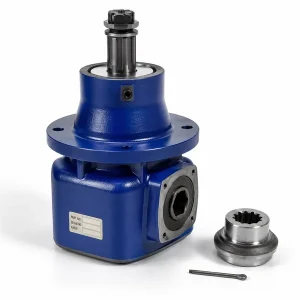
AEP-1 Series Irrigation Wheel Drive Gearbox — Worm Gear Final Drive
The AEP-1 Series is a worm gear irrigation wheel drive gearbox that converts electric motor rotation into the controlled, low-speed output required to propel center pivot and linear move irrigation towers across crop fields. Two configurations serve the Korean and international market: the AEP-1-50 with a standard 50:1 worm gear ratio, and the AEP-1V-52 with a 52:1 ratio engineered as a drop-in replacement for Valley brand pivot drives.
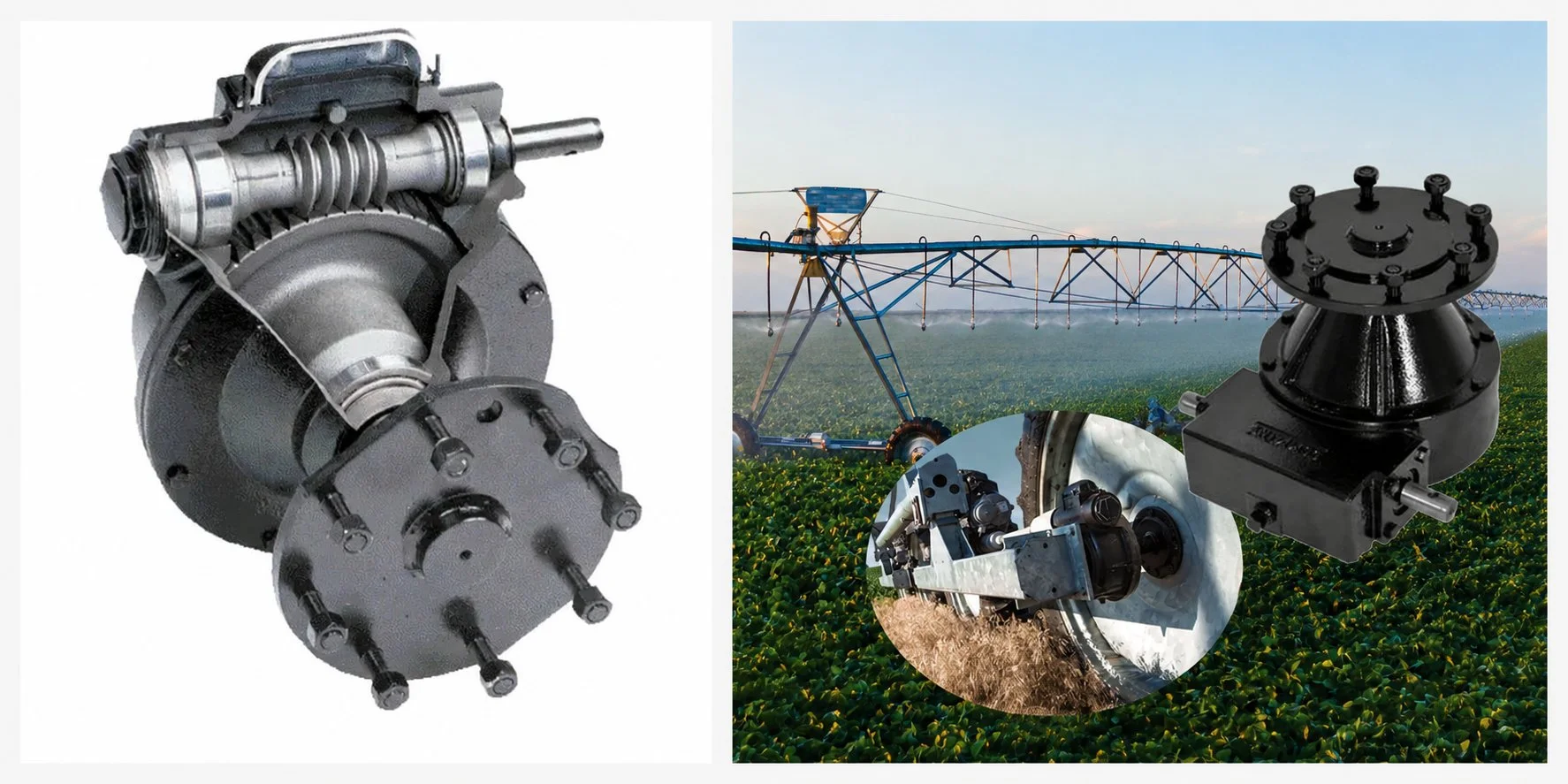
With a torque capacity of 69,000 lb-in (7,800 Nm), the AEP-1 provides enough force to move loaded pivot towers across uneven field surfaces, through soft ground after rain, and up gradients found on contour-irrigated fields. The high-strength cast iron housing and end caps resist the constant water exposure and seasonal temperature cycling that irrigation equipment endures year after year. Inside, a precision-finished worm and gear set runs on tapered roller bearings — a bearing type chosen for its ability to carry both radial wheel loads and axial thrust from hillside operation simultaneously.
Korean rice producers in Chungcheong and Jeolla provinces, vegetable growers across Gyeongsang, and large-scale specialty crop farms using center pivot irrigation all depend on this pto gearbox technology for reliable water delivery. The universal mount bolt pattern fits virtually every pivot tower base manufactured since the 1980s — making the AEP-1 a one-part-number solution for both new installations and replacement of worn or failed drives on aging Korean irrigation infrastructure.
Technical Specifications
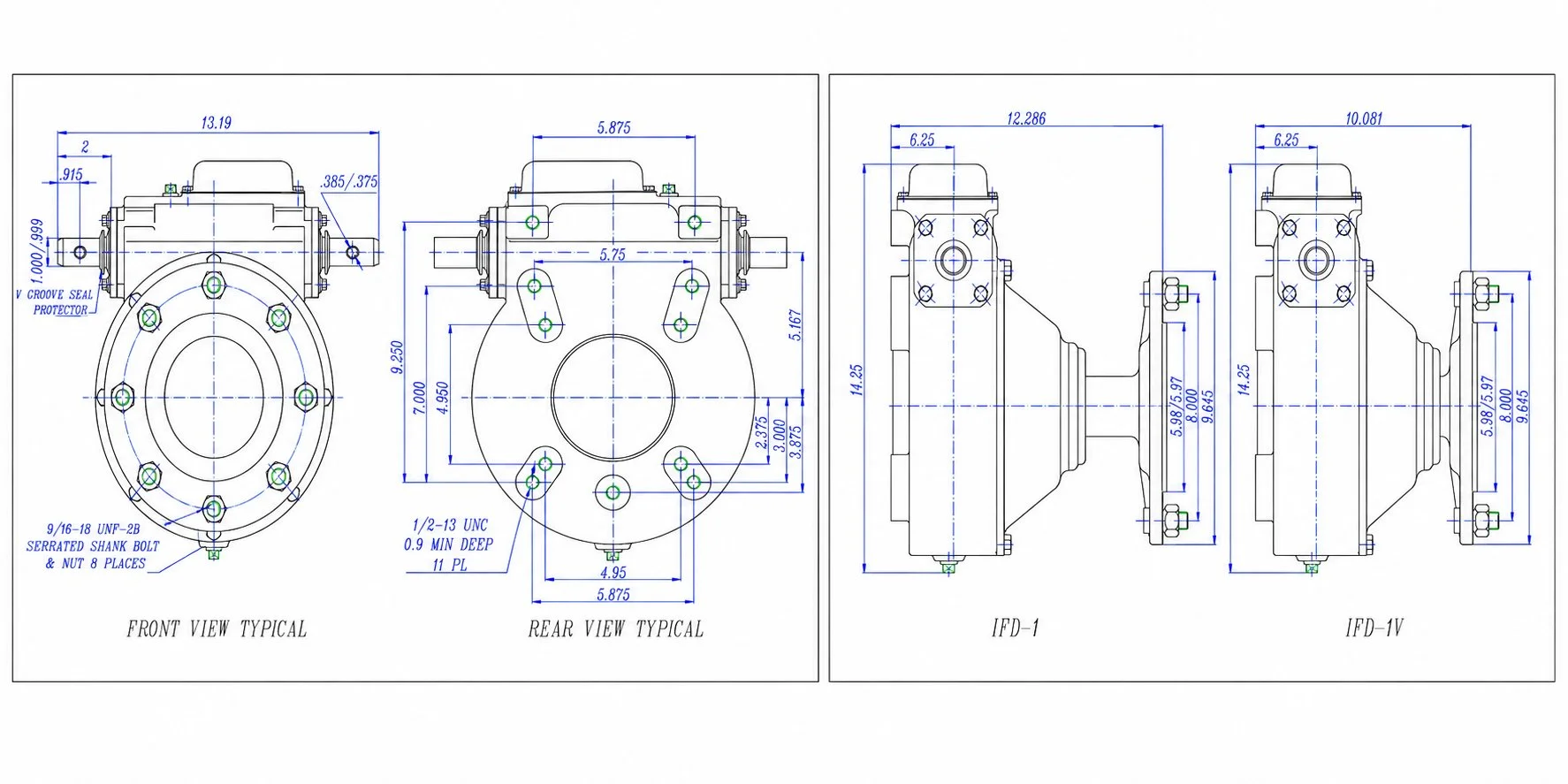
Specifications for the AEP-1-50 and AEP-1V-52 models. Both share the same housing, bearings, and mounting pattern — the worm gear set differs to achieve the respective ratio.
| Parameter | AEP-1-50 | AEP-1V-52 |
|---|---|---|
| Gear Ratio | 50 : 1 | 52 : 1 |
| Replaces | Standard universal | Replacement of Valley drives |
| Torque Capacity | 69,000 lb-in (7,800 Nm) | |
| Gear Type | Precision-Finished Worm and Gear | |
| Housing Material | High-Strength Cast Iron (housing + end caps) | |
| Bearings | Tapered Roller Bearings | |
| Input Shaft Seals | Triple-Lip Seals | |
| Expansion Chamber | Full-Cycle Bellows-Type Expansion Diaphragm | |
| Crop Guard Seals | External, included | |
| Mount Pattern | Universal — fits virtually all pivot towers | |
| Hardware Included | Serrated Shank Carriage Bolts + Wheel Nuts | |
| Shipped With Oil | Yes | |
Additional ratios available on request. Contact our engineering team with your system specifications for custom configurations.
Irrigation Systems Using the AEP-1
Center Pivot Irrigation
Center pivot systems rotate around a fixed central point, with each tower moving at a different ground speed — outermost towers travel the fastest. The AEP-1's 50:1 (or 52:1) worm gear reduction converts the 1,750 RPM electric motor output to approximately 35 RPM wheel drive speed, producing the slow, controlled movement that keeps tower alignment within acceptable tolerances. Korean rice producers in the Gimje Plain and Nonsan areas of Chungcheongnam-do operate center pivots covering 30-80 hectares per system, with 6-12 towers each requiring its own gearbox.
Linear Move (Lateral Move) Systems
Linear move systems travel in a straight line across rectangular fields. All towers move at the same speed, but the agricultural gearbox still needs the high torque output to push wheels through soft, saturated paddy soil — a condition common during the Korean rice growing season from May through September. The 7,800 Nm torque capacity handles the increased rolling resistance of mud and standing water that standard irrigation gearboxes with lower torque ratings struggle to overcome.
Replacement Drives for Aging Pivot Infrastructure
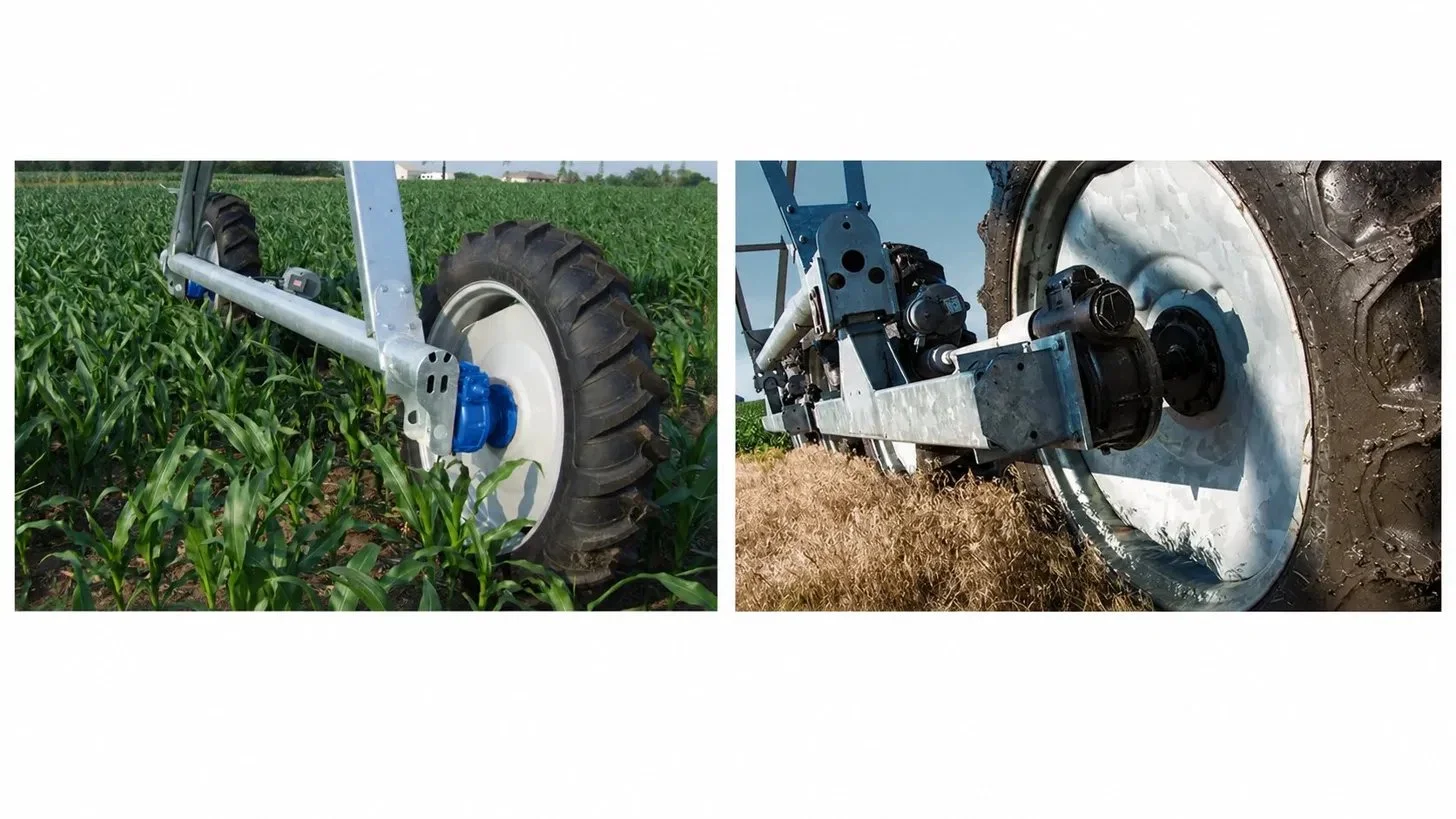
Korea's center pivot irrigation installations from the 1990s and early 2000s are reaching the age where wheel drive gearboxes fail from bearing fatigue and seal degradation. The AEP-1V-52's direct compatibility with Valley brand tower bases — the most widely installed pivot brand in Korea — makes it a cost-effective replacement that restores system operation without modifying the tower structure or electrical connections.
Selecting Between the AEP-1-50 and AEP-1V-52
Both models share the same housing, bearing set, and torque capacity. The choice between them depends on which pivot system you are equipping or replacing.
- Identify your current drive brand. Check the existing gearbox label on each tower. If it reads Valley, Valmont, or a Valley-compatible model number, the AEP-1V-52 (52:1) matches the original ratio and ensures tower timing remains synchronized with the system controller — no speed recalibration needed after installation.
- If the existing drive is not Valley-branded — or you are installing new equipment — the AEP-1-50 (50:1) is the standard universal option. Its universal bolt pattern fits the majority of pivot tower bases from Zimmatic, Reinke, T-L, Pierce, and other manufacturers.
- Verify the mount bolt pattern. While the universal pattern covers most installations, pivot systems manufactured before 1985 or custom-built systems may use non-standard bolt spacing. Measure the bolt circle diameter, bolt count, and bolt size before ordering.
- Consider terrain and soil conditions. Both models provide the same 7,800 Nm torque capacity. For flat, well-drained fields, either model has ample margin. For hilly terrain or consistently soft paddy soil, the torque rating covers worst-case scenarios — but confirm that the drive motor and electrical supply can sustain the higher current draw during peak torque events.
- Check oil condition on existing drives. If you are replacing one gearbox in a multi-tower system, inspect the remaining drives at the same time. Oil that appears dark, contains metal particles, or shows water contamination indicates imminent failure. Replacing multiple drives simultaneously avoids repeated downtime during the irrigation season.
Worm Gear Drive vs. Hydraulic Motor — Tower Propulsion Comparison
Irrigation towers can be driven by either electric motor-fed worm gearboxes (the AEP-1 approach) or hydraulic motors powered by a central hydraulic pump. The table below compares the two methods across factors that matter for Korean irrigation operations.
| Factor | Worm Gear Drive (AEP-1) | Hydraulic Motor Drive |
|---|---|---|
| Self-Locking Capability | Yes — prevents wind drift | No (needs brake valve) |
| Power Distribution | Individual motor per tower | Central pump + hose lines |
| Leak Risk | Minimal (sealed housing) | High (hoses, fittings, seals) |
| Environmental Impact | Contained oil, no crop contact | Hydraulic fluid leak onto crops |
| Maintenance Complexity | Low (oil check, seal inspection) | High (pump, hoses, valves, fluid) |
| Installation Cost | Lower per tower | Higher (pump + plumbing) |
| Speed Precision | Fixed ratio, consistent | Variable, adjustable |
| Cold Weather (-15°C) | Gear oil thickens moderately | Hydraulic fluid viscosity spike |
For Korean center pivot and linear move installations, the worm gear approach has a decisive advantage: self-locking. The worm gear geometry prevents the output shaft from back-driving the input — meaning wind loads on the irrigation spans cannot push towers out of alignment when the system is stopped. Hydraulic drives require separate brake valves at each tower to achieve the same hold, adding cost and maintenance points. This self-locking property is the primary reason over 90% of center pivot systems worldwide use worm gear final drives rather than hydraulic motors.
Drive Efficiency and Energy Cost Considerations
Worm gear drives operate at 30-50% mechanical efficiency — lower than helical or planetary alternatives. However, for irrigation wheel drives, efficiency is measured differently than for continuously running industrial gearboxes.
- ⚠ Intermittent duty cycle reduces efficiency impact. Pivot tower drive motors run in short bursts — typically 15-60 seconds per cycle — with rest periods between. The low duty cycle means the energy lost to worm gear friction is a small fraction of the total irrigation system energy budget, which is dominated by the water pump motor running continuously.
- ⚠ Precision-finished worm surfaces raise efficiency 5-10% above as-cast alternatives. The AEP-1's worm and gear are precision finished after hardening — this additional machining step reduces surface roughness at the contact zone, improving lubricant film formation and reducing friction losses compared to unfinished or as-cast worm gears used in lower-cost competing products.
- ⚠ Self-locking eliminates holding energy cost. When towers stop, the worm gear holds position without consuming electricity. Hydraulic systems need continuous pressure to prevent back-flow, and planetary gear drives require electric or mechanical brakes — both consume energy during the idle phase, which constitutes 60-80% of a typical center pivot operating cycle.
- ⚠ Total system cost comparison favors worm gear. A higher-efficiency planetary gear drive for a 10-tower pivot would save approximately 2-5% on tower drive electricity — but the planetary units cost 3-4 times more per tower and require external braking. Over a 15-year system life, the planetary efficiency advantage never recovers the upfront cost difference for typical Korean irrigation duty cycles.
Packaging and Delivery
- ◈ Ready to Install — Ships filled with gear oil, with serrated shank carriage bolts and wheel nuts included. No additional hardware purchase required for standard tower installations.
- ◈ Packaging — Individual plywood crate with foam inserts; VCI (Volatile Corrosion Inhibitor) wrap protects machined surfaces during transit. Multi-unit orders (6+ for a full pivot system) ship on palletized crates for forklift unloading at the field edge.
- ◈ Korea Domestic — Ships from Incheon warehouse. Metropolitan delivery 2-3 business days; rural agricultural regions 3-5 business days. Full pivot sets (8-12 units) available for same-day dispatch.
- ◈ International — FOB Incheon. Sea freight LCL or FCL available. Typical transit times: Japan 3-5 days, Southeast Asia 7-14 days, Central Asia 21-30 days. Air freight available for emergency replacements during irrigation season.
Complete Your Irrigation Drive System
While the AEP-1 is an electric motor-driven unit rather than a PTO-driven gearbox, farms operating both irrigation pivots and PTO-powered implements share a common need for reliable agricultural drive components. A pto shaft rated for your tractor's HP connects other field implements — tillers, spreaders, and pumps — to the same tractor fleet that services your irrigated fields.
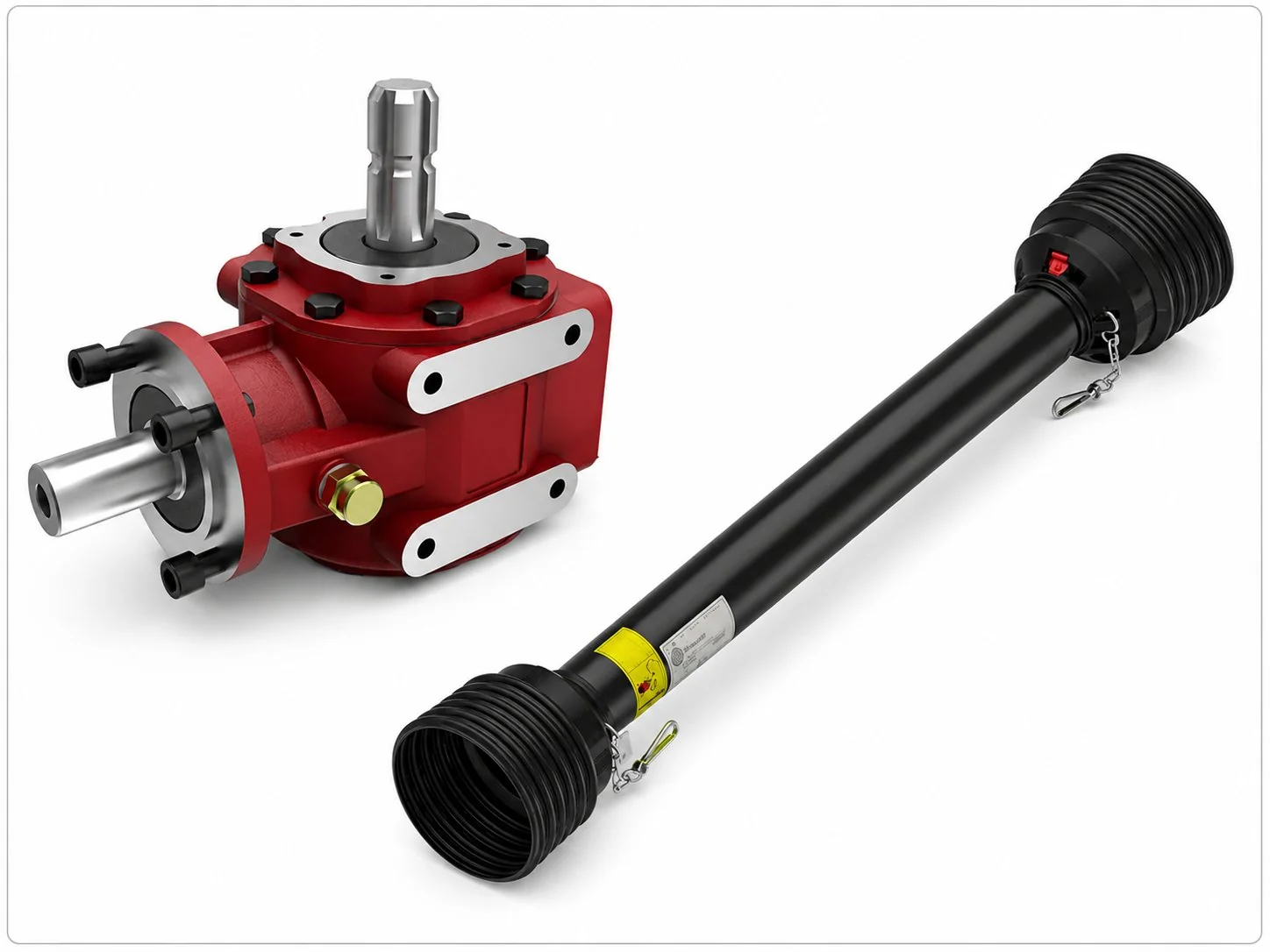
Our full agricultural gearbox catalog includes drives for rotary tillers, balers, spreaders, and other PTO-powered implements. Browse our pto gearbox for sale collection for complete tractor implement drive solutions.
Frequently Asked Questions
Can I mix AEP-1-50 and AEP-1V-52 units on the same pivot system?
Not recommended. The 2-tooth ratio difference (50:1 vs 52:1) creates a 4% speed discrepancy between towers. Over a full revolution, the mismatched tower falls progressively behind, stressing the span structure and triggering alignment sensors. Use the same model across all towers on a single system.
What is the bellows-type expansion diaphragm for?
The sealed gearbox housing expands and contracts with temperature changes — daytime heat increases internal air pressure, nighttime cooling creates a partial vacuum. Without the expansion diaphragm, these pressure cycles would force oil past seals or draw in moisture-laden air. The bellows absorbs volume changes while keeping the housing sealed, maintaining oil integrity across seasonal temperature swings from -15°C to +40°C.
How often should the oil be changed on an irrigation wheel drive?
Check oil level and condition at the beginning and middle of each irrigation season. Change oil every two years or whenever the oil appears discolored, contains metal particles, or shows water contamination. The low duty cycle (short bursts with long rest periods) means the oil degrades more from temperature cycling and condensation than from mechanical shearing.
What does the universal mount bolt pattern actually mean?
It means the mounting flange bolt circle, bolt size, and pilot diameter match the most widely used tower base dimensions across major pivot brands manufactured since the mid-1980s. The AEP-1 bolts onto these bases without adapter plates, shim kits, or drilling new holes.
Why do the crop guard seals matter?
On pivot systems passing through tall crops (corn, sorghum, sugarcane), plant material wraps around the output shaft and works its way toward the main housing seals. The external crop guard seals deflect debris before it reaches the primary seals, preventing the abraded seal failure that forces premature gearbox replacement. This feature is standard on the AEP-1 — many competing units charge extra for it.
Can this gearbox be installed vertically rather than horizontally?
The AEP-1 is designed for horizontal output shaft orientation (standard wheel drive position). Vertical mounting changes the oil distribution and bearing load pattern — contact our engineering team if your application requires a non-standard mounting angle.
Feedback from Irrigation Operations
Hwang Dong-hyun, Rice Farm Manager — Gimje, Jeollabuk-do, March 2025
"Replaced 8 failed Valley drives on our 10-tower center pivot with AEP-1V-52 units. Bolt pattern matched perfectly — installation took one afternoon with two workers. Three irrigation seasons running now with zero failures. The bellows expansion chamber is a feature our old drives did not have, and we have seen no condensation issues since switching."
Song Yun-ji, Irrigation Equipment Dealer — Nonsan, Chungcheongnam-do, January 2025
"The AEP-1 series covers both Valley replacement and universal applications — two part numbers instead of the eight or nine I used to carry from different suppliers. Stocking six of each model gets me through the spring installation rush. The factory-filled oil and included hardware mean farmers can install themselves without a return trip to my shop for accessories."
Jo Hyeon-woo, Vegetable Farmer — Haman, Gyeongsangnam-do, October 2024
"We irrigate 45 hectares of onion and garlic with a linear move system. The AEP-1-50 drives handle the soft paddy soil after monsoon season — our previous generic brand drives stalled in wet ground because they could not produce enough torque. The 7,800 Nm rating makes a real difference when the wheels are pushing through 15 cm of standing water and mud."
Moon Se-young, Agricultural Cooperative Director — Cheongdo, Gyeongsangbuk-do, July 2024
"Our cooperative manages 12 center pivot systems across member farms. Standardized on the AEP-1 series for all replacements. Having one reliable supplier and two model numbers simplifies procurement. The triple-lip input seals outlast the double-lip seals on the previous brand we used — seal failure was our most common gearbox problem before switching."
Baek In-ho, Pivot System Installer — Iksan, Jeollabuk-do, April 2024
"Installed 40+ AEP-1 units across 5 new pivot systems this spring. The universal bolt pattern claim holds true — every installation mounted without modifications. The serrated carriage bolts are a quality detail that matters: they grip the tower base and prevent bolt rotation during tightening. Small feature, but it saves 10-15 minutes per tower versus standard bolts that need a second wrench."
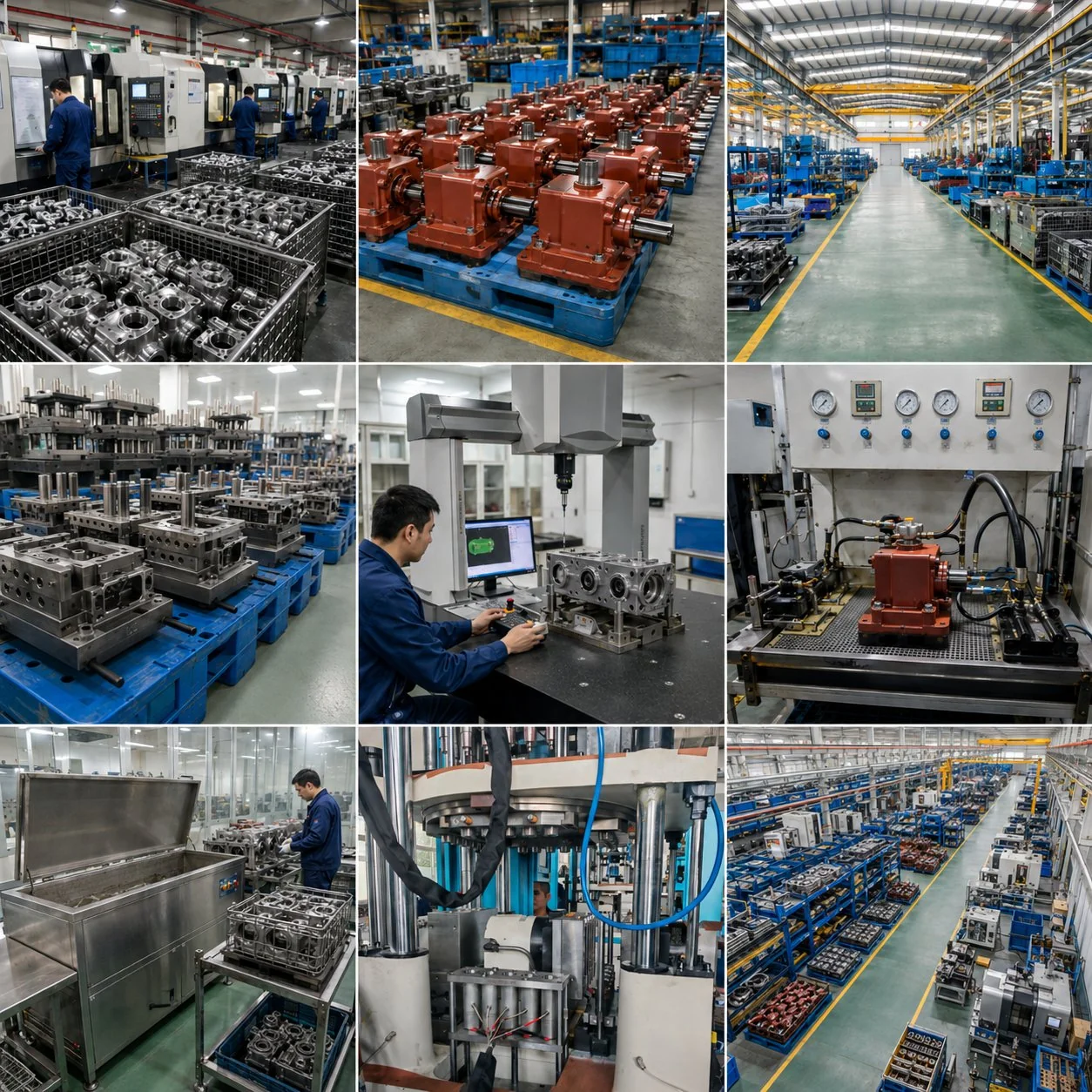
Additional information
| Editor | Cxm |
|---|
Related products
-
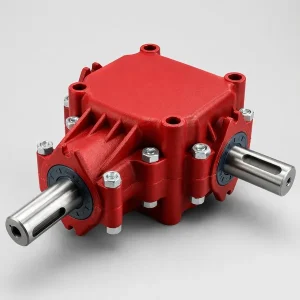
Fertilizer Spreader Gearbox L-25J | Comer Replacement PTO
-
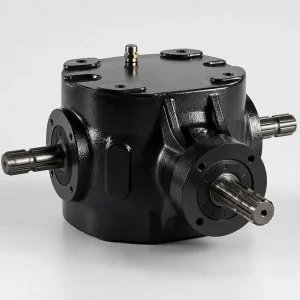
Agricultural Gearbox — Replacement of Bondioli & Pavesi
-
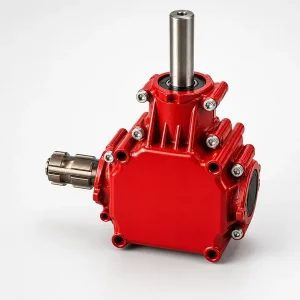
XL Series Gearbox for Agricultural Machinery
-
Agriculture Gearbox for Hay Tedder EP03
-
Round Baler Gearbox Replaces the Comer Code T-304A
-
75 HP Heavy Duty Post Hole Digger Gearbox — 3:1 Speed Reducer for 3-Point Auger Systems on Agricultural and Fencing Operations
-
Round Baler Gearbox EP2100-T3 — 80 HP Helical Speed Reducer with 2.1:1 Ratio for Baling and Harvesting Equipment
-
Rotary Mower Gearbox LF-199A — 45 CV Dual-Output Speed Increaser for Agricultural Blade Drives at 540 RPM