Round Baler Gearbox Replaces the Comer Code T-304A

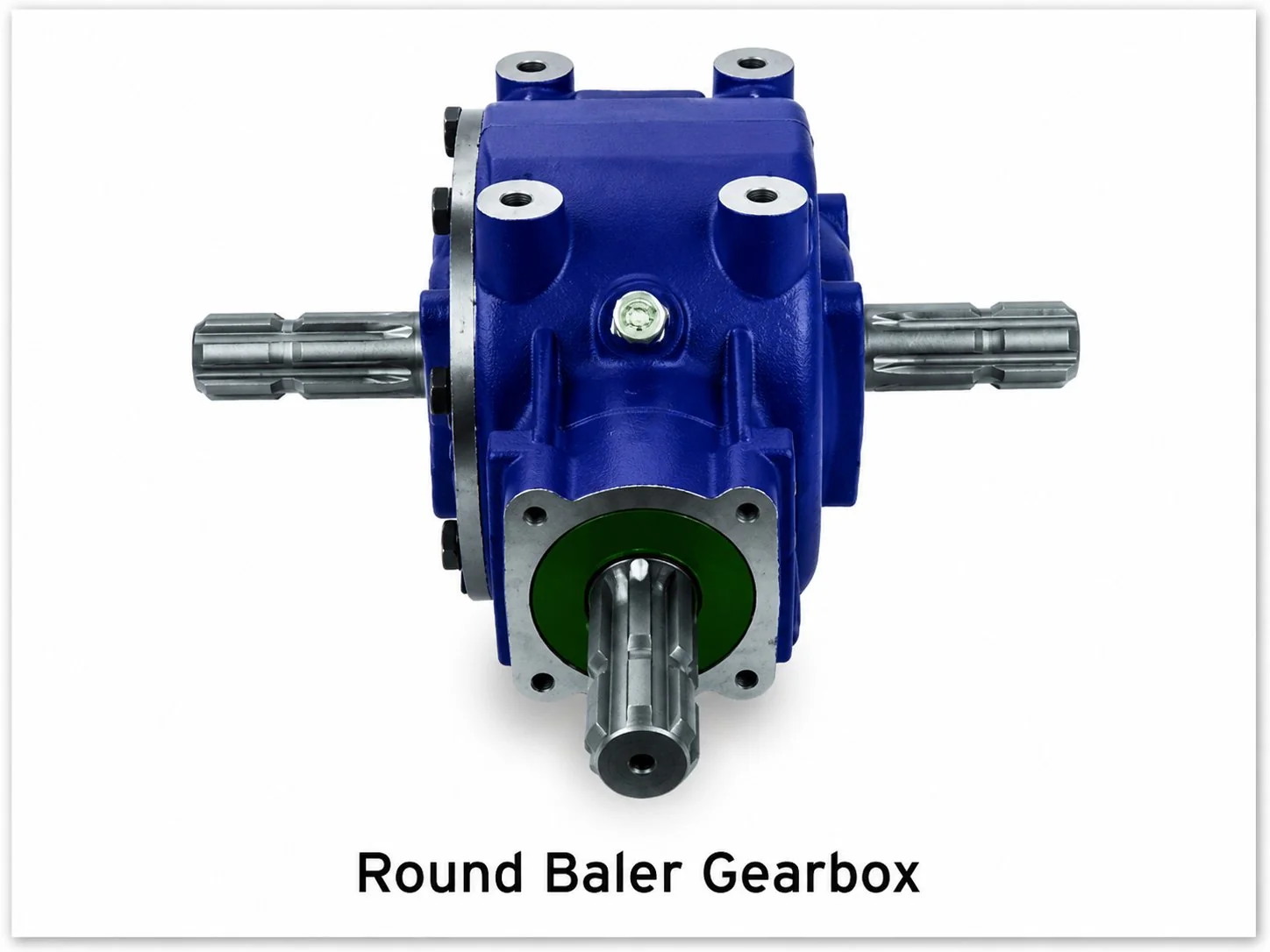
The EP-T304A round baler gearbox replaces the Comer Code T-304A, offering dual-mode operation with 1:3 increasing (50 HP / 36.8 kW input, 21 daNm output) and 3:1 reducing (25 HP / 18.4 kW input, 94.5 daNm output) configurations through a single unit. Three 1-3/8 inch splined shafts (X, Y, and Z) provide flexible input-output routing depending on the selected gear arrangement.
Replacement of Comer T-304A — Dual-Mode Round Baler Gearbox
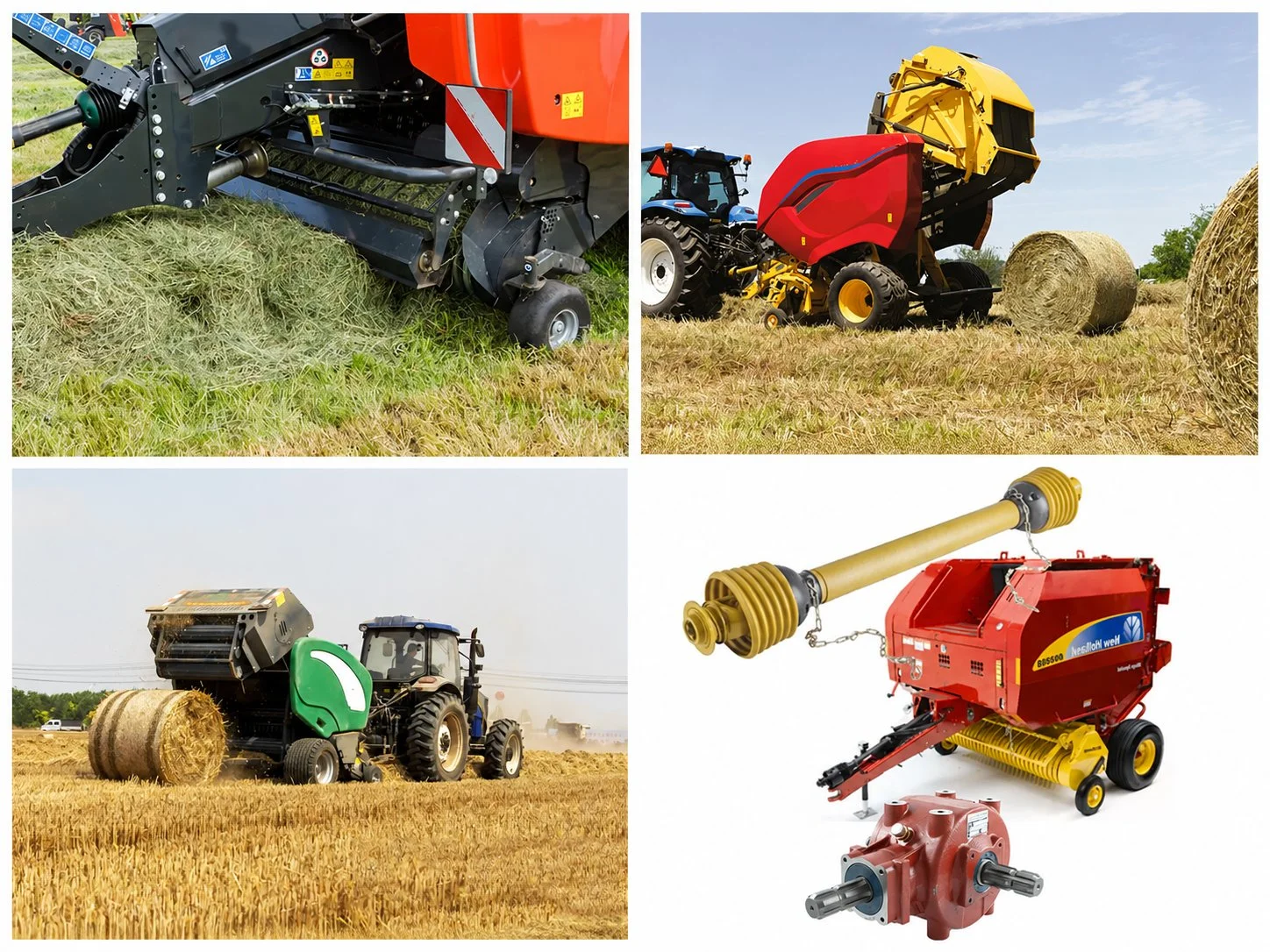
Round baler operations place contradictory demands on a single gearbox. During the initial feeding phase, the pickup mechanism and starter rollers need high rotational speed to gather crop material quickly and feed it into the baling chamber without jamming. Once the chamber fills and the compression cycle begins, the demand shifts entirely to torque — the belts or chains that compress loose hay into a dense cylindrical bale require sustained rotational force at lower speeds. The Comer T-304A addresses this fundamental tension through a dual-mode architecture that provides both 1:3 increasing (speed multiplication) and 3:1 reducing (torque multiplication) configurations within a single cast iron housing.
This replacement matches the original Comer T-304A in every critical dimension: three 1-3/8 inch 6-spline shafts (X, Y, and Z), identical mounting geometry, and the same dual gear arrangement that allows operators to select between increasing and reducing modes by choosing which shaft serves as the input. The four-gear increasing arrangement (gears 25-26-27-28) routes power through shafts X and Y, while the two-gear reducing arrangement (gears 5-6) uses shaft Z as the input. This PTO gearbox design eliminates the mechanical compromise that single-ratio round baler gearboxes must make — choosing between speed and torque rather than providing both.
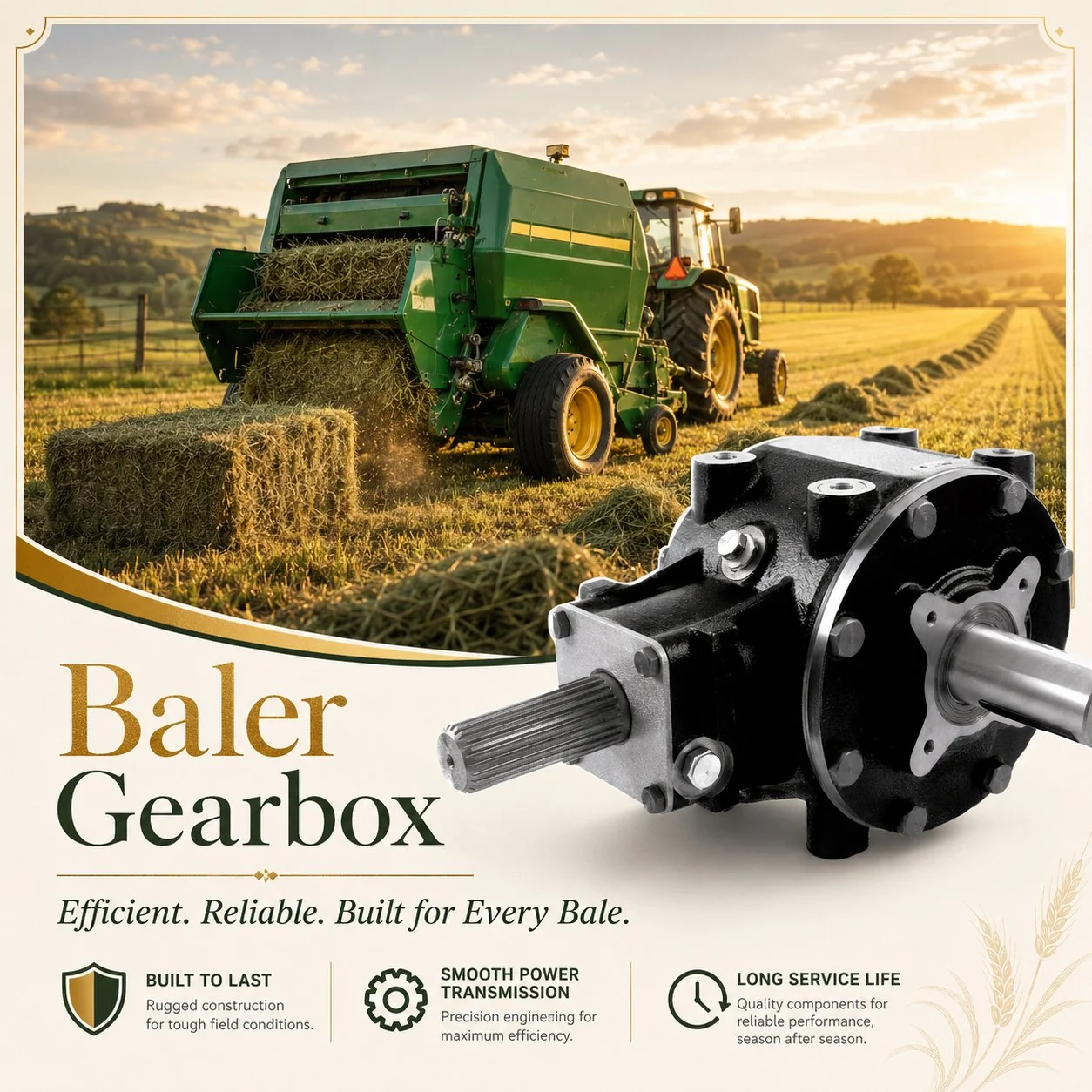
Korean hay and forage operations that run European-origin round balers face a persistent spare parts challenge. Original Comer gearboxes carry extended lead times and premium pricing when sourced through European distributors. This domestically available agricultural gearbox replacement provides Korean baling contractors, dairy operations, and livestock farms with a drop-in alternative that maintains the T-304A's dual-mode capability without the supply chain uncertainty. The 19 kg unit weight, 1.1-liter oil capacity, and 500-hour service intervals match the operational profile that experienced baler operators expect from this class of gearbox.
Technical Specifications
| Parameter | Specification |
|---|---|
| Model | EP-T304A (Replacement of Comer Code T-304A) |
| Ratio — Increasing | 1:3 |
| Ratio — Reducing | 3:1 |
| Input Power — Increasing | 36.8 kW / 50 HP |
| Input Power — Reducing | 18.4 kW / 25 HP |
| Output Torque — Increasing | 21 daNm |
| Max. Output Torque — Reducing | 94.5 daNm |
| Gear Arrangement — Increasing | 25 – 26 – 27 – 28 (4-gear train) |
| Gear Arrangement — Reducing | 5 – 6 (2-gear direct mesh) |
| Input Shaft — Increasing | Shaft X – Y |
| Input Shaft — Reducing | Shaft Z |
| Shaft X | 1-3/8" (6 spline) Type A |
| Shaft Y | 1-3/8" (6 spline) Type A |
| Shaft Z | 1-3/8" Z6 |
| Housing Material | Cast Iron GG25 |
| Weight | 19 kg |
| Oil Capacity | 1.1 liters |
| Oil Specification | SAE 80W-90 |
| Oil Change Interval | 500 hours (first change at 50 hours) |
| Ships With Oil | No — fill before first use |
| Applications | Round Balers, Mowers, Shakers, Agricultural Machinery |
Selection Guide — Choosing the Right Operating Mode
The T-304A's dual-mode capability means every operator faces a configuration decision before connecting the PTO shaft. The correct choice depends on the baling task, the crop material, and the tractor's power characteristics. Selecting the wrong mode does not damage the gearbox, but it reduces baling efficiency and can produce loose, poorly formed bales that waste time and material.
When to Select 1:3 Increasing Mode
● Dry hay and straw baling where fast pickup roller speed improves material flow into the chamber
● Light forage crops (timothy, orchard grass) that require speed rather than compression force
● Tractors in the 40-50 HP range that can supply the full 36.8 kW input without strain
● Operations prioritizing bales-per-hour throughput over maximum bale density
When to Select 3:1 Reducing Mode
◈ Wet silage baling where moisture content increases material density and resistance
◈ Heavy alfalfa or clover stands that require high compression force to form tight bales
◈ Smaller tractors (20-25 HP) where the 18.4 kW input limit better matches available engine power
◈ Operations prioritizing bale density and storage longevity over field speed
Korean dairy operations that bale their own feed often switch between modes seasonally — running the increasing configuration during the June-July dry hay harvest for maximum throughput, then switching to the reducing configuration for autumn silage baling when crop moisture content doubles or triples the material resistance inside the chamber.
Side-by-Side Comparison — Increasing vs Reducing Configuration
Understanding the mechanical tradeoffs between the two configurations helps operators make informed decisions based on their specific baling conditions rather than defaulting to a single mode year-round.
| Parameter | 1:3 Increasing | 3:1 Reducing |
|---|---|---|
| Input Shafts | X – Y | Z |
| Gear Train | 4-gear (25-26-27-28) | 2-gear (5-6) |
| Maximum Input Power | 50 HP (36.8 kW) | 25 HP (18.4 kW) |
| Output Torque | 21 daNm | 94.5 daNm |
| Output Speed Relative to Input | 3x faster | 3x slower |
| Torque Multiplication | 1/3 of input torque | 3x input torque |
| Mechanical Efficiency | Slightly lower (4-gear losses) | Higher (2-gear direct mesh) |
| Best Crop Type | Dry hay, straw, light grass | Wet silage, dense alfalfa, heavy forage |
| Tractor Class | 40-50 HP utility tractors | 20-30 HP compact tractors |
| Primary Advantage | Higher throughput, faster baling cycles | Maximum compression, tighter bales |
The 4-gear increasing train produces marginally more internal friction than the 2-gear reducing mesh, which means operators running extended baling sessions in increasing mode should monitor gearbox temperature more carefully. In the reducing configuration, the simpler gear path generates less heat but transmits substantially higher torque loads to the output shaft and housing bearings — a tradeoff that demands more attention to bearing condition during scheduled maintenance.
Load Analysis — Torque Demands by Crop Type
Baling loads vary enormously depending on the crop, its moisture content, and the target bale density. Understanding these load profiles helps operators select the correct configuration and avoid overloading either the gearbox or the tractor engine.
| Crop Material | Moisture Range | Typical Load | Recommended Mode |
|---|---|---|---|
| Dry Timothy Hay | 12-18% | Low-Medium | 1:3 Increasing |
| Wheat Straw | 10-15% | Low | 1:3 Increasing |
| Orchard Grass | 15-22% | Medium | 1:3 Increasing |
| Alfalfa (dried) | 16-20% | Medium-High | Either — depends on density target |
| Alfalfa (high-moisture) | 40-60% | High | 3:1 Reducing |
| Corn Silage | 60-70% | Very High | 3:1 Reducing |
| Grass Silage | 55-65% | High | 3:1 Reducing |
| Biomass / Switchgrass | 15-25% | Medium | 1:3 Increasing |
The critical decision boundary sits around 35-40% moisture content. Below this threshold, the speed advantage of the increasing configuration typically outweighs the torque advantage of reducing — material flows easily through the pickup mechanism and chamber, and faster rotation directly translates to more bales per hour. Above this threshold, the resistance inside the baling chamber climbs sharply, and the 94.5 daNm maximum output torque of the reducing configuration becomes essential for producing properly compressed bales that will ferment correctly for silage storage.
Korean operators baling rice straw — a common post-harvest activity in Korean agriculture — should note that rice straw typically falls in the 15-25% moisture range depending on drying time after harvest. The 1:3 increasing configuration handles this material efficiently, though operators working in the autumn rainy season may encounter moisture levels above 30% that push toward the reducing configuration.
Application Scenarios for Korean Agricultural Operations
The T-304A serves a wider range of applications than the "round baler" name suggests. Comer originally designed this gearbox as a versatile agricultural drive unit, and many Korean operators use it in equipment configurations beyond traditional round baling.
⚠ Hay and Forage Baling — The primary application. Korean dairy and beef cattle operations bale timothy, orchard grass, and mixed grass hay for winter feed storage. The dual-mode capability allows a single gearbox to handle both the fast-throughput dry hay season and the torque-demanding silage season without equipment changes.
⚠ Straw Baling After Rice Harvest — Korea's rice paddies produce substantial volumes of straw after harvest. Round baling this material for animal bedding, mushroom cultivation substrate, or composting requires the speed-oriented 1:3 increasing configuration. The relatively low density and moisture content of dried rice straw makes it an ideal application for the increasing mode.
⚠ Silage Wrapping Operations — High-moisture silage baling demands the 3:1 reducing configuration's torque advantage. Korean livestock operations that produce wrapped silage bales need the compression force to create tight, air-excluding bales that ferment properly. Loose or poorly compressed silage bales lead to spoilage and feed waste.
⚠ Mower and Shaker Drive Applications — Beyond baling, the T-304A's specifications match several mower and crop shaker drive requirements. Its 1-3/8 inch 6-spline shaft interface and dual-ratio capability make it suitable as a replacement gearbox in rotary mowers and hay shaker mechanisms where the original gearbox used a similar Comer design.
⚠ Biomass Collection — Korean renewable energy initiatives that collect agricultural residues for biomass fuel production use round balers to efficiently gather and compress crop waste. The T-304A handles switchgrass, miscanthus, and corn stover baling with the increasing configuration, producing dense bales that optimize transport and storage efficiency.
Storage and Seasonal Maintenance Protocol
Round balers operate seasonally in Korean agriculture, with peak usage concentrated in June-July (dry hay) and September-October (silage). The gearbox spends several months in storage between seasons, and how it is stored directly affects its readiness and longevity.
Pre-Storage Procedure (End of Baling Season)
● Drain all 80W-90 gear oil while the gearbox is still warm from operation — warm oil carries contaminants out more effectively than cold oil
● Inspect the drain plug magnet (if equipped) for metallic particles that indicate abnormal gear wear
● Refill with fresh 80W-90 oil to the specified 1.1-liter capacity — storing with fresh oil prevents internal surface corrosion during the dormant period
● Rotate each shaft (X, Y, Z) by hand through several complete revolutions to distribute fresh oil across all gear surfaces and bearings
● Apply a thin film of grease to exposed shaft splines to prevent surface corrosion
● Cover shaft openings with plastic caps or wrap to prevent dust and moisture entry
Pre-Season Inspection (Before First Use)
◈ Check oil level and clarity — milky or discolored oil indicates moisture contamination during storage and requires complete replacement
◈ Inspect all three shaft seals for cracking, hardening, or visible damage from temperature cycling during winter storage
◈ Verify shaft spline engagement — push each shaft in and out to confirm smooth engagement without binding or excessive play
◈ Check the housing for cracks, particularly around mounting bolt holes and shaft seal areas where cast iron is most vulnerable to thermal stress
◈ Run the gearbox unloaded for 5-10 minutes at low PTO speed before engaging the baling mechanism — this distributes oil and warms the seals to operating temperature
The 500-hour oil change interval assumes continuous seasonal operation. For Korean operations that accumulate fewer than 500 hours between storage periods, change the oil at the end of each season regardless of accumulated hours. Contaminated oil sitting in storage causes more damage than operating hours alone.
Compatible Components and Related Equipment
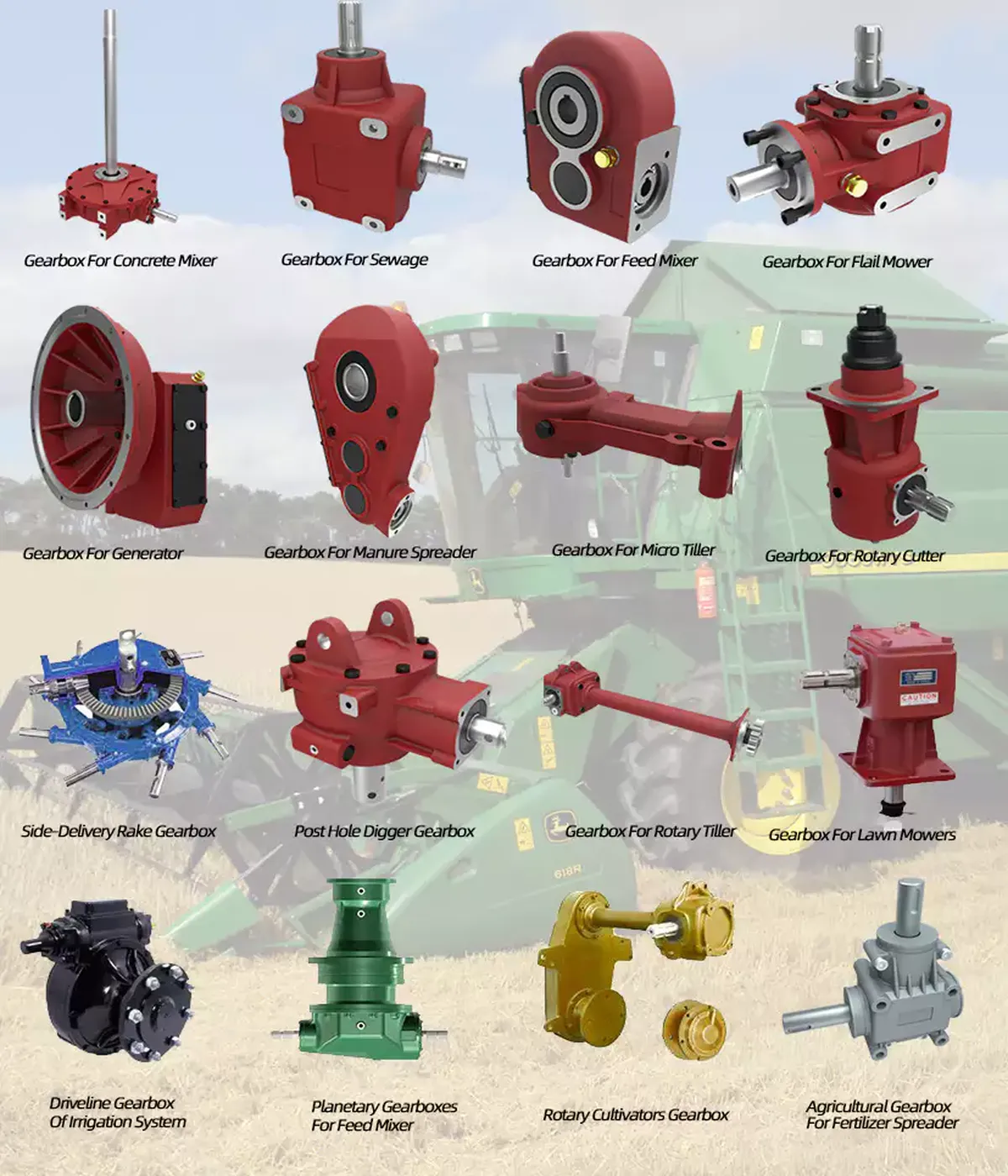
The T-304A gearbox operates as one component within a larger power transmission system. The PTO shaft that connects the tractor to the gearbox input, and the baler mechanisms that receive the gearbox output, must all be dimensionally and mechanically compatible for reliable operation.
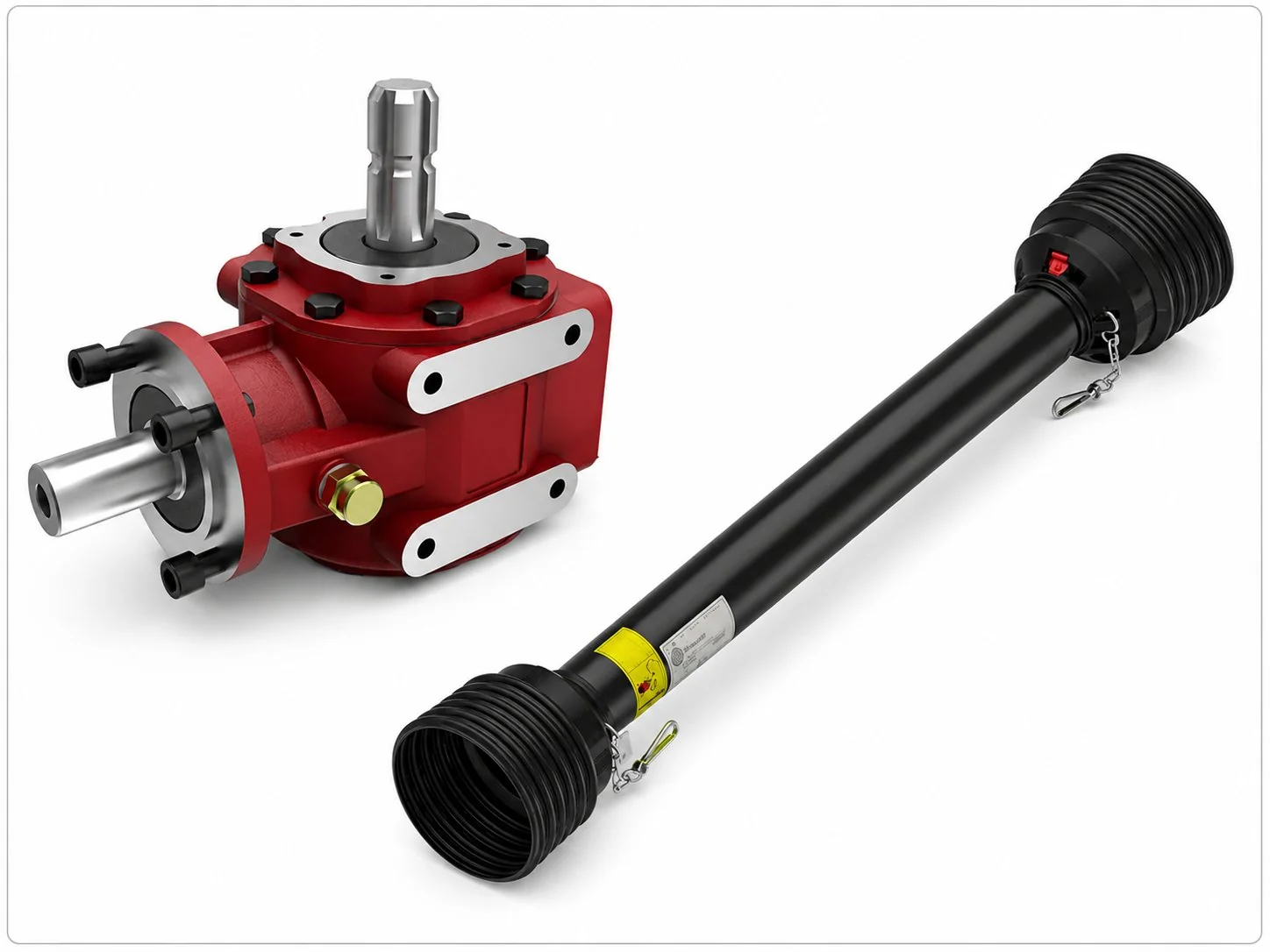
● The PTO shaft connecting the tractor to the T-304A must match the 1-3/8 inch 6-spline interface on whichever shaft (X, Y, or Z) serves as the input in the selected configuration. Telescoping PTO shafts with shear bolt protection are recommended for round baler applications where sudden load spikes from uneven crop feeding can generate torque exceeding the gearbox rating. The PTO shaft length must accommodate the tractor-to-baler distance at all turning angles without binding or bottoming out.
● Korean operators expanding or upgrading their baling operations can browse the full range of PTO gearbox options available for round balers, mowers, rakes, and other agricultural implements. Each gearbox in the catalog lists the complete shaft specification, gear ratio, and power rating to simplify replacement matching.
● For operations running multiple implement types, the agricultural gearbox range includes rotary cutter, rotary tiller, flail mower, feed mixer, and fertilizer spreader gearboxes that use the same 1-3/8 inch spline standard as the T-304A. Standardizing on this shaft interface across the equipment fleet reduces the spare parts inventory and simplifies maintenance.
Frequently Asked Questions
Can I switch between increasing and reducing modes in the field without tools?
Switching modes requires physically reconnecting the PTO shaft from one input shaft to another — moving from shafts X-Y (increasing) to shaft Z (reducing) or vice versa. This takes approximately 15-20 minutes and requires disconnecting the PTO shaft, repositioning it, and verifying the spline engagement. It is not a quick-change operation, so most operators commit to one mode for an entire baling session based on the crop material they are processing that day.
The gearbox ships without oil — what happens if I run it dry by mistake?
Running the gearbox without oil, even briefly, causes immediate metal-to-metal contact between the gear teeth and bearings. Internal temperatures spike within minutes, damaging gear tooth surfaces and bearing races. If the gearbox was accidentally run dry, drain any debris, fill with fresh 80W-90 oil, and run unloaded while checking for abnormal noise, vibration, or heat. Any grinding sounds or excessive heat indicate internal damage that requires professional inspection before returning to service under load.
Why does the reducing mode produce 94.5 daNm but only accept 25 HP input?
The 3:1 gear ratio multiplies input torque by a factor of three while dividing speed by the same factor. The 25 HP input limit is not an arbitrary restriction — it reflects the maximum load the 2-gear reducing arrangement (gears 5-6) can sustain without exceeding the gear tooth stress limits. The 94.5 daNm output torque is already near the material and dimensional limits of this gearbox class. Exceeding the 25 HP input would push the gear teeth beyond their rated contact stress, leading to pitting, spalling, and eventually catastrophic tooth failure.
Is this gearbox compatible with Korean-manufactured round balers?
The T-304A uses the international standard 1-3/8 inch 6-spline shaft interface (ASAE S203.4) that is common across both European and Korean agricultural equipment. Compatibility depends on the mounting dimensions and shaft alignment matching the baler's gearbox cavity. Korean balers that originally used Comer T-304A units are direct drop-in replacements. For balers using a different gearbox model, measure the mounting bolt pattern, shaft centerline height, and available clearance before ordering.
How do I know when the gearbox oil needs changing before reaching 500 hours?
Check the oil through the fill port using a clean dipstick or by draining a small sample. Fresh 80W-90 gear oil is typically amber or light brown and translucent. Dark brown or black oil indicates thermal degradation. Milky or cloudy oil means water contamination — common in Korean agriculture where humidity levels are high during the monsoon season. Metallic particles visible on a drain plug magnet indicate abnormal gear wear. Any of these conditions requires immediate oil replacement regardless of accumulated hours.
Customer Reviews
Han Seong-ho — Hoengseong-gun, Gangwon-do
I have been using this unit for over three years at my Hanwoo cattle farm for hay harvesting. Operating in the 1:3 speed-up mode, it handles the baling of Timothy hay with impressive speed, and the resulting bales are consistently uniform in shape. It performs flawlessly, with no perceptible difference in performance compared to the original Comer unit. I plan to repurchase it when the time comes for a replacement.
Park Jin-young — Gochang-gun, Jeollabuk-do
I primarily use the 3:1 reduction mode for silage baling. Even high-moisture forage is compressed tightly, resulting in excellent fermentation conditions after wrapping. Weighing just 19 kg, the unit can be attached or detached by a single person, and changing the gear oil is a simple process. It is a gearbox that offers outstanding value for money.
Lee Jae-min — Seosan-si, Chungcheongnam-do
It is utilized for baling rice straw after the harvest. When processing dry straw in high-speed mode, the hourly work output is demonstrably higher than that of the previous gearbox. The spline shaft specifications matched precisely, allowing for immediate installation and use without the need for any additional machining.
Choi Yong-seok — Yeongju, Gyeongsangbuk-do
I purchased this as a replacement for a Comer T-304A unit installed on a European-made round baler. The quality of the cast iron housing is excellent, and gear engagement noise is minimal. I switch between modes for the hay and silage seasons, and the unit performs stably in both settings. It was a very satisfying purchase.
Yoon Tae-ho — Jecheon City, Chungcheongbuk-do
Our livestock cooperative adopted this gearbox while jointly operating a baler. After the initial oil change at the 50-hour mark, we used it for up to 500 hours without any significant issues; it has demonstrated excellent durability, even in the demanding conditions of being shared and rotated among five member farms. We plan to order an additional unit as a spare part for the upcoming season.
Additional information
| Editor | Cxm |
|---|
Related products
-
Agricultural Gearbox — Replacement of Bondioli & Pavesi
-
XL Series Gearbox for Agricultural Machinery
-
Agriculture Gearbox for Hay Tedder EP03
-
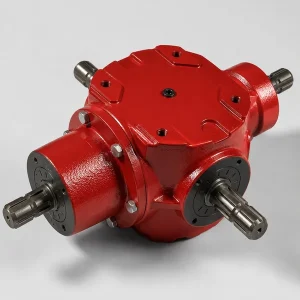
Round Baler Gearbox EP2100-T3 — 80 HP Helical Speed Reducer with 2.1:1 Ratio for Baling and Harvesting Equipment
-
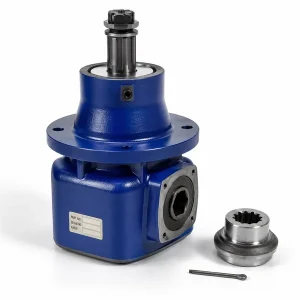
Rotary Mower Gearbox LF-199A — 45 CV Dual-Output Speed Increaser for Agricultural Blade Drives at 540 RPM
-
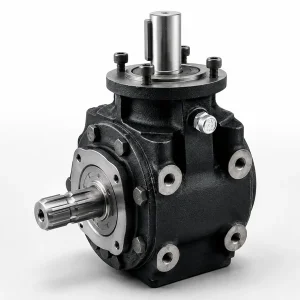
Flail Mower Gearbox T-310A — 22.1 kW Speed Reducer with 1:3 Ratio for Heavy-Duty Vegetation Shredding
-
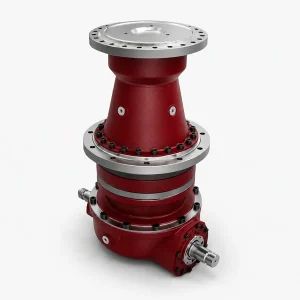
Feed Mixer Gearbox EP-Series — Planetary Gear Drives for Vertical TMR Mixing
-
EP-RC-30 Rotary Cutter Gearbox — 40 HP Bevel Gear Speed Increaser for Agricultural Mowing