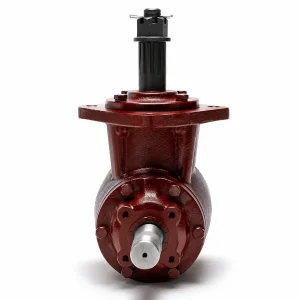
Fertilizer Spreader Gearbox L-150C — 9.9 kW Speed Increaser with 1:1.35 Ratio for Broadcast and Pendulum Spreaders

The L-150C fertilizer spreader gearbox is a compact speed increaser that converts 540 RPM tractor PTO input to 729 RPM spinning disc output through a 1:1.35 helical gear ratio. Rated at 9.9 kW (13.3 HP) with 126 Nm of output torque, this unit drives the centrifugal distribution disc on broadcast and pendulum-type fertilizer spreaders used across Korean rice, vegetable, and grain farming operations.
L-150C Fertilizer Spreader Gearbox — 9.9 kW Speed Increaser
The L-150C is a compact speed-increasing fertilizer spreader gearbox that converts 540 RPM tractor PTO input to 729 RPM spinning disc output through a 1:1.35 ratio. Rated at 9.9 kW (13.3 HP) with 126 Nm of output torque, this pto gearbox drives the centrifugal distribution disc on broadcast and pendulum-type fertilizer spreaders — the mechanism responsible for throwing granular fertilizer outward in a controlled fan pattern across the field.
Designed as a direct replacement for the Comer Code L-150C, the gearbox matches all original mounting dimensions, shaft profiles, and flange geometry. Operators can swap the unit without modifications to the spreader frame or disc assembly. For Korean rice paddies and vegetable fields in Jeolla and Chungcheong provinces, where precise fertilizer distribution directly affects per-hectare yield, this pto gearbox provides the consistent disc speed needed for uniform coverage at working widths from 10 to 24 meters.
Unlike the heavier reduction gearboxes used on mixers or tillers, a spreader gearbox operates in the speed-increase range — the output spins faster than the input. This means internal gear loads are lower per revolution, but the gearbox must tolerate sustained continuous operation at higher output RPM with minimal vibration, since any speed fluctuation translates directly into uneven spread patterns that waste fertilizer and create visible striping in the crop canopy.
Technical Specifications
Core parameters for the L-150C. Verify these against your spreader's disc shaft requirements and tractor PTO output before ordering.
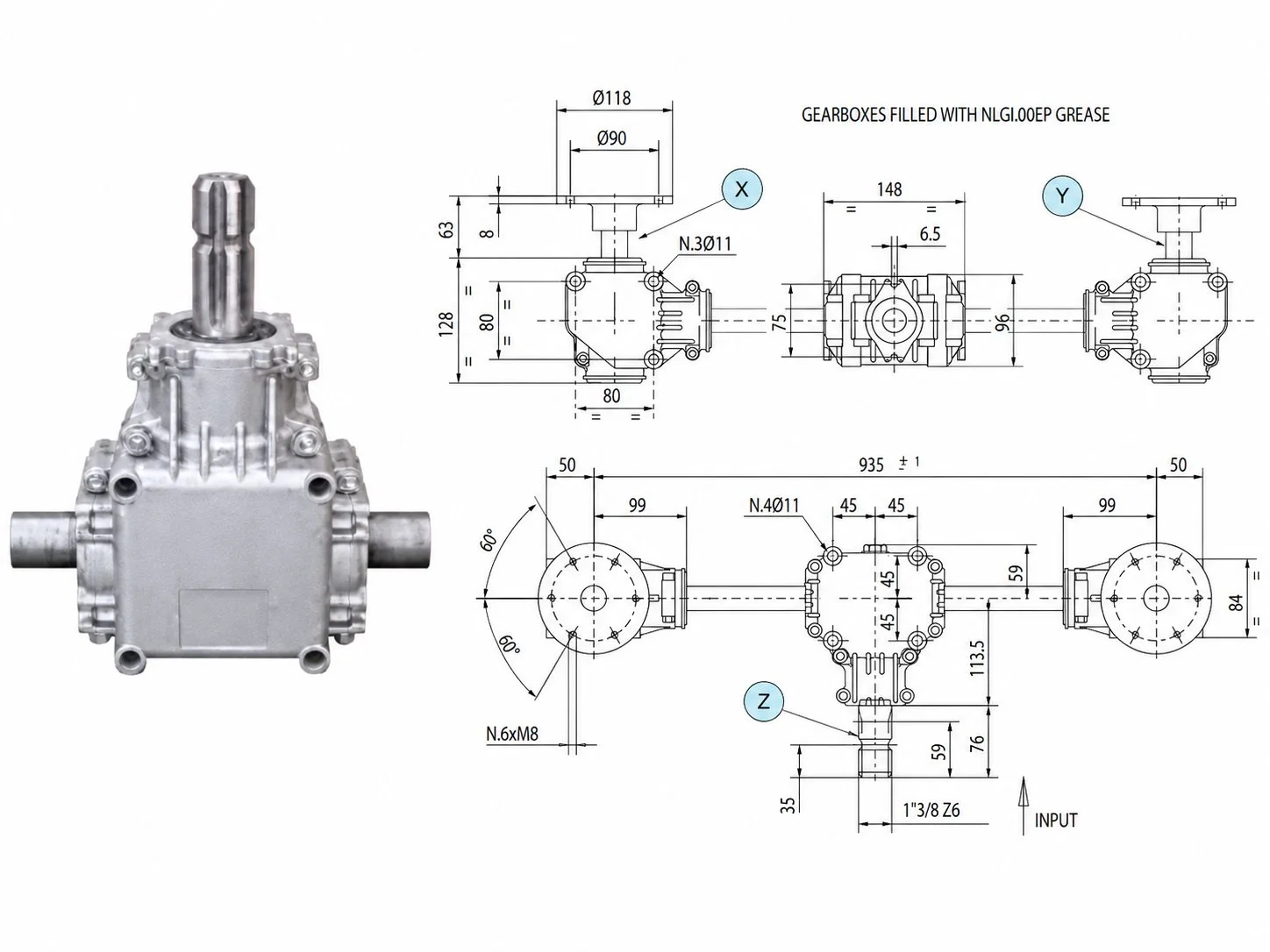
| Parameter | Value |
|---|---|
| Replacement For | Comer Code L-150C |
| Gear Ratio (i) | 1 : 1.35 (speed increaser) |
| Input Speed (N₁) | 540 RPM |
| Output Speed (N₂) | 729 RPM |
| Rated Input Power (P₁) | 9.9 kW (13.3 HP) |
| Output Torque (M₂) | 126 Nm |
| Gear Type | Helical |
| Input Shaft | 1-3/8" – 6 spline (540 RPM standard) |
| Application | Broadcast / Pendulum Spreaders |
Output speed calculated: 540 × 1.35 = 729 RPM. Torque calculated: (9.9 × 1000) / (729 × 2π/60) × η ≈ 126 Nm at approximately 97% gear efficiency.
Housing Material and Gear Heat Treatment
Material selection in a fertilizer spreader gearbox must account for two factors that do not apply to most other agricultural gearbox types: chemical exposure and sustained high-speed operation that distinguish this agricultural gearbox category. Fertilizer dust — particularly ammonium nitrate and urea-based compounds — is mildly corrosive when combined with moisture, and the gearbox housing sits directly beneath the hopper where exposure is continuous.
Housing: Cast Iron vs. Aluminium for Spreader Duty
| Property | Cast Iron (HT200) | Aluminium Alloy (A356) |
|---|---|---|
| Tensile Strength | ≥ 200 MPa | 230–280 MPa |
| Corrosion Resistance (fertilizer exposure) | Good — forms stable oxide layer | Moderate — pitting in high-chloride environments |
| Weight (relative) | Baseline | ~60% lighter |
| Vibration Damping | Superior — graphite flakes absorb energy | Lower |
| Heat Dissipation | Moderate | Better thermal conductivity |
| Cost | Lower | 20–30% higher |
The L-150C uses cast iron — the better choice for spreader environments where corrosion resistance, vibration damping, and cost matter more than saving weight. At 9.9 kW, the thermal load is modest enough that cast iron's lower thermal conductivity is not a limitation.
Gear Material and Surface Hardening
The helical gear pair uses 20CrMnTi alloy steel with carburizing heat treatment. Carburizing produces a hard outer case (HRC 58–62) over a tough, ductile core — the case resists surface pitting from repeated tooth contact, while the core absorbs shock loads without brittle fracture. For the 1:1.35 speed-increase duty, where the output gear rotates faster than the input, surface hardness is the primary wear factor because each output tooth contacts its partner more frequently per revolution.
Seal elements use NBR (nitrile rubber) rated for continuous operation at -30°C to +100°C, covering the full range of Korean seasonal conditions from Gangwon-do winters to Gyeongsang-do summers.
Spreader Types and Field Conditions for the L-150C
The 729 RPM disc output and 126 Nm torque rating define where this gearbox fits in the Korean agricultural landscape:
- ▸ Single-Disc Broadcast Spreaders (800–1,500 L capacity) — The primary application. At 729 RPM, the centrifugal disc throws granular NPK fertilizer in a 10–18 meter working width depending on disc diameter and vane configuration. Korean rice farming cooperatives in Jeolla and Chungcheong provinces use this pto gearbox setup for pre-planting and top-dressing applications on paddy fields.
- ▸ Twin-Disc Spreaders (1,500–3,000 L capacity) — Some larger spreaders use two counter-rotating discs for wider and more uniform coverage. The L-150C can drive a single disc in a twin-disc system where each disc has its own gearbox. At 9.9 kW per unit, a pair draws under 20 kW — within the PTO capacity of most 50+ HP tractors when running through a splitter gearbox.
- ▸ Pendulum Spreaders — Pendulum (oscillating tube) spreaders use a gearbox to convert PTO rotation into oscillating motion. The L-150C's 1:1.35 ratio and compact dimensions fit the narrow housing envelope typical of pendulum designs used on smaller Korean vegetable farms where precision matters more than working width.
- ▸ Lime and Gypsum Application — Beyond chemical fertilizers, the same gearbox drives spreaders distributing agricultural lime (calcium carbonate) or gypsum for soil pH correction. These materials are denser than NPK granules, but the 126 Nm output torque is sufficient for disc-driven distribution at typical application rates of 2–4 tons per hectare.
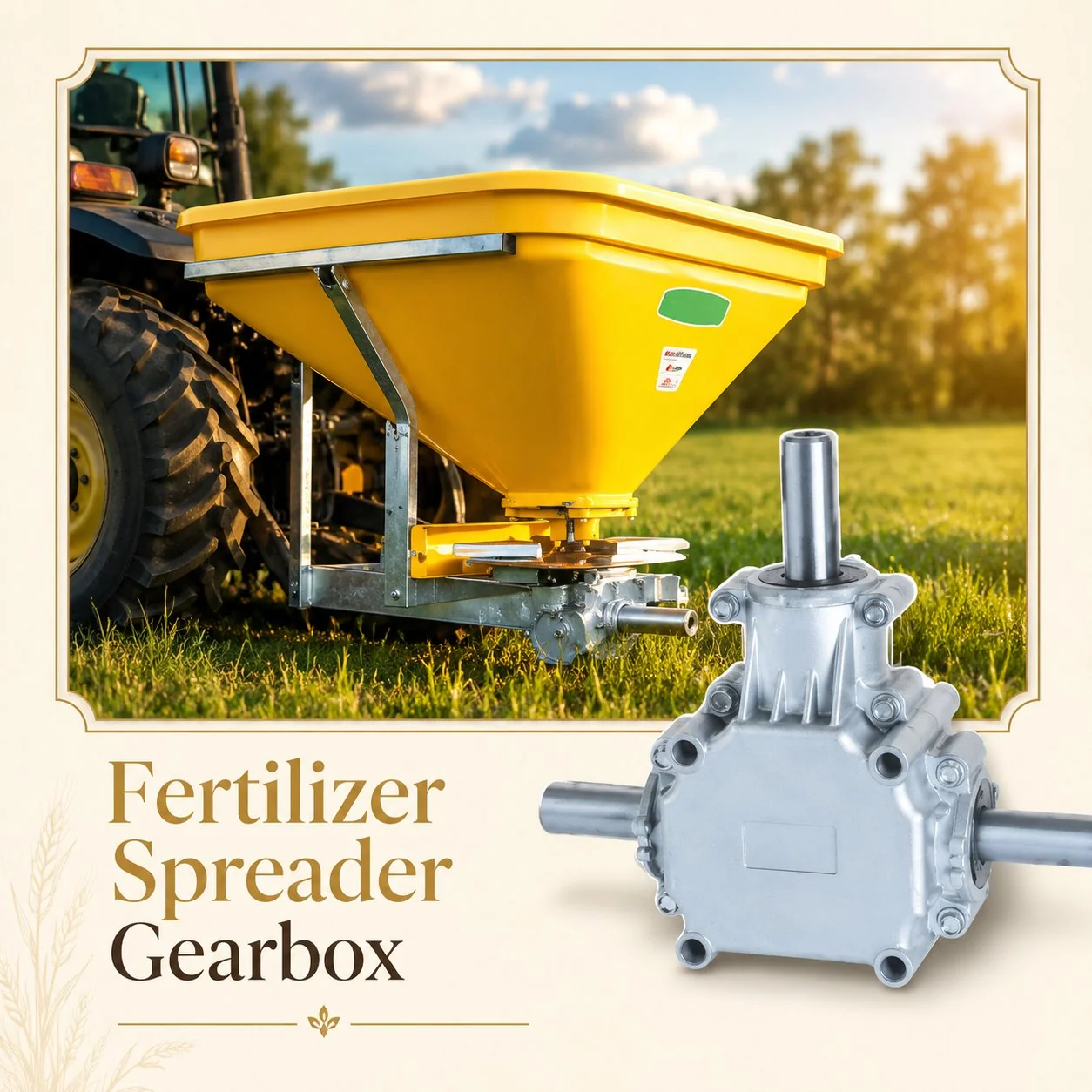
Installation Procedure — L-150C Replacement
Replacing a worn Comer L-150C with the Ever-Power equivalent follows a straightforward sequence. Allow approximately 45 minutes for a first-time pto gearbox swap; experienced technicians complete it in under 30 minutes.
- Disconnect PTO and secure tractor. Disengage the tractor PTO, turn off the engine, remove the ignition key, and apply the parking brake. Never work under or around a spreader with the PTO engaged.
- Remove the spinning disc assembly. Unbolt the distribution disc from the gearbox output shaft. Mark the disc orientation relative to the spreader frame for reinstallation alignment. Set disc and hardware aside on a clean surface.
- Disconnect the PTO drive shaft. Slide the PTO shaft spline out of the gearbox input. Support the shaft so it does not hang from the tractor PTO — unsupported weight on the tractor output seal causes premature leaks.
- Unbolt the old gearbox. Remove the flange mounting bolts securing the gearbox to the spreader frame. Note the bolt pattern, torque marks, and any shim washers — the Ever-Power replacement uses identical dimensions, but shimming may have been added during original installation to correct alignment.
- Clean the mounting surface. Remove old gasket material, dirt, and fertilizer residue from the spreader frame mounting flange. A clean, flat mating surface on this pto gearbox prevents oil leaks and ensures accurate shaft alignment.
- Install the new L-150C gearbox. Position the Ever-Power unit on the frame flange, insert mounting bolts finger-tight, then torque in a cross pattern to the value specified on the spreader frame (typically 35–45 Nm for M10 bolts). Reinstall any shim washers noted in step 4.
- Fill with lubricant. Add the specified gear oil (typically 80-90W GL-5 or ISO VG 150, per your spreader manual) to the fill-plug level. Do not overfill — excess oil generates heat and can push past seals under pressure.
- Reconnect drive shaft and disc. Slide the PTO shaft spline into the input, reattach the spinning disc to the output shaft using the orientation marks from step 2, and torque disc bolts to specification.
- Test run at low RPM. Start the tractor and engage PTO at idle speed. Listen for abnormal noise, check for oil leaks at the housing seams and shaft seals, and verify that the disc spins freely without wobble. Gradually increase to full 540 RPM and run for 2–3 minutes before loading fertilizer.
⚠ Safety reminder: Never reach into the disc area while the PTO is engaged. The disc accelerates to 729 RPM within seconds and has no external guard in most spreader designs. Keep all personnel clear of the discharge zone during test runs.
Gear Drive vs. Belt Drive — Spreader Transmission Compared
Some economy spreaders use belt-and-pulley systems instead of a gearbox to drive the distribution disc. The table below compares both approaches for the factors that affect Korean operators in real field conditions — not laboratory specifications.
| Factor | Gear Drive (L-150C type) | V-Belt / Pulley Drive |
|---|---|---|
| Speed Consistency | Fixed ratio — constant 729 RPM | Slips under load, speed varies 5–15% |
| Spread Pattern Uniformity | Consistent — no slip-induced variation | Variable — belt slip causes uneven throw |
| Wet/Humid Operation | Sealed — unaffected by moisture | Belt grip drops in rain; monsoon risk |
| Maintenance | Oil changes only (500–1000 hr intervals) | Belt tension checks, replacement every 300–600 hr |
| Fertilizer Dust Resistance | Sealed housing — dust stays out | Open — dust accelerates belt wear |
| Service Life | 3,000+ hours | Belt replacement every 300–600 hours |
| Transmission Efficiency | 96–98% | 90–95% (new belt) |
| Initial Cost | Higher | Lower |
For Korean conditions — where monsoon humidity, fertilizer dust exposure, and the need for precise spread uniformity are all significant factors — the gear-driven approach delivers measurably better results over the life of the spreader. For Korean agricultural gearbox buyers, the gear drive is the clear choice for broadcast spreading. The higher upfront cost of a pto drive gearbox is recovered within two to three seasons through reduced belt replacement costs and more uniform fertilizer distribution that eliminates over-application waste.
Pair With the Right PTO Shaft and Accessories
The L-150C connects to the tractor through a pto shaft rated for the 9.9 kW power throughput. For spreader applications, select a Category 1 PTO shaft with a friction clutch (not a shear bolt) for overload protection — spreaders rarely encounter sudden impact loads like cutters do, but a friction clutch prevents drivetrain damage if the disc jams from a foreign object in the hopper.
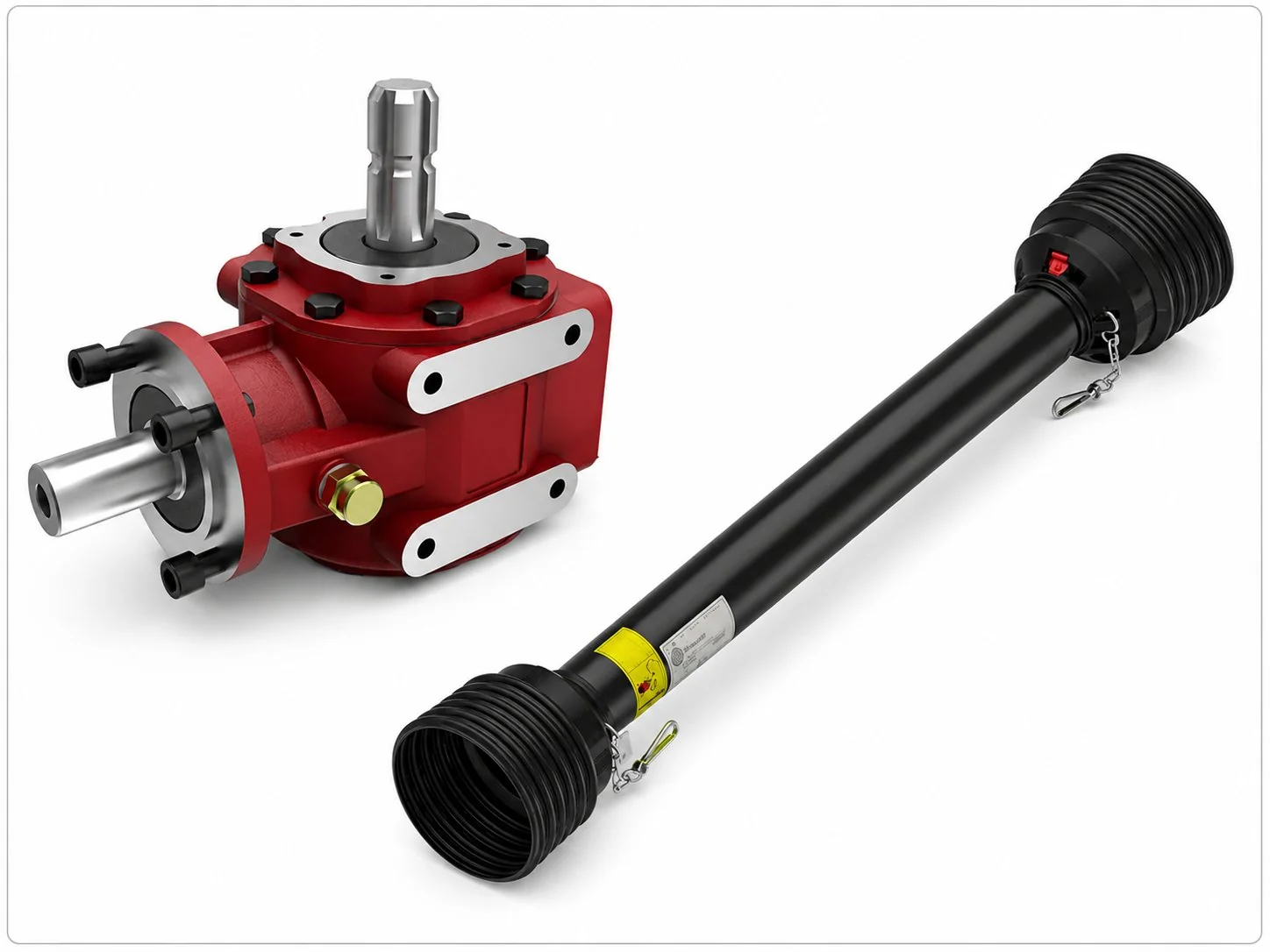
Our complete agricultural gearbox range includes additional spreader gearbox models for twin-disc systems, manure spreaders, and seeder-fertilizer combination machines — all available with Korean domestic delivery from our Incheon warehouse.
Frequently Asked Questions
What makes the L-150C a speed increaser rather than a reducer?
The 1:1.35 ratio means the output spins 35% faster than the input — 540 RPM in, 729 RPM out. Spreader discs need this increased speed to generate the centrifugal force that throws fertilizer granules outward. Most other tractor pto gearbox types are speed reducers that slow the output for high-torque applications like mixers and tillers.
Will this gearbox fit my existing Comer-equipped spreader without modifications?
Yes. The Ever-Power L-150C replacement matches the Comer original on all critical dimensions: mounting flange bolt pattern, shaft spline profile, and housing envelope. No frame drilling, adapter plates, or shaft sleeves are needed.
Can I use this on a 1000 RPM PTO tractor?
The L-150C is rated for 540 RPM input only. At 1000 RPM, the output would reach 1,350 RPM — far above the safe operating speed for standard spreader discs and beyond the bearing speed rating of this housing. Contact our team for 1000 RPM spreader gearbox alternatives.
What lubricant and change interval does the L-150C need?
Use 80-90W GL-5 gear oil or ISO VG 150 (check your spreader manual for the original specification). First change at 50 hours to flush manufacturing residue; subsequent changes every 500–1,000 hours or annually. The low power throughput means thermal degradation is minimal — annual changes are sufficient for most Korean farms.
How does fertilizer dust affect the gearbox over time?
The sealed cast iron housing prevents internal contamination. Externally, fertilizer residue on the housing surface can accelerate surface corrosion if left uncleaned — rinse the gearbox exterior with water after each spreading session, especially when using ammonium-based fertilizers that are hygroscopic and mildly acidic when wet.
Is the spread pattern affected by gearbox condition?
Yes. Worn bearings or damaged gears cause disc speed fluctuation and vibration, both of which distort the spread pattern. If you notice visible striping in the field after fertilizer application, inspect the gearbox for bearing play and gear wear before adjusting spreader vane settings — the gearbox is the most common mechanical cause of pto speed increaser gearboxes related spread-pattern problems.
What Korean Farmers Report
Shin Tae-ho, Rice Cooperative Manager — Iksan, Jeollabuk-do, April 2025
"Our cooperative operates six Comer-type spreaders across 180 hectares of paddy. Two gearboxes failed during spring top-dressing — the worst possible timing. Replaced both with the Ever-Power L-150C and finished the season without further issues. Spread pattern test showed no measurable difference from the original Comer units. Price was about 40% less with next-day delivery."
Oh Mi-kyung, Vegetable Farm Owner — Naju, Jeollanam-do, January 2025
"Small farm, 12 hectares of pepper and garlic. The L-150C on our 30 HP Daedong tractor has been running for two full seasons — maybe 200 hours total. Gearbox is quiet, no leaks, and the disc speed feels steady. I rinse it after every use because the fertilizer residue is corrosive. So far, housing looks clean. A solid little fertilizer spreader gearbox for the price."
Ryu Chang-su, Agricultural Equipment Technician — Asan, Chungcheongnam-do, November 2024
"Installed about 30 of these L-150C replacements for different customers in the past year. Bolt pattern matches the Comer original every time — no shimming needed on any of the installations. Only callback was for a customer who overfilled the oil and got a weeping seal, which resolved itself after draining to the correct level."
Lim Hyun-soo, Lime Application Contractor — Andong, Gyeongsangbuk-do, August 2024
"We spread agricultural lime for soil correction — 3 to 4 tons per hectare, which is heavier than NPK granules. The 126 Nm output handles the disc load without stalling. After 400 hours in dusty limestone conditions, the sealed housing kept the internals clean. Good value for the application."
Ahn Soo-yeon, Organic Farming Association — Goesan, Chungcheongbuk-do, June 2024
"We use these on our organic compost spreader setup — adapted a broadcast spreader to distribute pelleted compost. The consistent 729 RPM disc speed gives us even coverage without the hot spots we were getting from our old belt-driven system. Switching to gear drive was the right decision for our operation."
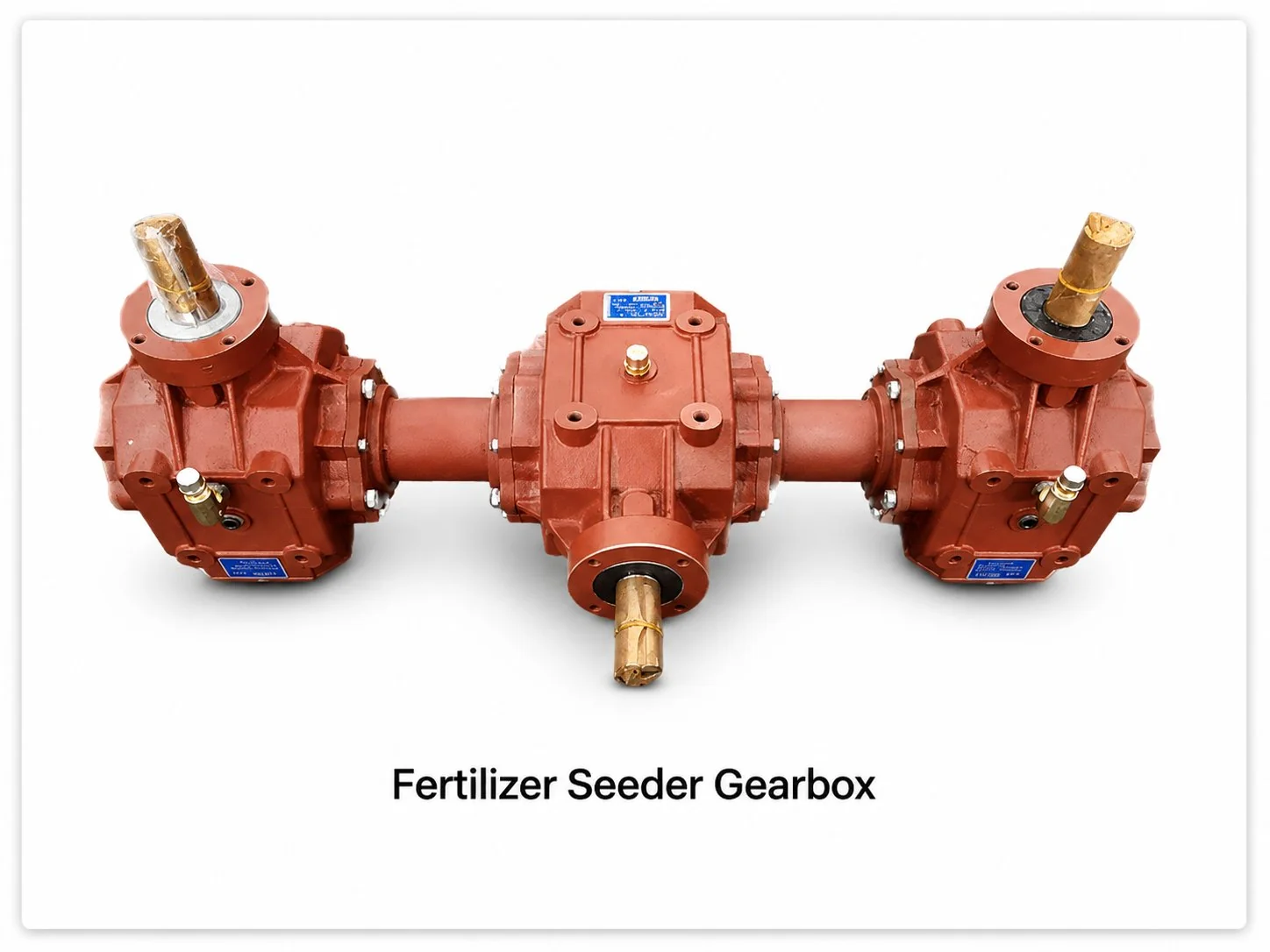
Additional information
| Editor | Cxm |
|---|
Related products
-
Fertilizer Spreader Gearbox L-25J | Comer Replacement PTO
-
XL Series Gearbox for Agricultural Machinery
-
Agriculture Gearbox for Hay Tedder EP03
-
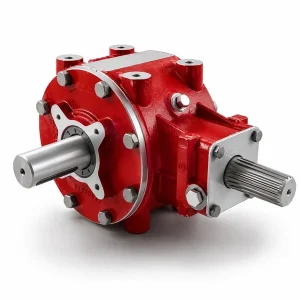
Round Baler Gearbox Replaces the Comer Code T-304A
-
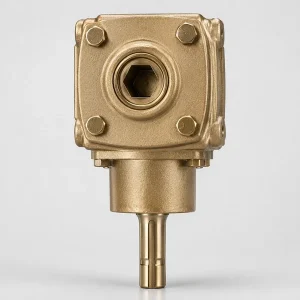
Manure Spreader Gearbox TB-19C — 28 HP Dual-Configuration Drive with 1:1.46 Ratio for Paddle and Beater Applications
-
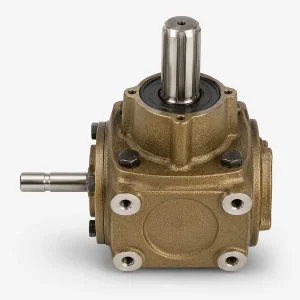
Angular Gearbox T-19A — 28 HP Multi-Application Right-Angle Drive with 1.46:1 Ratio for Tillers, Mowers, and Spreaders
-
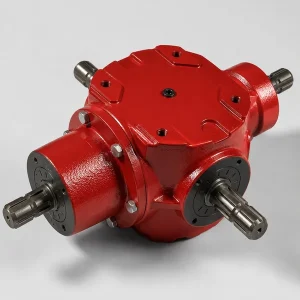
Round Baler Gearbox EP2100-T3 — 80 HP Helical Speed Reducer with 2.1:1 Ratio for Baling and Harvesting Equipment
-
EP-RC-30 Rotary Cutter Gearbox — 40 HP Bevel Gear Speed Increaser for Agricultural Mowing