What Is a Grain Storage Transportation Gearbox?
A grain storage transportation gearbox is the PTO-driven or motor-driven gear unit that powers the augers, conveyors, bucket elevators, and bin unloading systems used to move grain from the field (combine harvester, grain cart) through temporary or permanent storage (bins, silos, flat stores) and onward to processing or market (trucks, rail cars, shipping terminals). These gearboxes span the entire post-harvest grain logistics chain — from the portable swing-away auger that loads the first bin to the permanent leg elevator that feeds the drying system and the bin sweep auger that reclaims grain for outloading.
The grain storage transportation gearbox faces a unique combination of operating demands: extended continuous duty (16 to 20 hours per day during harvest), abrasive grain-dust contamination, seasonal temperature extremes (autumn cold starts followed by sustained hot-day operation), and the absolute requirement for zero unplanned downtime during the time-critical harvest window. A gearbox failure during harvest does not simply delay a task — it can result in unharvested grain left standing in the field, exposed to weather damage that reduces grade and value. This harvest-critical reliability requirement drives every engineering decision in the grain handling gearbox specification.
Four Grain-Handling Applications, Four Gearbox Profiles
The PTO gearbox requirements vary across the four main grain-handling equipment types. Portable grain augers (swing-away, transport augers) use a right-angle bevel gearbox at the lower intake to convert horizontal PTO rotation to the auger shaft axis, typically at 1:1 to 1:1.5 ratio producing 360 to 540 RPM auger speed. Grain bin unloading augers (sweep augers, centre-discharge augers) use compact right-angle gearboxes mounted inside or beneath the bin floor, operating at lower speed (180 to 300 RPM) and higher torque for moving the heavy grain column from the bin floor to the discharge point.
Bucket elevators (leg elevators) use inline or right-angle gearboxes to drive the head pulley at 60 to 120 RPM — requiring 1:4.5 to 1:9 ratio (often through a two-stage gearbox or gearbox-plus-belt arrangement). Belt and chain conveyors use inline reducers at 1:2 to 1:5 ratio to drive the head roller at the speed that matches the required grain throughput rate. Each application places different demands on the grain storage transportation gearbox in terms of speed, torque, duty cycle, and environmental exposure.
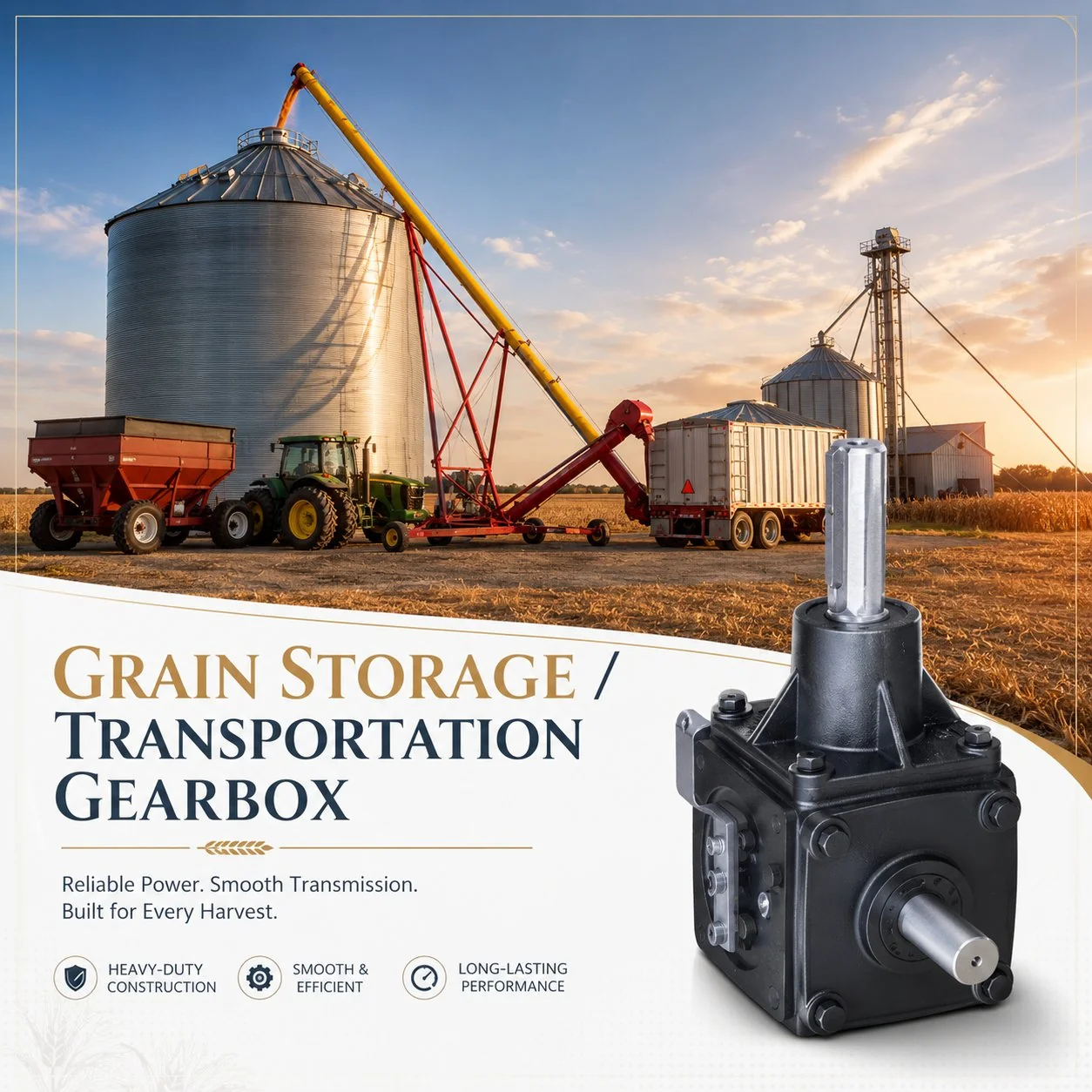
Grain storage transportation gearbox — right-angle drive for auger and conveyor applications
Grain Dust: The Silent Gearbox Threat
Grain dust is one of the most abrasive and penetrating contaminants that any grain storage transportation gearbox encounters. Wheat, maize, barley, and rice produce fine silica-bearing dust particles (10 to 100 micrometres) during handling — particles small enough to pass through standard breather caps and worn shaft seals, yet hard enough (6 to 7 on the Mohs scale for the silica component) to abrade precision-ground gear tooth surfaces and bearing raceways. Once inside the gearbox, grain dust mixes with the lubricant to form an abrasive paste that accelerates gear and bearing wear by 5 to 15 times compared to clean-oil operation — transforming a 10-year gearbox into a 2 to 3 year component if sealing and breather integrity are not maintained.
Grain dust in suspension is an explosion hazard — a risk that extends to the grain storage transportation gearbox. A gearbox that overheats due to bearing failure, low oil, or excessive load can reach surface temperatures above 200 degrees Celsius — well above the ignition threshold for grain dust clouds (typically 400 to 500 degrees Celsius for a cloud, but hot-surface ignition of accumulated dust layers can occur at 200 to 300 degrees). Maintaining correct oil level, functioning seals, and routine temperature monitoring is not just a gearbox-protection measure — it is a fire and explosion safety requirement in grain-handling facilities. Any reputable agricultural gearbox supplier serving the grain sector must verify that gearbox surface temperatures remain below ignition thresholds under all rated operating conditions.
Double-lip seals with grease-purged intermediate chamber. NBR is acceptable (no chemical exposure). Labyrinth or V-ring dust excluders as outer barrier. Re-grease intermediate chambers every 50 to 100 hours during harvest.
Desiccant breather filters (not standard open caps) are mandatory for grain-handling environments. A standard breather cap ingests grain dust with every thermal breathing cycle. Desiccant breathers trap particles and moisture simultaneously, extending oil life by 2 to 3 times.
Gear and Bearing Design for Extended Continuous Duty
During the harvest peak, a grain handling PTO gearbox may run 16 to 20 hours per day for 2 to 6 weeks — accumulating 200 to 600 operating hours in a single harvest season. This sustained continuous duty at moderate to high power demands gear and bearing designs with generous fatigue margins. Case-carburised spiral bevel gears (58 to 62 HRC surface, 30 to 35 HRC core) with gear module 4 to 6 mm provide the wear resistance and fatigue strength needed for multi-season harvest duty. The gear module is selected for the specific application: 4 mm for portable augers (moderate torque, compact housing), 5 to 6 mm for bucket elevators and conveyors (higher torque, sustained loading).
The grain conveyor gearbox bearing arrangement must accommodate the specific loading of each grain-handling application. Portable grain augers generate combined radial load (from the bevel mesh) and axial thrust (from the auger flight pushing grain upward through inclined tubes). Tapered roller bearings at the output position handle this combined loading. Bucket elevator gearboxes must resist the sustained belt tension that pulls the head shaft — a constant unidirectional radial load that produces different fatigue patterns from the alternating loads in tillage or mowing gearboxes. For bucket elevator gearbox applications, bearing L10 life must be calculated for the sustained continuous loading at full throughput — not the average loading that includes idle periods between loads.
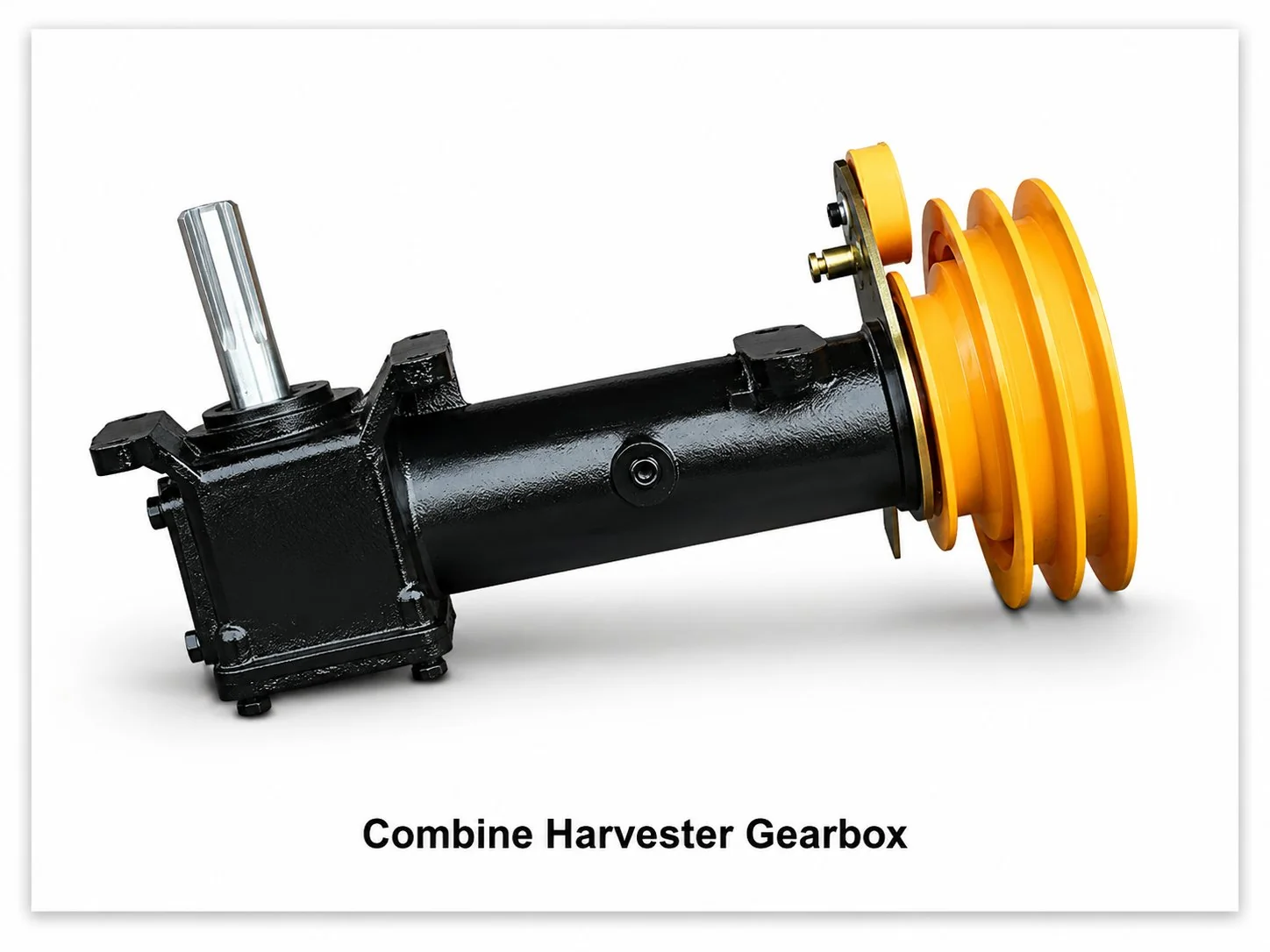
Technical Specifications at a Glance
PTO Driveline and Start-Up Loading
Starting a loaded grain auger or elevator from rest generates the highest torque event in the grain-handling duty cycle. A vertical auger filled with standing grain (50 to 100 kg per metre of auger length) must accelerate this entire grain column from rest — producing a start-up torque spike of 2 to 4 times the continuous running torque that lasts 3 to 5 seconds until the grain begins flowing. The PTO driveline must be rated for this start-up transient, and the tractor engine must be at sufficient RPM to deliver the required torque without stalling. Engaging the PTO at idle speed (800 RPM engine) and then gradually increasing to operating speed distributes the start-up loading over a longer period and reduces the peak torque demand on the gearbox by 30 to 50 percent compared to engaging at full operating RPM.
Series 4 PTO drivelines are adequate for portable augers up to 25 HP. Series 6 is recommended for larger augers and elevator systems (25 to 50+ HP) where the start-up transient and sustained continuous loading approach the fatigue capacity of lighter driveline series. Slip clutch protection on the driveline protects the grain storage transportation gearbox from the overload events that occur when the auger intake is plugged with damp grain, foreign material blocks the elevator boot, or a belt conveyor jams from grain spillage over the side rails.
Grain Storage Gearbox Oil and Lubrication Strategy
Synthetic PAO EP ISO VG 220 is the recommended grain storage gearbox oil for all grain-handling applications. The extended continuous duty (16 to 20 hours per day during harvest) produces sustained oil temperatures of 55 to 80 degrees Celsius — moderate but persistent enough that synthetic base stock provides meaningful oxidation-life advantage over mineral oil. More importantly, synthetic oil maintains its viscosity more consistently across the wide temperature range encountered during harvest — from cold early-morning starts (5 to 10 degrees Celsius ambient in autumn) to sustained afternoon operation (30 to 35+ degrees ambient).
Oil change intervals for grain-handling gearboxes should be shorter than the standard 500-hour agricultural specification because of the grain-dust contamination risk. Even with desiccant breathers and properly maintained seals, trace amounts of fine grain dust inevitably enter the agricultural gearbox over extended operating periods — and the abrasive effect of even low concentrations of silica particles accelerates gear and bearing wear. Change oil every 250 to 400 hours or at the end of each harvest season (whichever comes first). Inspect the magnetic drain plug for metallic particles — fine grey paste is normal; coarse chips or abrasive-cut particles (indicating grain-dust contamination) require investigation of the seal and breather integrity before refilling with fresh oil.
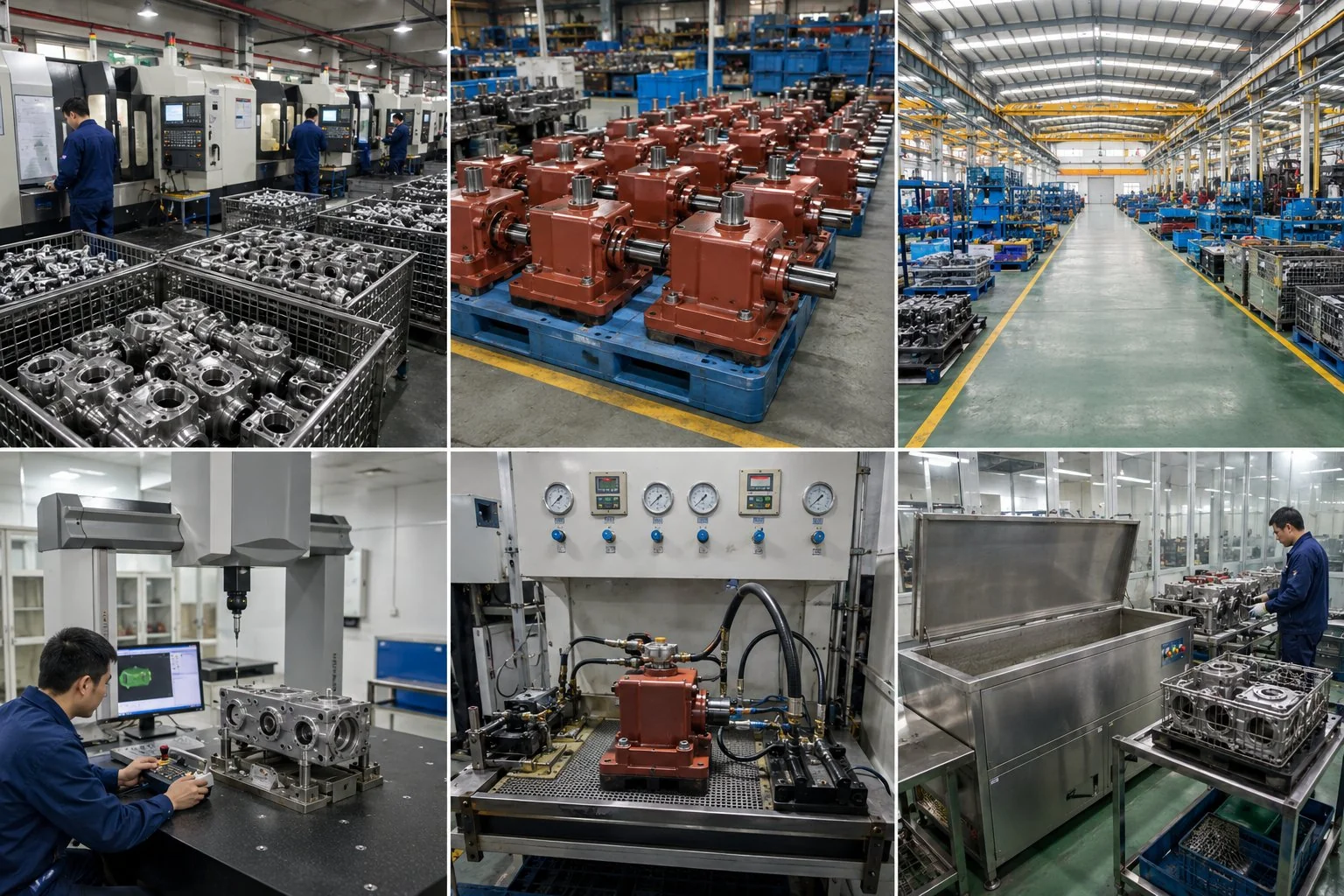
Electric Motor Drive: Fixed-Installation Grain Handling
While portable grain augers are typically PTO-driven, permanent grain-handling installations (elevator legs, bin unloading systems, fixed conveyor lines) are more often driven by electric motors through inline helical or worm-gear reducers. The grain storage transportation gearbox in a motor-driven installation receives input at 1,450 RPM (50 Hz) or 1,750 RPM (60 Hz) from the motor — significantly higher than the 540 RPM PTO input — and must reduce this to the 60 to 300 RPM output speed required by the driven equipment. The higher input speed means the gearbox bearings accumulate fatigue cycles 2.7 to 3.2 times faster than a PTO-driven equivalent at the same power — requiring higher-speed-rated bearings and more frequent maintenance intervals.
Motor-driven installations also operate for longer total annual hours than seasonal PTO-driven equipment. A bucket elevator in a commercial grain terminal may run 3,000 to 5,000 hours per year — 5 to 10 times the annual hours of a farm portable auger. The grain elevator gearbox for these high-duty installations requires industrial-grade gear and bearing specifications (minimum L10 bearing life of 25,000+ hours at rated load) rather than the seasonal agricultural specifications adequate for farm equipment. Oil cooling provisions (finned housing or circulating oil cooler) may be needed for installations running above 30 kW continuous in ambient temperatures exceeding 30 degrees Celsius.
For operations transitioning from manual PTO-driven grain handling to automated motor-driven systems, the agricultural gearbox originally fitted to the portable equipment is typically not suitable for the higher input speed and extended annual duty of the fixed installation. A purpose-designed motor-mount reducer — sized for the specific motor speed, power rating, and annual operating hours — provides the bearing fatigue life and thermal capacity that continuous industrial-grade grain handling demands. Our engineering team can specify motor-driven grain handling gearboxes matched to any standard IEC or NEMA frame motor for permanent installation applications.
Harvest-Season Maintenance Schedule
Full oil change with synthetic VG 220. Replace desiccant breather element. Inspect all shaft seals and dust excluders — replace any showing wear. Grease PTO driveline U-joints. Verify slip clutch calibration. Run each auger and elevator unloaded for 5 minutes, listening for bearing noise.
Oil level check before each shift. Visual inspection for leaks. Touch-test gearbox temperature during operation (should be warm but hand-tolerable). Clean accumulated grain dust from gearbox exterior and seal areas. Re-grease PTO driveline U-joints every 8 to 10 operating hours.
Clean all grain dust from gearbox and equipment thoroughly — residual dust absorbs moisture and accelerates off-season corrosion. Change oil if approaching 400 hours. Top up oil to maximum. Apply grease to exposed shafts. Store under cover. Record total harvest hours for next-season planning.
Aftermarket Grain Transport Gearbox Replacement
Grain transport gearbox replacement is driven by bearing fatigue from extended continuous duty and abrasive wear from grain-dust contamination. A well-maintained gearbox with functioning desiccant breather and clean seals typically lasts 5 to 15 years (2,000 to 6,000 operating hours). Neglected sealing or standard open breathers can reduce life to 2 to 5 years. Cross-reference parameters include the input shaft configuration (PTO spline or motor flange), the output shaft size and coupling type, the mounting arrangement, the gear ratio, and the power rating.
Our engineering team maintains cross-reference data for major grain-handling equipment brands. Both complete gearbox assemblies and individual gear, bearing, and seal kits are available. For harvest-critical replacements, we maintain stocked inventory of the most commonly specified grain auger gearbox ratios and sizes to minimise delivery lead time during the time-sensitive harvest window when every hour of downtime risks crop quality loss. Contact us with your equipment model, throughput capacity, and application requirements for accurate specification matching and delivery scheduling.
Frequently Asked Questions
Move More Grain, Lose No Time
From portable field augers to permanent elevator systems — our grain storage transportation gearboxes deliver the harvest-season endurance, dust-sealed reliability, and throughput capacity that efficient grain logistics demands.
Editor: Cxm