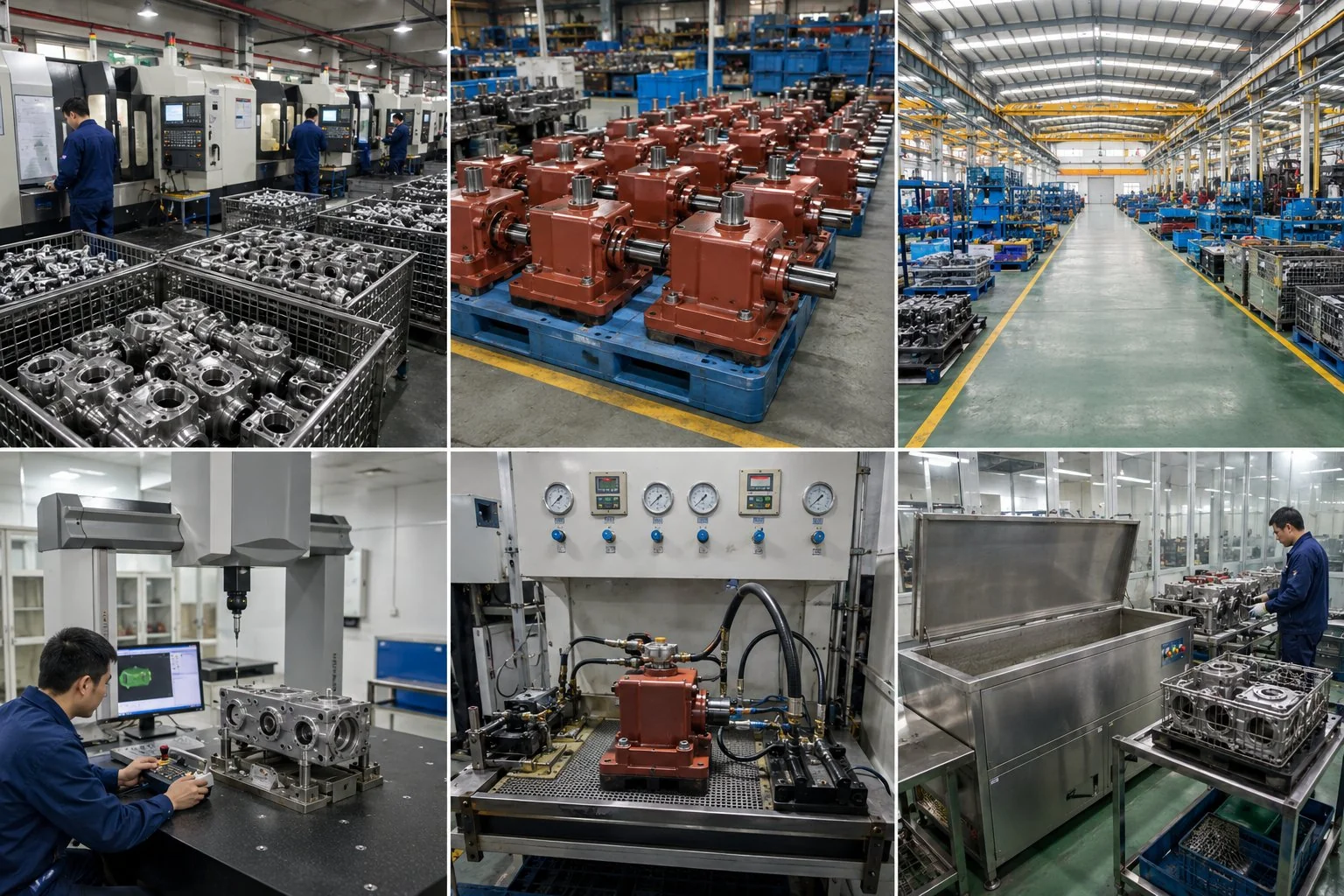
Replacement of Comer T-311J — Flail Mower Gearbox with Freewheel

This flail mower gearbox replaces the Comer Code T-311J, a 1:3 speed-increase unit with an integrated freewheel mechanism that functions exclusively as an accelerator in the specified rotation direction. The T-311J delivers 50 HP (36.8 kW) through a 1:3 ratio that triples the 540 RPM PTO input to 1620 RPM at the flail rotor, producing 21 daNm of output torque from a 20.5 kg cast iron housing with 1.2 liter oil capacity.
Replacement of Comer T-311J — 1:3 Speed-Increase Flail Mower Gearbox with Freewheel
Choosing the right gearbox for a flail mower is fundamentally different from selecting one for a rotary cutter or disc mower. The flail rotor demands high speed — typically 1500-1800 RPM — to generate the centrifugal force that swings the flail hammers outward and drives them through dense vegetation, brush, and woody growth that would stall lighter cutting systems. The Comer T-311J achieves this through a 1:3 speed-increase ratio that triples the standard 540 RPM PTO input to 1620 RPM at the flail rotor shaft, making it one of the standard PTO gearbox configurations in European-manufactured flail mowers.
This replacement matches the T-311J's complete specification: the 1:3 ratio, the freewheel mechanism, the shaft interfaces, the mounting pattern, and the 50 HP power capacity. The freewheel is a critical safety and mechanical protection feature — it allows the heavy flail rotor (which carries significant rotational inertia at 1620 RPM) to coast down naturally when the operator disengages the PTO, rather than feeding reverse torque back through the gearbox and PTO shaft to the tractor. Without a freewheel, sudden PTO disengagement creates a destructive torque reversal that damages driveline components and creates a safety hazard for the operator.
Korean equipment operators replacing failed or worn Comer T-311J gearboxes need exact specification matching because the freewheel direction, the gear ratio, and the shaft dimensions are all interdependent — installing a gearbox with the wrong freewheel direction or a different ratio changes the flail rotor behavior in ways that range from reduced cutting performance to dangerous mechanical failure. This agricultural gearbox replacement provides that exact match for the substantial installed base of Comer-equipped European flail mowers operating on Korean farms, road maintenance fleets, and vegetation management contractors.
Complete Technical Specifications
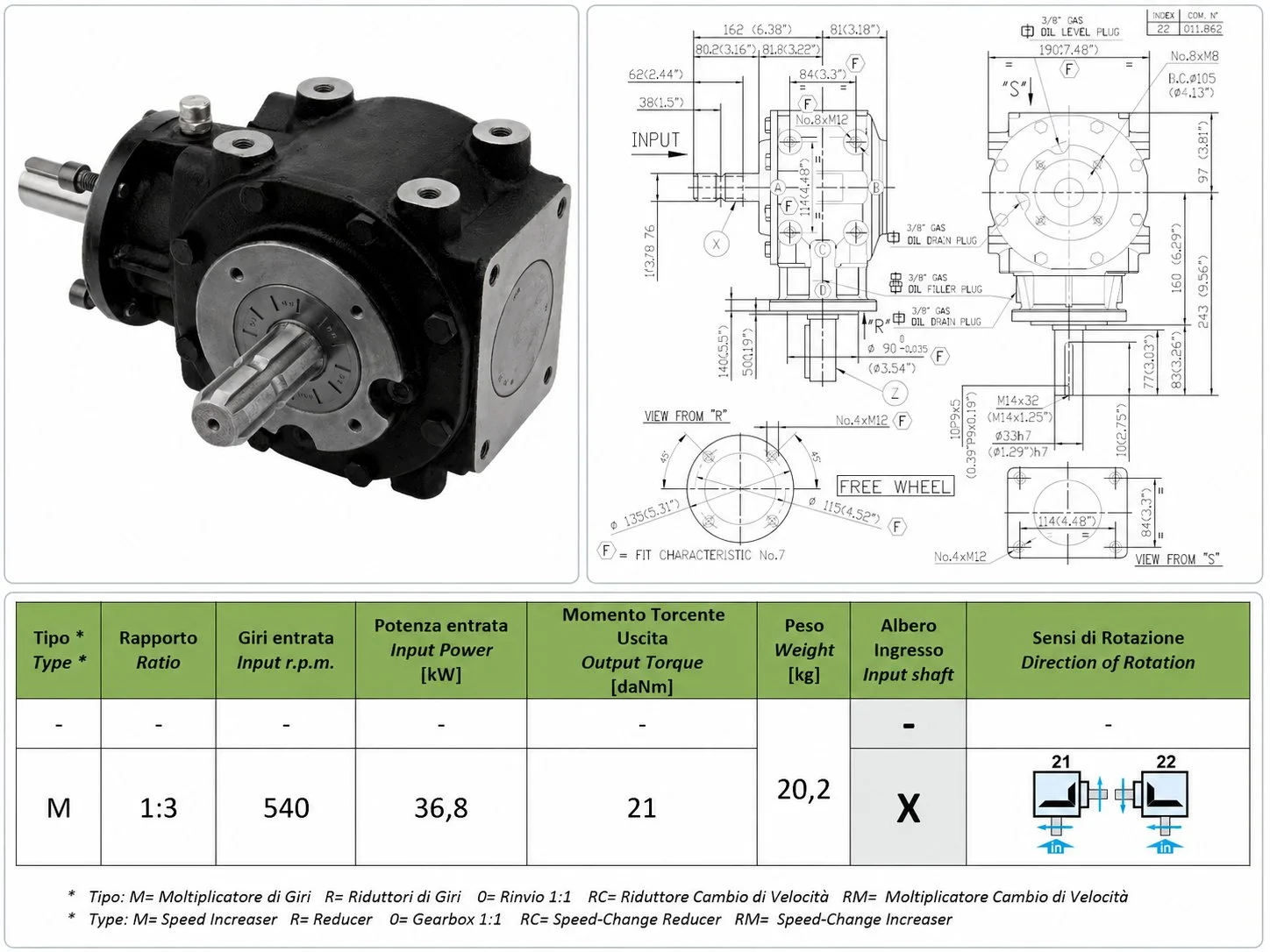
| Parameter | Specification |
|---|---|
| Replaces | Replacement of Comer Code T-311J (1:3) |
| Gear Ratio | 1 : 3 (Speed Increase) |
| Gear Arrangement | Teeth 21-22 (Spiral Bevel) |
| Input Power (max) | 36.8 kW / 50 HP |
| Input Speed | 540 RPM (standard PTO) |
| Output Speed | 1,620 RPM |
| Output Torque | 21 daNm |
| Input Shaft (X) | 1-3/8" Z6 (6-spline) |
| Output Shaft (Z) | 33H7 (precision bore) |
| Freewheel | Yes — accelerator in specified direction only |
| Housing Material | Cast Iron |
| Weight | 20.5 kg |
| Oil Capacity | 1.2 liters (ships without oil) |
| Oil Specification | SAE 80W-90 |
| Application Range | Flail mowers, rotary tillers, various agricultural |
How to Determine If the T-311J Is the Correct Replacement
Installing the wrong gearbox on a flail mower creates dangerous operating conditions. The T-311J has specific characteristics — a 1:3 speed increase, a directional freewheel, and defined shaft interfaces — that must match the mower's requirements exactly. Use the following selection criteria to confirm compatibility before purchasing.
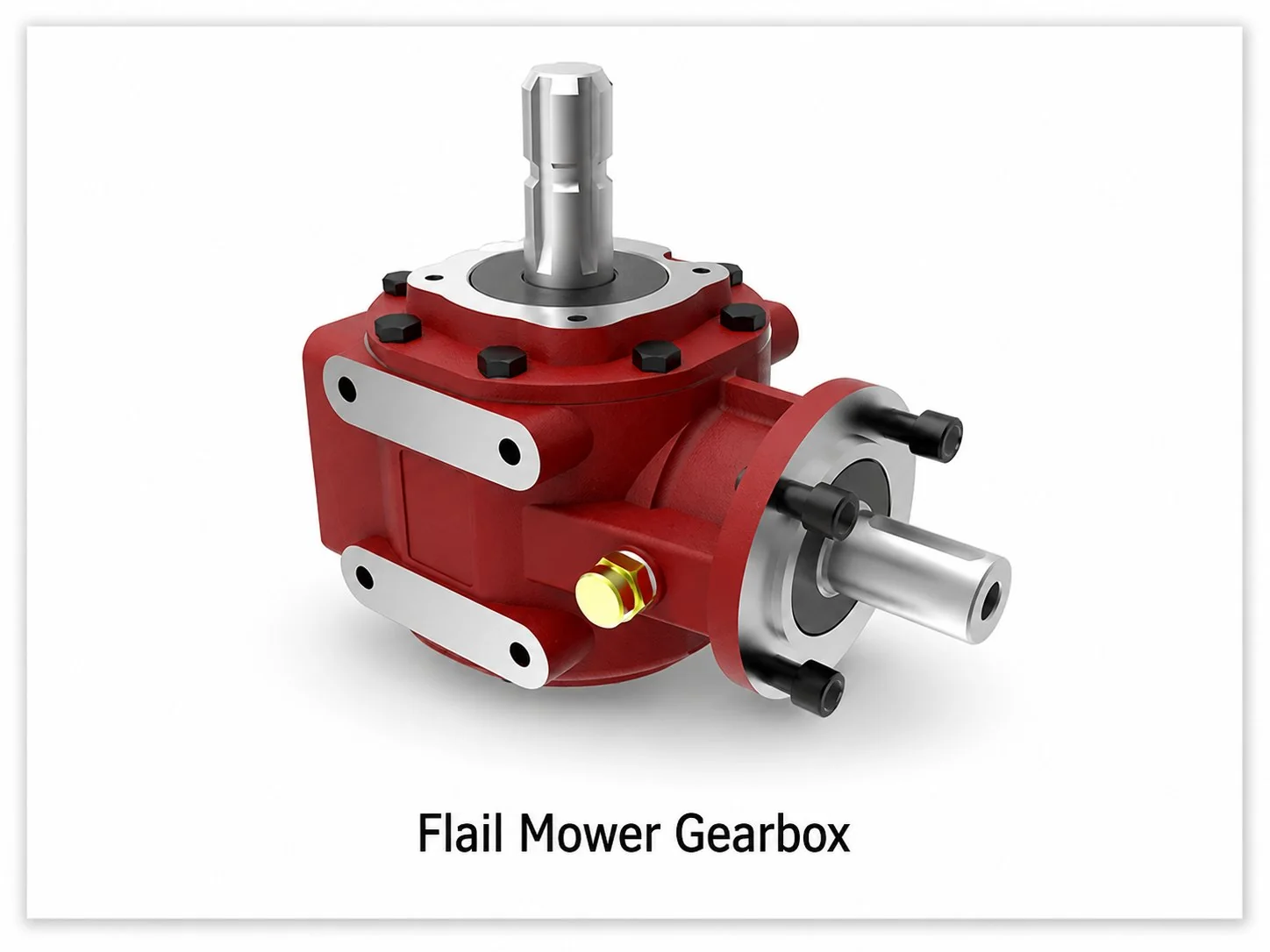
Step 1: Confirm the Original Gearbox Code
Locate the identification plate on the existing gearbox. The Comer code T-311J should be stamped or printed on the housing. If the plate is damaged or unreadable, measure the shaft dimensions: input shaft X must be 1-3/8 inch with 6 splines (Z6 profile), and output shaft Z must be 33mm H7 tolerance. These dimensions uniquely identify the T-311J within the Comer product range. If your existing gearbox has different shaft dimensions, it is a different Comer model requiring a different replacement.
Step 2: Verify the Freewheel Direction
The T-311J freewheel engages in one rotation direction only — it acts as an accelerator (speed increase) when the input shaft rotates in the specified direction and freewheels (disengages) when the direction reverses. Before installation, verify that the freewheel engagement direction matches your mower's rotor rotation. Incorrect freewheel direction means the gearbox will not transmit power to the rotor. The freewheel direction is factory-set and cannot be reversed in the field.
Step 3: Match the Power Requirement
The T-311J handles a maximum of 50 HP (36.8 kW) input power. Calculate your tractor's actual PTO output at operating RPM — not the engine horsepower, which is always higher than PTO horsepower due to drivetrain losses. Korean tractors in the 60-70 engine HP class typically deliver 45-55 HP at the PTO, placing them within the T-311J's operating envelope. Tractors exceeding 50 HP at the PTO require a higher-capacity flail mower gearbox.
Step 4: Confirm Mounting Compatibility
Measure the mounting bolt pattern on the mower's gearbox housing seat. The T-311J uses a specific bolt circle diameter and bolt count that matches Comer's standard flail mower gearbox mounting interface. If the bolt pattern does not match, the gearbox is for a different mower model regardless of shaft compatibility. Also verify the gearbox housing depth — the mower frame provides a specific pocket depth for the gearbox, and a mismatched housing depth prevents proper seating or creates clearance problems with the rotor shaft.
Selection Warning: Do not substitute a standard 1:3 bevel gearbox without a freewheel for the T-311J. The freewheel is a safety-critical component. Without it, PTO disengagement sends the rotor's stored kinetic energy backward through the driveline, potentially shearing the PTO shaft, damaging the tractor's PTO clutch, or causing the driveshaft to whip dangerously. Always use a freewheel-equipped replacement.
Flail Mower Gearbox vs. Rotary Mower Gearbox — Choosing the Right System
Korean equipment operators frequently face the decision between flail mower and rotary mower systems when selecting vegetation management equipment. The gearbox differences between these systems reflect fundamental differences in cutting philosophy, material handling, and operational demands.
| Performance Factor | Flail Mower Gearbox (T-311J) | Rotary Mower Gearbox |
|---|---|---|
| Horsepower Rating | Higher (50 HP for this class) | Lower (typically 30-40 HP) |
| Torque Rating | Higher (21 daNm) | Lower |
| Output Speed | Lower rotor RPM (1620) | Higher blade RPM (2000+) |
| Durability | Higher (heavier construction) | Lower |
| Equipment Cost | Higher | Lower |
| Freewheel Required | Yes (high rotor inertia) | Optional |
| Vegetation Type | Brush, woody growth, dense weeds | Grass, light vegetation |
| Cut Quality | Shreds finely (mulch-quality) | Chops coarsely |
| Projectile Risk | Lower (enclosed rotor) | Higher (exposed blade) |
The fundamental decision: if the vegetation is predominantly grass and light weeds, a rotary mower system costs less and cuts faster. If the vegetation includes brush, woody growth, dense weed stands, or any material exceeding 15mm stem diameter, the flail mower system — driven by a higher-torque, freewheel-equipped gearbox like the T-311J — delivers the shredding force needed to process tough material into fine mulch. Korean roadside maintenance contractors, abandoned farmland reclamation operations, and orchard floor management applications consistently favor flail systems for their ability to handle mixed vegetation without the blockage and debris-throwing problems that rotary mowers experience in the same conditions.
Power Efficiency and Performance Analysis
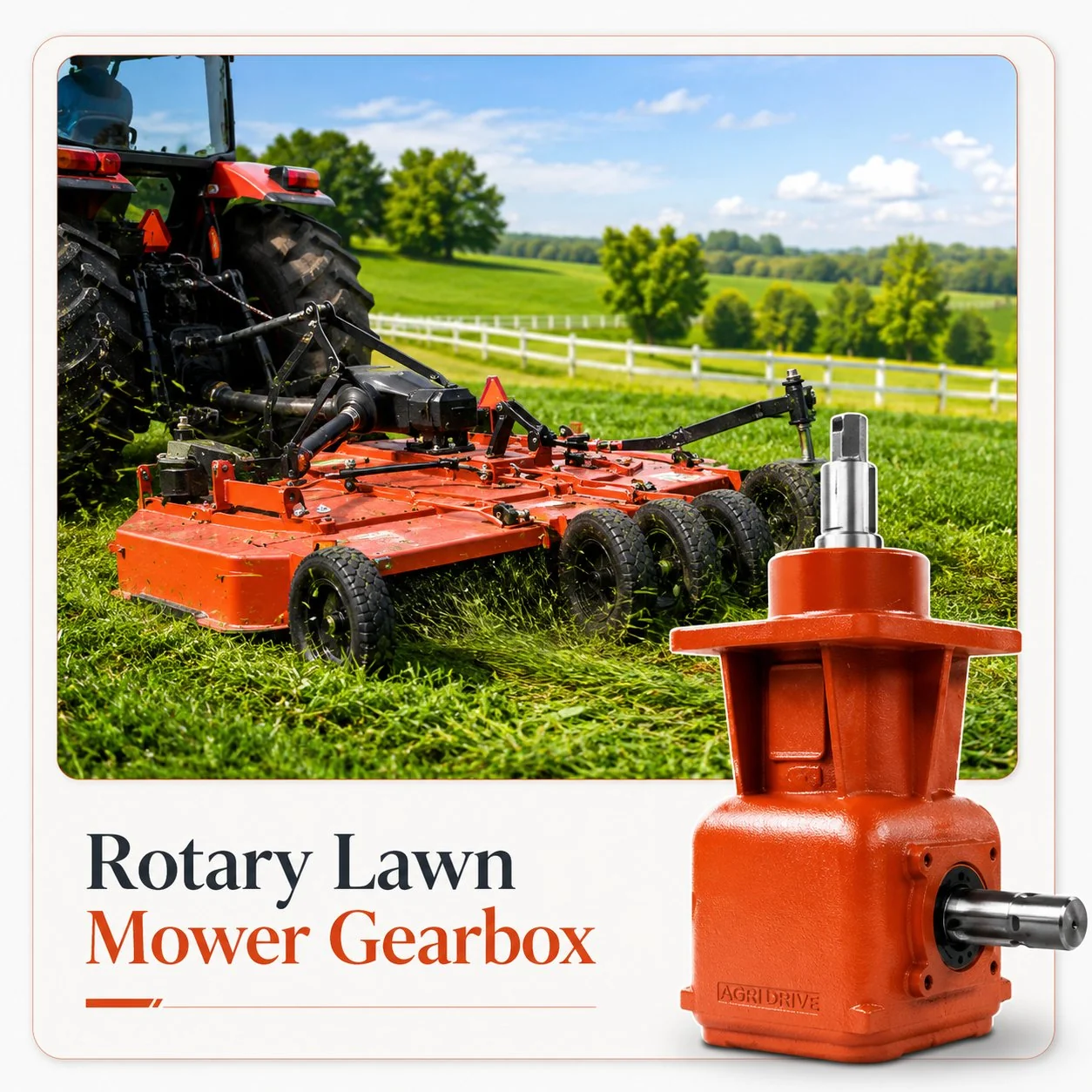
The 1:3 Speed Multiplication and Its Efficiency Impact
The 1:3 ratio is the highest speed multiplication commonly used in agricultural PTO gearboxes. At this ratio, the spiral bevel gear pair operates at a 3:1 tooth count difference, and the smaller gear (pinion) rotates at the higher 1620 RPM while handling the full 50 HP power flow. The mechanical efficiency of the T-311J's spiral bevel gear set at this ratio is approximately 95-96%, meaning that of the 36.8 kW input power, approximately 35-35.3 kW reaches the flail rotor. The 1.5-1.8 kW loss converts to heat in the gear mesh and bearings, which the 1.2 liter oil volume and cast iron housing dissipate effectively during normal duty cycles.
Why Spiral Bevel Gears Matter at High Speed Ratios
At 1620 RPM output speed, the gear tooth engagement frequency is substantially higher than in 1:1 or 1:1.5 ratio gearboxes. Spiral bevel gears engage gradually — each tooth pair comes into contact along a curved path rather than the sudden full-face engagement of straight bevel gears. This gradual engagement reduces the impact loading per tooth contact, distributes the load across a wider gear face area, and produces less noise and vibration at the high rotational speeds the T-311J operates at. For Korean flail mower operators running 4-8 hour daily shifts, the reduced vibration from spiral bevel gearing materially improves operator comfort and reduces fatigue.
Freewheel Efficiency Contribution
The freewheel mechanism contributes a small additional friction loss during power transmission — approximately 0.5-1% — as the roller or sprag elements maintain engagement under torque loading. However, this minor efficiency penalty is far outweighed by the mechanical protection the freewheel provides. Without it, every PTO disengagement event would subject the gear teeth, bearings, and shafts to a reverse torque pulse proportional to the rotor's kinetic energy. Over the gearbox's service life, the cumulative damage from these reverse pulses would far exceed the energy cost of freewheel friction, making the freewheel a net positive for both safety and gearbox longevity.
| Power Flow Stage | Input | Loss | Output |
|---|---|---|---|
| PTO Shaft to Input | 36.8 kW | ~0.2 kW (seal, bearing) | 36.6 kW |
| Freewheel Engagement | 36.6 kW | ~0.3 kW (roller friction) | 36.3 kW |
| Spiral Bevel Gear Mesh (1:3) | 36.3 kW | ~1.3 kW (tooth mesh) | 35.0 kW |
| Output to Rotor Shaft | 35.0 kW | ~0.2 kW (output bearing) | 34.8 kW (94.6%) |
Korean Flail Mowing Applications
- ● Roadside and Highway Vegetation Management — Korean highway maintenance contractors manage thousands of kilometers of road shoulders and median strips where mixed vegetation — grass, weeds, shrubs, and volunteer tree seedlings — grows aggressively during the monsoon season. The T-311J-equipped flail mower shreds this mixed vegetation into fine mulch that decomposes quickly in place, eliminating the windrow collection and disposal that rotary cutting requires. The pto gearbox freewheel provides essential safety protection for roadside operations where the operator must frequently engage and disengage the PTO to navigate obstacles, drainage crossings, and intersections.
- ● Abandoned Farmland Reclamation — Korean rural areas face increasing abandoned farmland that overgrows with brush and woody vegetation. Reclaiming these plots for cultivation requires aggressive vegetation clearing that rotary mowers cannot handle. The flail mower driven by the T-311J's 1:3 speed increase shreds woody growth up to 30-40mm stem diameter, processing it into mulch that can be incorporated into the soil during subsequent tillage. The 50 HP capacity matches Korean mid-size tractors (60-75 engine HP) used for land clearing work.
- ● Orchard Floor and Vineyard Management — Korean apple, pear, and grape producers manage the vegetation between tree or vine rows using flail mowers that produce fine mulch rather than the coarse chop of rotary cutters. The mulch layer suppresses weed regrowth, retains soil moisture, and adds organic matter. The enclosed flail rotor housing prevents debris projection toward the tree trunks and fruit — an important advantage over open rotary cutters that throw stones and cut material laterally into the crop. The T-311J's agricultural gearbox configuration provides the rotor speed needed for fine shredding while the freewheel allows safe PTO disengagement at row ends.
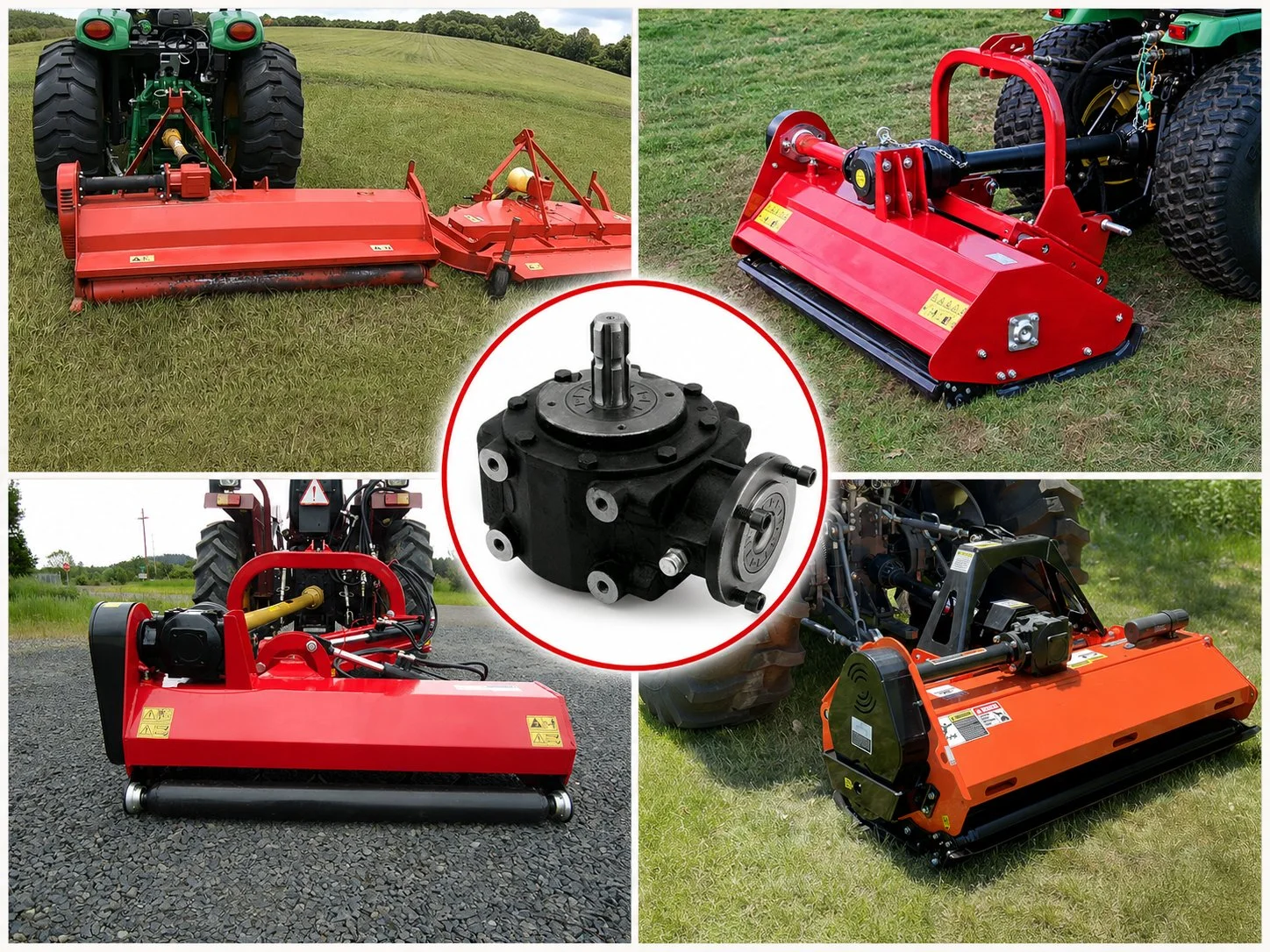
Safe Operation Practices for Flail Mower Gearbox Systems
Flail mower gearboxes with speed-increase ratios and freewheel mechanisms require specific operational awareness that differs from standard agricultural gearbox operation. The combination of high rotor speed (1620 RPM), significant rotational mass, and directional freewheel creates unique safety considerations.
- ⚠ Rotor Coast-Down Awareness — After PTO disengagement, the freewheel allows the flail rotor to coast down from 1620 RPM. Depending on the rotor mass and bearing condition, this coast-down can take 15-45 seconds. During this period, the flail hammers remain dangerous — they are still swinging outward under centrifugal force and rotating at decreasing but still hazardous speed. Never approach the mower, open maintenance covers, or reach into the cutting chamber until the rotor has completely stopped. Listen for complete silence from the rotor housing before approaching.
- ⚠ PTO Engagement Speed — Engage the PTO at low engine RPM (idle or near-idle) and gradually increase to operating speed. Sudden PTO engagement at full engine RPM sends a torque shock through the 1:3 ratio that is amplified by a factor of three at the output shaft, creating extreme stress on the freewheel rollers, the gear teeth, and the rotor shaft coupling. This shock loading is the single most common cause of premature gearbox failure in flail mower applications. Korean operators report that gradual engagement — taking 5-8 seconds from PTO engagement to full operating RPM — extends gearbox service life by 30-50% compared to abrupt engagement.
- ⚠ PTO Shield Integrity — The PTO shaft connecting the tractor to the T-311J gearbox rotates at 540 RPM and is a documented entanglement hazard. Verify that the PTO shaft guard is intact, rotates freely around the shaft, and has no damaged or missing sections. Korean accident data shows that PTO entanglement incidents occur most frequently during the start of the mowing season when operators reconnect stored equipment without inspecting guard condition.
- ⚠ Overload Response — When the flail mower encounters an obstruction (buried rock, metal post, tree stump) that stops the rotor suddenly, the gearbox absorbs the impact energy of the entire rotor mass decelerating from 1620 RPM. Do not immediately re-engage the PTO after a rotor stop. Shut down the tractor, inspect the flail hammers and rotor for damage, check the gearbox for oil leaks or housing cracks, and inspect the PTO shaft for shear bolt failure before resuming operation. A concealed housing crack that leaks oil during subsequent operation leads to gearbox seizure.
- ⚠ Oil Temperature Monitoring — Extended continuous operation in Korean summer conditions (above 33C ambient) at near-maximum power loading causes oil temperature elevation that degrades lubrication effectiveness. If the gearbox housing becomes too hot to touch comfortably (approximately 80C surface temperature), reduce PTO RPM or pause operation to allow cooling. Operating with degraded lubrication at 1620 RPM output speed accelerates gear tooth wear dramatically — the high-speed gear mesh generates proportionally more friction heat than lower-speed applications.
Complete the Flail Mower Drive System
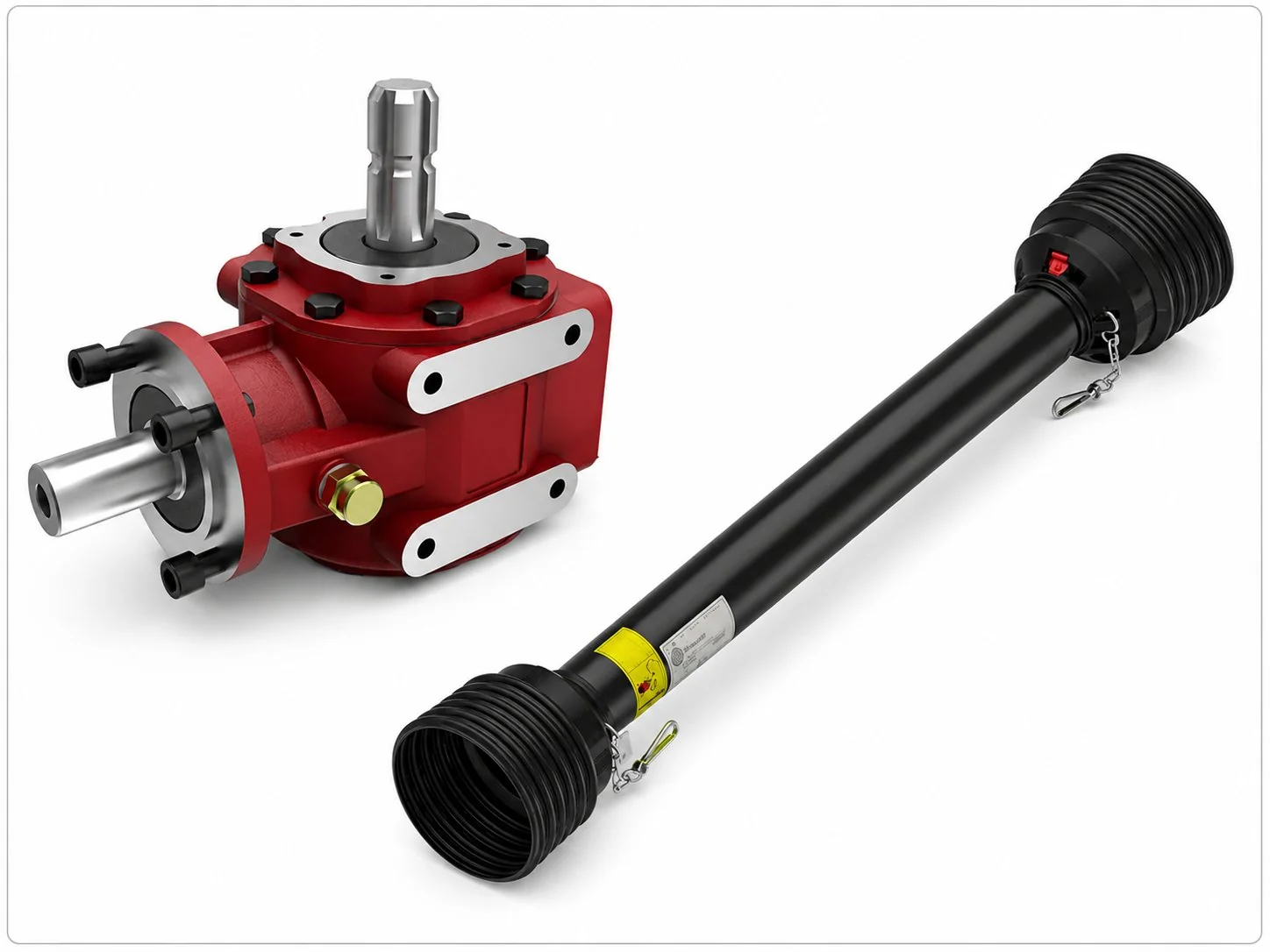
The T-311J connects to the tractor through a pto shaft rated for 50 HP and equipped with a shear bolt protection device matched to the gearbox's torque capacity. For flail mower applications, the PTO shaft must include a wide-angle joint or constant-velocity joint to accommodate the angular displacement between the tractor PTO and the mower gearbox input as the mower follows ground contours.
Browse our full agricultural gearbox range including flail mower gearboxes in different ratios and power classes, rotary cutter drives, and application-specific models for different vegetation management equipment types.
Frequently Asked Questions
What does "gearbox with freewheel" mean in the T-311J specification?
The freewheel is a one-way clutch mechanism built into the gearbox that allows the output shaft to spin freely in one direction while transmitting torque in the other. In the T-311J, this means the gearbox drives the flail rotor at 1620 RPM when the PTO is engaged, but when the PTO stops, the rotor coasts down on its own momentum without feeding reverse torque back through the gearbox to the tractor. This protects the driveline and prevents the dangerous whipping that occurs when a heavy, fast-spinning rotor suddenly tries to drive the PTO shaft backward.
Can I use the T-311J on a rotary tiller instead of a flail mower?
The T-311J is listed for various agricultural applications including rotary tillers. However, verify that your tiller requires a 1:3 speed increase ratio with a 33H7 output shaft — most rotary tillers use different ratios and shaft specifications. The freewheel direction must also match the tiller's rotation. Contact our technical team with your rotary tiller model for compatibility verification.
Why is the T-311J heavier than gearboxes with similar power ratings?
The 20.5 kg weight reflects the cast iron housing (chosen for impact resistance in debris-intensive flail mowing), the freewheel mechanism (which adds internal components), and the larger oil capacity (1.2 liters, needed for the higher heat generation at 1:3 speed multiplication). Lighter aluminium-housing gearboxes exist in the 50 HP class but are not suitable for flail mower applications where the gearbox must absorb impact loads from rotor obstructions and dissipate heat from sustained high-speed operation.
How do I know if the freewheel is worn or failing?
A worn freewheel produces a distinct clicking or slipping sensation during PTO engagement — the gearbox briefly freewheels in the drive direction before the freewheel rollers or sprags engage and begin transmitting torque. If you notice a delay between PTO engagement and rotor acceleration, the freewheel is developing wear. Replace the gearbox before the freewheel fails completely — a failed freewheel either locks permanently (eliminating the coast-down safety feature) or disengages permanently (no power transmission to the rotor).
What oil change interval applies to the T-311J in heavy-duty flail mowing?
For continuous heavy-duty operation (daily use at near-maximum power loading in Korean summer conditions), change oil every 250-300 hours rather than the standard 500-hour interval. The 1:3 speed multiplication generates more heat per hour than lower-ratio gearboxes, and the 1.2 liter oil volume reaches saturation with wear particles and thermal degradation products faster under sustained loading. Use SAE 80W-90 gear oil from a recognized manufacturer — avoid mixing brands or grades.
Korean Operator Experience
Im Tae-hyung, Highway Maintenance Contractor — Wonju, Gangwon-do, October 2025
"Contract 320 km of national highway vegetation management in Gangwon-do. The T-311J gearbox on our flail mowers handles the mixed brush and grass along mountain highway shoulders where rotary mowers fail completely. The freewheel is essential for our work — we disengage and re-engage the PTO 30-50 times per shift navigating around guardrails, culverts, and bridge abutments. Without the freewheel, the driveline shock from frequent disengagement would destroy the PTO shaft within a season."
Ahn So-yeon, Orchard Management — Chungju, Chungcheongbuk-do, September 2025
"Our apple orchard uses a flail mower between the tree rows from May through October. The T-311J's 1620 RPM rotor speed produces fine mulch that decomposes in 3-4 weeks, adding organic matter to the soil. The enclosed flail housing never throws stones at the tree trunks — we had constant bark damage when we used a rotary cutter. Replaced one T-311J gearbox after 4 seasons and approximately 800 operating hours. The replacement was bolt-on identical."
Kwon Ji-hwan, Land Reclamation Service — Gongju, Chungcheongnam-do, August 2025
"Specialize in clearing abandoned farmland for returning agricultural use. The vegetation on plots abandoned for 5-10 years includes saplings and dense brush that requires flail mower horsepower. The T-311J handles our 65 HP tractor's full PTO output clearing material up to 35mm stem diameter. We go through 2-3 sets of flail hammers per season but the gearbox itself holds up well — just oil changes every 250 hours."
Seo Min-jung, Municipal Vegetation Control — Seogwipo, Jeju-do, July 2025
"Jeju's subtropical climate produces aggressive vegetation growth requiring year-round mowing. Our municipal team maintains road shoulders, public walking paths, and drainage channel banks using T-311J-equipped flail mowers. The humid Jeju conditions mean we change gearbox oil every 200 hours instead of 250 — the moisture infiltration is worse here than on the mainland. The cast iron housing handles the salt air better than the aluminium gearboxes we tried previously."
Yun Dong-hee, Agricultural Equipment Dealer — Andong, Gyeongsangbuk-do, June 2025
"The T-311J replacement is popular with Korean farmers upgrading from rotary cutters to flail mowers for orchard and field edge management. Most of my customers' flail mowers came with Comer gearboxes from the European manufacturer. When these fail after 4-6 years of Korean field conditions, having the replacement available domestically in 2-3 days versus 6-8 weeks from Europe makes the difference between downtime during peak mowing season and continued productivity."

Additional information
| Editor | Cxm |
|---|
Related products
-
Fertilizer Spreader Gearbox L-25J | Comer Replacement PTO
-
Agriculture Gearbox for Hay Tedder EP03
-
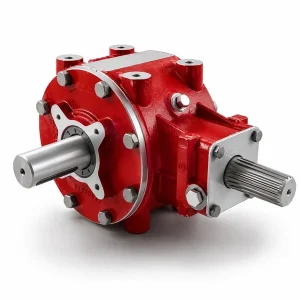
Round Baler Gearbox Replaces the Comer Code T-304A
-
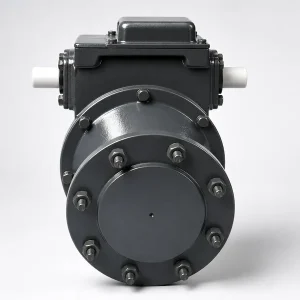
Irrigation Wheel Drive Gearbox AEP-1 Series — 50:1 and 52:1 Worm Gear Final Drive for Center Pivot and Linear Move Systems
-
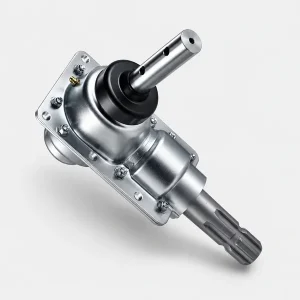
Snow Plow Gearbox EP-01-229 — Spiral Bevel 1:1.35 Ratio Drive for PTO-Powered Snow Plows and Salt Spreaders
-
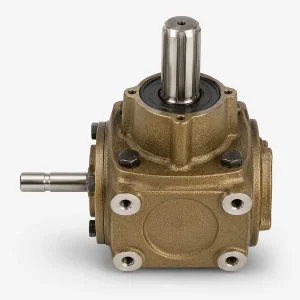
Angular Gearbox T-19A — 28 HP Multi-Application Right-Angle Drive with 1.46:1 Ratio for Tillers, Mowers, and Spreaders
-
Fertilizer Spreader Gearbox L-150C — 9.9 kW Speed Increaser with 1:1.35 Ratio for Broadcast and Pendulum Spreaders
-
EP-RC-30 Rotary Cutter Gearbox — 40 HP Bevel Gear Speed Increaser for Agricultural Mowing