Das Grundprinzip: Geschwindigkeit und Drehmoment sind ein Kompromiss.
Jedes Nebenabtriebsgetriebe – egal ob es die Drehzahl erhöht oder verringert – unterliegt demselben mechanischen Grundgesetz: In jedem Getriebesystem ist die zugeführte Leistung gleich der abgegebenen Leistung abzüglich der Reibungsverluste. Leistung ist das Produkt aus Drehmoment und Drehzahl. Erhöht ein Getriebe die Ausgangsdrehzahl über die Eingangsdrehzahl hinaus, muss es das Ausgangsdrehmoment proportional verringern. Umgekehrt erhöht es das Ausgangsdrehmoment proportional, wenn es die Ausgangsdrehzahl unter die Eingangsdrehzahl verringert. Es gibt kein Getriebe, das Drehzahl und Drehmoment gleichzeitig erhöht – der Energieerhaltungssatz verbietet dies.
Dieses Prinzip hat tiefgreifende praktische Konsequenzen für jedes an einen Traktor angebaute Anbaugerät. Zapfwellengetriebe Um einen Rotationsmäher anzutreiben, müssen schwere Klingen durch dichte Vegetation und vergrabenes Material rotieren. Die Klingen stoßen dabei auf plötzlichen, massiven Widerstand – einen versteckten Baumstumpf, einen Stein oder ein Gewirr aus Drahtzäunen, das im Gestrüpp vergraben ist. Was das Gerät benötigt, ist eine hohe Rotationskraft bei moderater Drehzahl. Ein Zapfwellengetriebe liefert genau das: Es reduziert die Drehzahl der Zapfwelle von 540 oder 1000 U/min auf etwa 200 oder 300 U/min und erhöht gleichzeitig das verfügbare Drehmoment um den Kehrwert des Untersetzungsverhältnisses.
Ein Hydraulikpumpenantrieb hat die gegenteilige Anforderung. Die internen Komponenten der Pumpe – Zahnräder, Schaufeln oder Kolben – sind für einen effizienten Betrieb bei 1.500 bis 3.000 U/min ausgelegt. Die Drehzahl der Zapfwelle von 540 U/min ist viel zu niedrig, um die Pumpe im optimalen Drehzahlbereich anzutreiben. Ein Zapfwellen-Übersetzungsgetriebe erhöht die Drehzahl um den Faktor 2 bis 6 und erzeugt so die benötigte hohe Drehzahl bei gleichzeitig geringerem Ausgangsdrehmoment – was akzeptabel ist, da Pumpen ihre Kraft durch hydraulischen Druck und nicht durch mechanisches Drehmoment erzeugen.
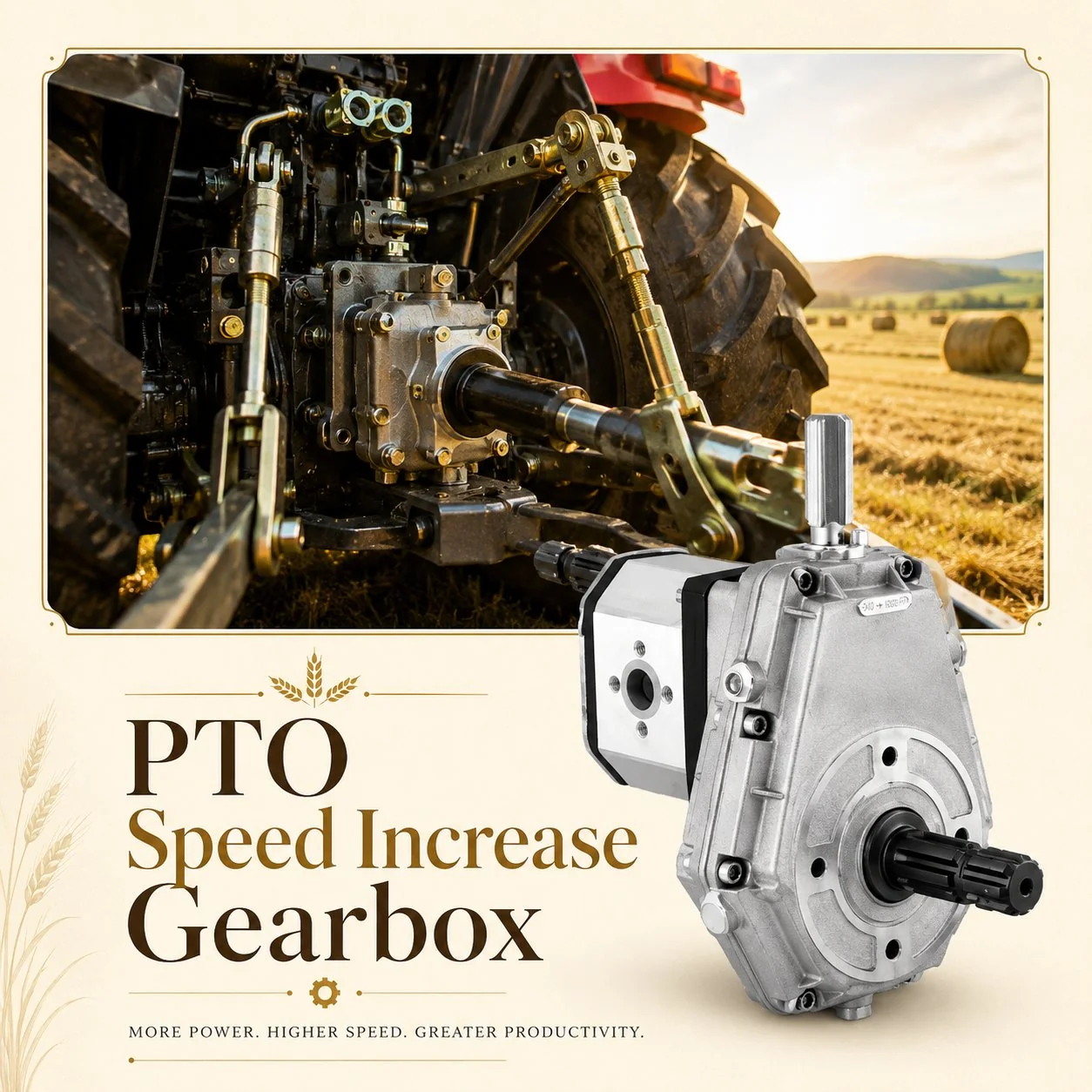
Innenleben eines Zapfwellengetriebes: Mechanische Architektur
Die meisten Zapfwellengetriebe in der Landwirtschaft verwenden eine rechtwinklige Konstruktion mit einem spiralförmigen Kegelradsatz. Die Eingangswelle, die über eine Keilwellenkupplung mit dem Zapfwellenstutzen des Traktors verbunden ist, trägt ein spiralförmiges Kegelradritzel mit kleinem Durchmesser. Dieses Ritzel kämmt mit einem spiralförmigen Kegelrad mit größerem Durchmesser, das auf der Ausgangswelle montiert ist. Die Ausgangswelle verlässt das Getriebe im 90°-Winkel zur Eingangswelle. Das Verhältnis der Zähnezahlen von Kegelrad und Ritzel bestimmt die Drehzahluntersetzung – ein 12-zahniges Ritzel, das ein 36-zahniges Kegelrad antreibt, ergibt eine Untersetzung von 3:1, wodurch aus 540 U/min Eingangsdrehzahl 180 U/min Ausgangsdrehzahl werden und gleichzeitig das verfügbare Drehmoment verdreifacht wird.
Spiralverzahnte Kegelräder werden aus demselben Grund gegenüber geradverzahnten Kegelrädern bevorzugt, aus dem Schrägverzahnungen in Parallelwellenanordnungen Stirnrädern vorgezogen werden: Der schräge Zahneingriff gleitet sanft über die Zahnstirnfläche und sorgt so für eine gleichmäßigere Drehmomentübertragung und deutlich geringere Geräuschentwicklung. In einem landwirtschaftlichen Getriebe, das über seine Lebensdauer Tausende von Stunden laufen kann, verlängert die reduzierte Vibrationsbelastung durch spiralverzahnte Kegelräder im Vergleich zu geradverzahnten Alternativen auch die Lebensdauer von Lagern und Gehäusen.
Das Gehäuse eines Winkelgetriebes muss mehrere Funktionen gleichzeitig erfüllen. Es positioniert die Ein- und Ausgangslager mit mikrometergenauer Präzision, um die korrekte Zahneingriffsausrichtung unter Last zu gewährleisten. Es enthält das Schmierölbad und leitet die Spritzschmierung zu den oberen Lagern, die sonst trocken laufen würden. Es dient als strukturelle Befestigungsschnittstelle – typischerweise vier oder sechs Schraubenlöcher in Flanschanordnung –, die das Getriebe mit dem Geräterahmen verbindet. Und es muss das Reaktionsdrehmoment des Zahneingriffs aufnehmen, ohne sich so weit zu verformen, dass die Lagerausrichtung beeinträchtigt wird.
Gusseisen ist nach wie vor das dominierende Gehäusematerial für landwirtschaftliche Getriebe, da es eine ausgezeichnete Schwingungsdämpfung, gute Wärmeleitfähigkeit, präzise Gießbarkeit für Lagerbohrungstoleranzen und natürliche Korrosionsbeständigkeit im landwirtschaftlichen Außenbereich bietet. Aluminiumgehäuse kommen bei einigen leichten oder hochtourigen Anwendungen zum Einsatz und bieten ein geringeres Gewicht sowie eine bessere Wärmeableitung pro Flächeneinheit. Die geringere Steifigkeit von Aluminium erfordert jedoch dickere Wände, um die gleiche Durchbiegungsfestigkeit zu erreichen – was den Gewichtsvorteil bei den für Bodenbearbeitungsgeräte typischen Drehmomenten teilweise zunichtemacht.
⚙️ Wie sich das Reduktionsverhältnis auf das Implementierungsverhalten auswirkt
Ein Rotationsmäher mit einer Untersetzung von 1,47:1 (540 U/min Eingangsdrehzahl, 367 U/min Ausgangsdrehzahl) erzeugt einen feinen Schnitt bei hoher Messerspitzengeschwindigkeit und eignet sich ideal für das Nachmähen auf verbesserten Weideflächen. Derselbe Mäher mit einer Untersetzung von 1,92:1 (540 U/min Eingangsdrehzahl, 281 U/min Ausgangsdrehzahl) bietet hingegen ein höheres Drehmoment und reduziert die Schnittqualität, wodurch er auch dichtes Gestrüpp und Jungbäume problemlos durchschneidet. Die Wahl des Untersetzungsverhältnisses ist daher nicht nur eine mechanische, sondern eine anwendungsbezogene Entscheidung – sie bestimmt die Leistungsfähigkeit und Grenzen des Geräts im praktischen Einsatz.
Im Inneren eines Zapfwellen-Drehzahlübersetzers: Umgekehrter Kraftfluss
Ein Übersetzungsgetriebe verwendet dieselben Zahnradtypen wie ein Untersetzungsgetriebe – Stirn-, Schräg- oder Planetengetriebe – kehrt jedoch die Kraftflussrichtung um. Das große, langsame Zahnrad wird vom Nebenabtrieb angetrieben, das kleine, schnell drehende Zahnrad gibt die Kraft an den Abtrieb ab. Bei einem Schrägverzahnungsgetriebe mit paralleler Welle treibt der Nebenabtrieb ein großes Schrägverzahnungszahnrad an, das mit einem kleineren Zahnrad auf der Abtriebswelle kämmt. Das Übersetzungsverhältnis ist umgekehrt: Während ein Untersetzungsgetriebe beispielsweise ein 48-Zahn-Zahnrad antreibt, um eine 3:1-Übersetzung (und eine entsprechende 3:1-Drehmomentreduzierung) zu erzielen, wird hier ein 48-Zahn-Zahnrad auf ein 16-Zahn-Zahnrad aufgesetzt.
Die technischen Herausforderungen bei einem Übersetzungsgetriebe unterscheiden sich in mehreren wichtigen Punkten von denen eines Untersetzungsgetriebes. Erstens dreht sich die Abtriebswelle schneller als die Antriebswelle – oft zwei- bis sechsmal schneller. Das bedeutet, dass die Abtriebslager höheren Drehzahlen standhalten müssen, was die Fliehkraftbelastung der Wälzkörper erhöht, durch die Schmierstoffverdrängung mehr Wärme erzeugt und engere Lagerspiele erfordert. Ein Lager, das für 2.000 Stunden bei 500 U/min ausgelegt ist, hält unter gleichen Radial- und Axialbelastungen bei 2.500 U/min möglicherweise nur noch 800 Stunden, da die Lagerlebensdauer mit steigender Drehzahl gemäß einer bekannten inversen Beziehung abnimmt.
Zweitens muss die Abtriebswellenabdichtung bei höheren Umfangsgeschwindigkeiten arbeiten. Bei 3.000 U/min und einer Welle mit 40 mm Durchmesser gleitet die Dichtlippe mit 6,3 Metern pro Sekunde über die Wellenoberfläche. Bei diesen Geschwindigkeiten erzeugt die Dichtlippe erhebliche Reibungswärme, die das Elastomer mit der Zeit aushärtet und schließlich zu Undichtigkeiten führt. Hochgeschwindigkeitsdichtungen verwenden PTFE-Lippenmaterialien (Teflon) oder Labyrinthdichtungen, um die Reibung zu reduzieren und die Lebensdauer zu verlängern – ein Detail, das hochwertige Zapfwellen-Übersetzungsgetriebe von kostengünstigen Alternativen unterscheidet.
Drittens ändern sich die Schmierstoffanforderungen bei höheren Drehzahlen. Die Ölverluste durch Verwirbelung steigen quadratisch mit der Drehzahl. Das bedeutet, dass ein Zahnrad, das sich mit 3.000 U/min dreht, neunmal so hohe Verwirbelungsverluste verursacht wie dasselbe Zahnrad bei 1.000 U/min. Untersetzungsgetriebe kompensieren dies durch einen geringeren Ölstand – gerade so viel, dass die unteren Zahnradzähne bedeckt sind – und nutzen Spritzöl und gezielten Ölfluss von den eingetauchten Zahnrädern zur Schmierung der oberen Lager. Einige Planetengetriebe mit hoher Übersetzung verwenden eine Druckumlaufschmierung mit einer internen Trochoidenpumpe, die vom Getriebe angetrieben wird, um eine ausreichende Ölversorgung der Sonnenradlager zu gewährleisten. Diese befinden sich im Zentrum der rotierenden Baugruppe und sind in einem Schwerkraftsystem nur minimalen Spritzölverlusten ausgesetzt.
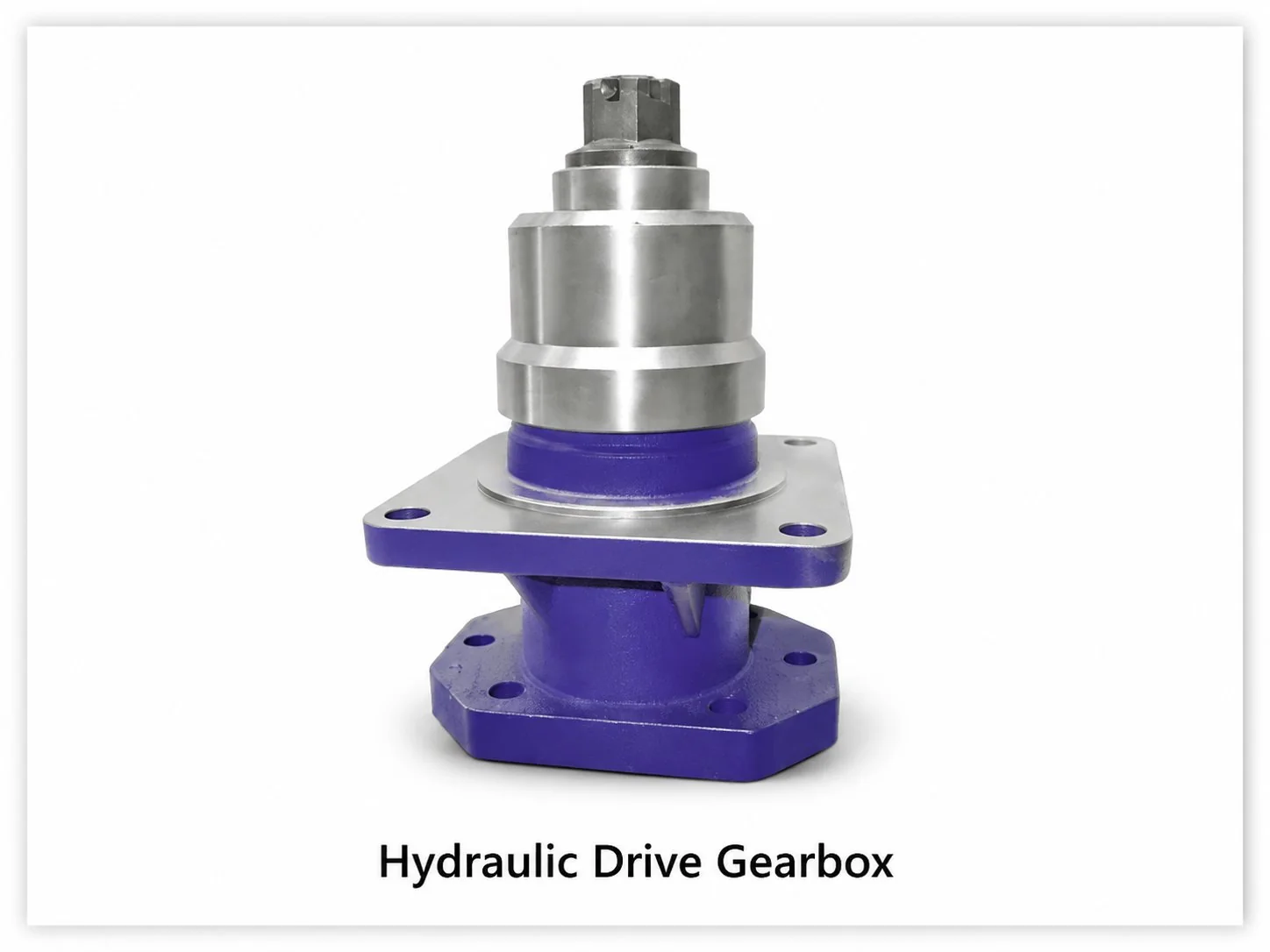
Hydraulisches Antriebsgetriebe – eine typische Drehzahlübersetzungskonfiguration für den Pumpenantrieb in Zapfwellen-betriebenen Hydraulikkreisläufen
Direkter Vergleich: Reduzierer vs. Erhöher
Die folgende Tabelle fasst die wichtigsten technischen und anwendungstechnischen Unterschiede zwischen einem Zapfwellen-Untersetzungsgetriebe und einem Zapfwellen-Drehzahlübersetzungsgetriebe zusammen. Nutzen Sie sie als praktische Auswahlhilfe bei der Spezifizierung eines neuen Getriebes. Landwirtschaftliches Getriebe für eine Gerätekonstruktion oder einen Geräteersatz.
| Parameter | Zapfwellengetriebe | Zapfwellendrehzahlerhöhung |
|---|---|---|
| Ausgangsgeschwindigkeit im Verhältnis zum Eingang | Niedriger (typischerweise 1/3 bis 2/3 der Zapfwellendrehzahl) | Höher (typischerweise 2× bis 6× Zapfwellendrehzahl) |
| Ausgangsdrehmoment im Vergleich zum Eingangsdrehmoment | Höher (multipliziert mit dem Reduktionsverhältnis) | Untere (geteilt durch das Multiplikationsverhältnis) |
| Typische Getriebekonfiguration | Spiralförmig abgeschrägt (rechtwinklig) oder spiralförmig parallel | Helikale Parallele, Sporn-Parallele oder planetarische |
| Üblicher Verhältnisbereich | 1,2:1 bis 3,5:1 | 1:2 bis 1:6 |
| Kritische Lager | Abtriebswelle (hohes Drehmoment, niedrigere Drehzahl) | Abtriebswelle (hohe Drehzahl, radiale Pumpenbelastung) |
| Primärer Ausfallmodus | Zahnflankenschäden durch Stoßüberlastung | Ermüdung des Ausgangslagers durch dauerhaft hohe Drehzahl |
| Mechanischer Wirkungsgrad | 94%–97% (Spiralkegel-Einstufen-Schneide) | 90%–97% (variiert je nach Typ und Verhältnis) |
| Schmierungsherausforderung | Sicherstellung des EP-Schutzes unter Stoßbelastungen | Wärmemanagement bei Hochgeschwindigkeits-Schüttelvorgängen |
| Typische Anwendungen | Rotationsmäher, Bodenfräsen, Ballenpressen, Mähwerke, Streuer | Hydraulische Pumpenantriebe, Generatoren, Radialgebläse |
Anwendungsübereinstimmung: Welches Getriebe für welches Anbaugerät?
Die Wahl zwischen einem Drehzahlverstärker und einem Getriebeuntersetzungsgetriebe beginnt mit einer Frage: Benötigt das Anbaugerät eine langsamere oder schnellere Drehzahl der Abtriebswelle als die Zapfwelle? Die Antwort ist fast immer offensichtlich, sobald man die Funktionsweise des Anbaugeräts verstanden hat.
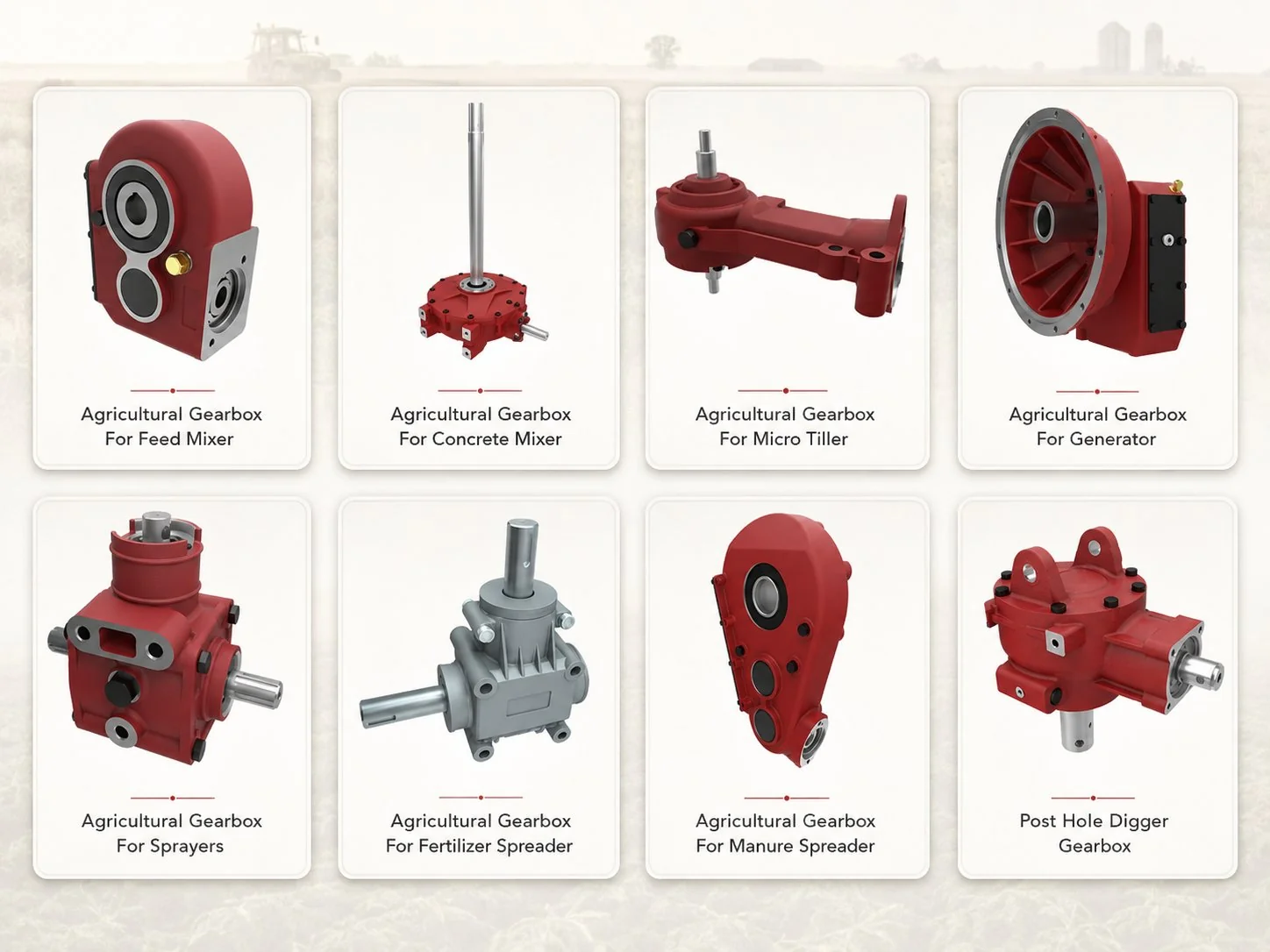
Bodenbearbeitungsgeräte → Getriebe
Jedes Anbaugerät, dessen Arbeitselement mit dem Boden, Erntegut oder Pflanzenresten in Berührung kommt, benötigt ein hohes Drehmoment, um den Widerstand zu überwinden. Rotationsmäher, die sich durch hohes Gras und Jungbäume drehen, Bodenfräsen, die verdichteten Boden durchwühlen, Schlegelmäher, die Gehölze zerkleinern, und Erdbohrer, die in Lehm bohren – all diese Geräte stoßen auf plötzliche Widerstandsspitzen, die eine hohe Drehzahl bei niedrigem Drehmoment zum Stillstand bringen würden. Das Untersetzungsgetriebe fängt diese Stöße ab, indem es eine Drehmomentreserve bereitstellt: Die Getriebeübersetzung stellt sicher, dass selbst bei einem Widerstand, der weit über der stationären Last des Anbaugeräts liegt, die Zapfwelle und der Motor über das Getriebe genügend mechanische Übersetzung haben, um die Abtriebswelle in Bewegung zu halten.
Innerhalb der Kategorie der Getriebeuntersetzungsgetriebe muss das spezifische Übersetzungsverhältnis den Anforderungen des Anbaugeräts entsprechen. Rotationsschneidgetriebe Typischerweise werden Übersetzungsverhältnisse zwischen 1,47:1 und 1,92:1 verwendet, wodurch bei einer Zapfwellendrehzahl von 540 U/min Ausgangsdrehzahlen von 280 bis 367 U/min erreicht werden. Das Getriebe einer Rundballenpresse kann eine höhere Untersetzung (2,5:1 bis 3:1) aufweisen, da der Ballenformmechanismus ein sehr hohes Drehmoment benötigt, um das Erntegut zu einer festen, zylindrischen Masse zu verdichten. Das Getriebe einer Bodenfräse verwendet eine moderate Untersetzung (typischerweise 1,6:1 bis 2,5:1), die die Drehzahl der Messerspitze für effektives Schneiden des Bodens mit ausreichend Drehmoment für die Bearbeitung von Wurzelballen und steinigen Böden in Einklang bringt.
Pumpen- und Generatorantriebe → Drehzahlübersetzer
Hydraulikpumpen, Kreiselpumpen, Luftkompressoren und Zapfwellengeneratoren haben eines gemeinsam: Ihre internen Komponenten sind für Drehzahlen weit über der Zapfwellenleistung des Traktors ausgelegt. Eine Zahnrad-Hydraulikpumpe erzeugt bei 540 U/min nur einen vernachlässigbaren Förderstrom – die internen Spaltmaße, die bei 2000 U/min für eine ausreichende Abdichtung sorgen, werden bei 540 U/min proportional groß, sodass der größte Teil des geförderten Fluids über die Zahnradspitzen zurückfließt. Lässt man dieselbe Pumpe mithilfe eines Drehzahlverstärkers mit ihrer Nenndrehzahl von über 2000 U/min betreiben, wird dieser Effizienzverlust eliminiert und der Nennförderstrom erreicht.
Zapfwellengetriebene Generatoren stellen einen Sonderfall dar, bei dem die Ausgangsdrehzahl einer festen Netzfrequenz entsprechen muss. In Märkten mit 50 Hz Netzfrequenz (größtenteils Asiens, Europas und Ozeaniens) muss der Generator exakt 1500 U/min (bei einem 4-poligen Generator) bzw. 3000 U/min (bei einem 2-poligen Generator) erreichen. Eine Zapfwelle mit 540 U/min, die ein Übersetzungsgetriebe mit einem Untersetzungsverhältnis von 1:2,78 antreibt, erzeugt exakt 1500 U/min – jedoch wirkt sich jede Drehzahlabweichung der Zapfwelle direkt auf die Generatorfrequenz aus und verursacht Spannungsschwankungen. Die Qualität des Übersetzungsgetriebes beeinflusst die Stabilität der elektrischen Ausgangsspannung in diesen Anwendungen unmittelbar: Unregelmäßigkeiten im Zahneingriff, Lagerschlag und Gehäuseschwingungen tragen zu Drehzahlschwankungen bei, die sich als Frequenzjitter in der elektrischen Ausgangsspannung äußern.
🔽
Anwendungen von Reduzierstücken
Rotationsmäher, Schlegelmäher, Bodenfräsen, Rundballenpressen, Düngerstreuer, Miststreuer, Erdbohrer, Schneefräsen, Futtermischer, Rotationsrechen
🔼
Verstärkeranwendungen
Hydraulische Pumpenantriebe, Nebenantriebsgeneratoren, Kreiselwasserpumpen, Luftkompressoren, Kreiselgebläse, Getreidevakuumventilatoren, Generatorantriebe
Durchgerechnete Rechenbeispiele
Beispiel 1: Auswahl eines Untersetzungsgetriebes für einen Rotationsschneider
Ein 72-Zoll-Rotationsmäher benötigt eine Messerspitzengeschwindigkeit von ca. 68 m/s, um Mischgestrüpp bis zu einem Durchmesser von 3 Zoll effektiv zu schneiden. Das Messer misst von Drehpunkt bis Spitze 27 Zoll (0,686 m). Die Spitzengeschwindigkeit berechnet sich wie folgt: π × Rotordurchmesser × Drehzahl ÷ 60. Umgekehrt ergibt sich: 68 = π × (0,686 × 2) × Drehzahl ÷ 60, also Drehzahl = 68 × 60 ÷ (π × 1,372) = 947 U/min. Dies ist die erforderliche Rotordrehzahl an den Messerspitzen. Da die Getriebeausgangswelle über einen Direktantrieb (ohne Zwischenriemen oder Kette) mit dem Messerträger verbunden ist, muss sie sich mit ca. 947 U/min drehen.
Moment mal – 947 U/min sind höher als die 540 U/min der Zapfwelle. Brauchen Sie deshalb ein Übersetzungsgetriebe? Nein. Bei den meisten Rotationsmähern ist der Durchmesser des Messerträgers deutlich kleiner als die Messerlänge von der Drehachse bis zur Spitze. Der Messerträger (die rotierende Scheibe) hat einen Durchmesser von etwa 66 cm; die 69 cm entsprechen der Messerlänge von der Drehachse bis zur Spitze. Die Drehzahl des Messerträgers, angetrieben vom Getriebeausgang, liegt typischerweise zwischen 300 und 400 U/min. Die hohe Drehzahl der Messerspitze resultiert aus dem langen Messerarm, nicht aus einer hohen Drehzahl der Welle. Das richtige Getriebe ist also tatsächlich ein Untersetzungsgetriebe: 540 U/min Eingangsdrehzahl ÷ 1,5:1 Übersetzung = 360 U/min Ausgangsdrehzahl. In Kombination mit der Messergeometrie ergibt sich so die gewünschte Drehzahl der Messerspitze. Dieses Beispiel verdeutlicht, warum das Verständnis des mechanischen Aufbaus des Anbaugeräts – und nicht nur der Drehzahlanforderungen – für die Wahl des richtigen Getriebetyps unerlässlich ist.
Beispiel 2: Auswahl eines Drehzahlübersetzers für eine Hydraulikpumpe
Ein zapfwellengetriebener Holzspalter verwendet eine Zahnradpumpe mit 16 cm³/U, die bei 2.200 U/min und einem Betriebsdruck von 180 bar arbeitet. Das Überdruckventil ist auf 210 bar eingestellt. Der Traktor hat eine Zapfwelle mit 540 U/min und einer Leistung von 35 PS (26,1 kW). Erforderliche Getriebeübersetzung: 2.200 ÷ 540 = 4,07:1. Wählen Sie die nächsthöhere handelsübliche Übersetzung: 1:4,5. Diese ergibt 540 × 4,5 = 2.430 U/min – innerhalb des Nenndrehzahlbereichs der Pumpe, aber nicht über deren maximal zulässiger Drehzahl (typischerweise 101 bis 151 U/min über der Nenndrehzahl).
Theoretischer Durchfluss: 16 cm³/U × 2430 U/min ÷ 1000 = 38,9 l/min. Volumetrischer Wirkungsgrad 92%: Tatsächlicher Durchfluss 35,8 l/min. Hydraulische Leistung im Entlastungszustand: 35,8 × 210 ÷ 600 = 12,5 kW. Getriebeverluste (5% für ein Stirnradgetriebe) hinzufügen: 12,5 ÷ 0,95 = 13,2 kW Zapfwellenleistungsbedarf. Dies entspricht 13,2 ÷ 26,1 = 50,6% verfügbarer Zapfwellenleistung – deutlich innerhalb des sicheren Betriebsbereichs und mit ausreichend Reserve für kurzzeitige Überlastungen, wenn der Spaltkeil auf einen Ast oder Querfaserwiderstand trifft.
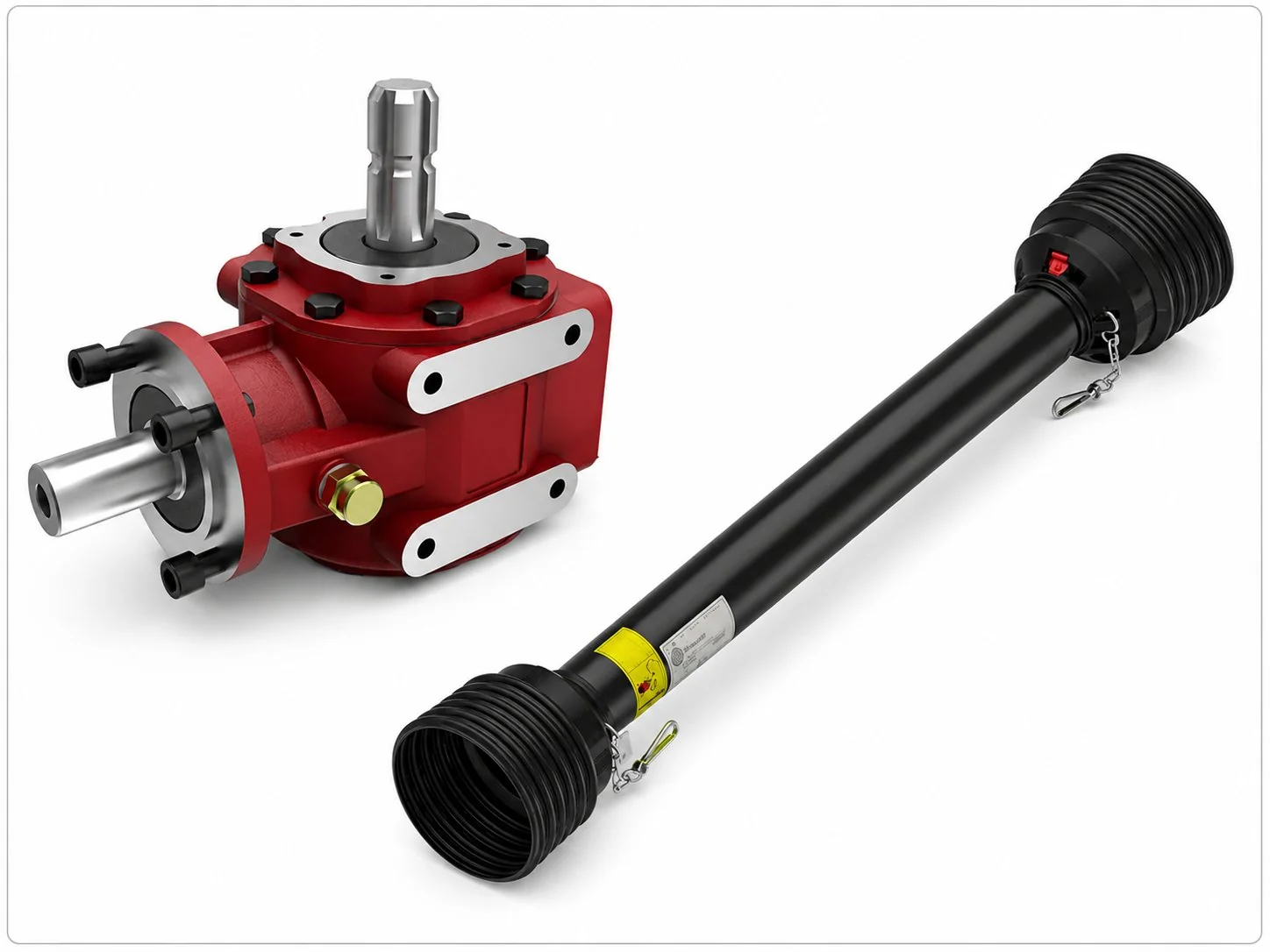
Fünf häufige Auswahlfehler und wie man sie vermeidet
Nach zwei Jahrzehnten Erfahrung mit der Spezifizierung von Nebenantriebsgetrieben für landwirtschaftliche und industrielle Anwendungen treten bestimmte Fehler immer wieder auf. Jeder einzelne führt zu vorzeitigem Ausfall, mangelhafter Leistung oder unnötigen Kosten.
Fehler 1: Die Wahl des Getriebes ausschließlich anhand der PS-Zahl. Die Leistung (PS) ergibt sich aus Drehmoment und Drehzahl. Ein Getriebe mit einer Nennleistung von 50 PS und einem Übersetzungsverhältnis von 1:3 überträgt ein völlig anderes Drehmoment als dasselbe Getriebe mit einem Übersetzungsverhältnis von 1:1,5 – das Drehmoment an der Abtriebswelle verdoppelt sich, wenn man bei gleicher PS-Zahl das Übersetzungsverhältnis verdoppelt. Prüfen Sie daher immer das Drehmoment für das von Ihnen beabsichtigte Übersetzungsverhältnis und nicht die maximale PS-Zahl auf dem Typenschild.
Fehler 2: Verwendung einer 540-U/min-Zapfwelle mit einem Übersetzungsverhältnisverstärker, wenn eine 1000-U/min-Zapfwelle verfügbar ist. Wie in unserem Artikel über Zapfwelle Bei dieser Konfiguration überträgt die 540-U/min-Zapfwelle das doppelte Drehmoment einer 1000-U/min-Zapfwelle bei gleicher Leistung. Ein Übersetzungsgetriebe mit hoher Übersetzung konzentriert das extreme Drehmoment auf die Eingangswelle und die Zähne des ersten Zahnrads einer 540-U/min-Zapfwelle. Der Wechsel zu einer 1000-U/min-Zapfwelle mit niedrigerer Übersetzung ermöglicht die gleiche Ausgangsdrehzahl bei halbem Eingangsdrehmoment und verlängert so die Lebensdauer aller Komponenten im Antriebsstrang.
Fehler 3: Ignorieren des Tastverhältnisses. Ein Getriebe mit der Nennleistung „50 PS intermittierend“ kann diese Leistung nicht 8 Stunden lang kontinuierlich erbringen. Landwirtschaftliche Getriebe, die Rotationsmäher antreiben, arbeiten naturgemäß intermittierend – hohe Last während der Mähvorgänge, nahezu keine Last in den Kurven. Übersetzungsgetriebe für Hydraulikpumpen arbeiten hingegen kontinuierlich unter nahezu Nennlast. Stellen Sie sicher, dass die Getriebeleistung dem Betriebszyklus der Anwendung entspricht: intermittierend (S3), kurzzeitig (S2) oder kontinuierlich (S1).
Fehler 4: Vernachlässigung der Radiallast durch die Pumpenmontage. Wenn eine schwere Hydraulikpumpe am Abtriebsflansch eines Übersetzungsgetriebes hängt, erzeugt ihr Gewicht eine statische Radiallast auf das Abtriebslager – zusätzlich zur dynamischen Radiallast durch die internen Druckkräfte der Pumpe. Getriebekataloge, die nur Drehmomentangaben enthalten, berücksichtigen diese kombinierte Radiallast möglicherweise nicht. Wählen Sie daher ein Getriebe mit Abtriebslagern, die sowohl für das berechnete Drehmoment als auch für die kombinierte Radiallast aus Pumpengewicht und hydraulischen Reaktionskräften ausgelegt sind.
Fehler 5: Zu groß dimensionieren, „nur um auf Nummer sicher zu gehen“. Ein übermäßig überdimensioniertes Untersetzungsgetriebe mag zwar auf den ersten Blick eine sichere Wahl sein, birgt aber eigene Probleme. Ein Getriebe, das mit 201 TP3T seiner Nennleistung betrieben wird, erzeugt so wenig interne Wärme, dass die Kondenswasserbildung im Öl nicht verdunstet – das Getriebe arbeitet permanent in einem Zustand ständiger Unterkühlung, was die interne Korrosion, insbesondere an präzisionsgeschliffenen Zahnflanken, begünstigt. Das Kondensationsproblem tritt am stärksten in Klimazonen mit hoher Luftfeuchtigkeit und großen Temperaturschwankungen zwischen Tag und Nacht auf. Ein korrekt dimensioniertes Getriebe, das mit 501 TP3T bis 751 TP3T seiner Dauernennleistung betrieben wird, erreicht eine ausreichende Betriebstemperatur, um Kondenswasser zu verdunsten und gleichzeitig eine komfortable Sicherheitsreserve für Spitzenlasten zu gewährleisten.
Kombinationseinheiten: Getriebe mit beiden Funktionen
Manche Landmaschinen benötigen sowohl eine Drehzahlreduzierung als auch eine Drehzahlerhöhung innerhalb derselben Maschine. Ein selbstfahrender Feldhäcksler beispielsweise nutzt ein Untersetzungsgetriebe, um den Schneidkopf mit hohem Drehmoment und niedriger Drehzahl anzutreiben, während gleichzeitig ein Übersetzungsgetriebe eine Hydraulikpumpe antreibt, die die Einzugswalze und die Auswurfdüsenrotation versorgt. Anstatt zwei separate Getriebe zu montieren, spezifizieren einige OEMs eine Kombinationseinheit – ein einzelnes Gehäuse mit mehreren Abtriebswellen, die mit unterschiedlichen Übersetzungsverhältnissen von einem gemeinsamen Eingang angetrieben werden.
Diese Kombinationseinheiten sind zwar komplexer in der Herstellung, bieten aber erhebliche Vorteile hinsichtlich Ausrichtungsgenauigkeit (alle Wellen werden durch dasselbe Gussteil positioniert) und Kompaktheit (keine externen Halterungen oder Kupplungen zwischen den einzelnen Getrieben). Ever-Power Zapfwellengetriebe Das Ingenieurteam entwirft regelmäßig kundenspezifische Kombinationsgeräte für OEM-Kunden, die beide Funktionen in einem einzigen, platzsparenden Gehäuse benötigen. Kontaktieren Sie uns um Ihre Bewerbungsanforderungen zu besprechen.
Bei der Beurteilung, ob ein Kombinationsgetriebe für Ihre Anwendung geeignet ist, sollten Sie die thermische Wechselwirkung zwischen den beiden Abtriebszweigen berücksichtigen. Ein Untersetzungsgetriebe mit hohem Drehmoment und niedriger Drehzahl erzeugt Wärme hauptsächlich durch die Reibung im Zahneingriff, während das Übersetzungsgetriebe mit hoher Drehzahl Wärme durch Drehbewegungen und Lagerreibung erzeugt. Beide Wärmequellen erwärmen das gemeinsame Ölvolumen. Übersteigt die gesamte Wärmeerzeugung die Wärmeabfuhrkapazität des Gehäuses, überhitzt das gemeinsame Öl – was die Leistung beider Abtriebszweige gleichzeitig beeinträchtigen kann. Eine sorgfältige thermische Analyse in der Konstruktionsphase stellt sicher, dass die Gehäuseoberfläche und das Ölvolumen des Kombinationsgetriebes die gesamte Wärmelast unter allen Betriebsbedingungen aufnehmen können.
Überblick über Zapfwellengetriebetypen – Untersetzungsgetriebe und Übersetzungsgetriebe erfüllen grundlegend unterschiedliche Anwendungsanforderungen
Häufig gestellte Fragen
Benötigen Sie Hilfe bei der Auswahl zwischen einem Übersetzungsgetriebe und einem Untersetzungsgetriebe?
Senden Sie uns Ihre Anwendungsdetails – Zapfwellendrehzahl, Anbaugerätetyp und Leistungsanforderungen – und unser Ingenieurteam empfiehlt Ihnen das exakte Übersetzungsverhältnis, den Getriebetyp und die Montagekonfiguration für Ihr System. Über 500 landwirtschaftliche Getriebemodelle stehen zur sofortigen Spezifikation bereit.
Herausgeber: Cxm