Die Rolle des Getriebes bei der präzisen Düngemittelapplikation
Düngemittelausbringungsgeräte wandeln die Zapfwellenleistung des Traktors in mechanische Energie um, die körniges, granuliertes oder pelletiertes Material mit kontrollierter Menge über die Feldoberfläche verteilt. Düngerstreuergetriebe Das Herzstück dieser Übersetzung ist die Zapfwellen-Eingangsdrehzahl von 540 oder 1000 U/min, die in das spezifische Ausgangsdrehzahl- und Drehmomentprofil umgewandelt wird, das vom Streumechanismus benötigt wird, während gleichzeitig die Vibrationen, Stoßbelastungen und die korrosive chemische Umgebung, die beim Umgang mit Düngemitteln auftreten, absorbiert werden.
Die Anforderungen an die Präzision dieses Getriebes sind höher als man zunächst annehmen mag. Moderne Präzisionslandwirtschaft erfordert Ausbringungsmengen, die über die gesamte Arbeitsbreite auf 31 TP³T bis 51 TP³T genau vom Zielwert abweichen. Diese Gleichmäßigkeit wird nur erreicht, wenn die Streuscheiben oder der Ausbringmechanismus unter wechselnden Lastbedingungen – wie dem Leeren des Behälters und der damit einhergehenden Gewichtsveränderung, dem Befahren von Steigungen durch den Traktor oder der durch Wind beeinflussten Flugbahn der Granulate – eine konstante und vorhersehbare Drehzahl beibehalten. Jede Drehzahlabweichung am Getriebeausgang führt direkt zu Abweichungen in der Ausbringungsmenge auf dem Feld und verursacht so über- oder unterdüngte Bereiche, die den Ertrag mindern und die Kosten für Betriebsmittel unnötig erhöhen.
Die Betriebsbedingungen verschärfen die technische Herausforderung. Düngemittel – insbesondere Ammoniumnitrat, Harnstoff und Kaliumchlorid – sind hygroskopisch (sie ziehen Feuchtigkeit aus der Luft an) und korrosiv gegenüber Stahl- und Eisenoberflächen. Düngemittelstaub und gelöste Düngemittellösungen greifen unlackierte Gusseisengehäuse an, beschleunigen den Verschleiß von Dichtungen und verunreinigen das Getriebeöl, wenn die Dichtungen beschädigt sind. Ein Getriebe für Düngerstreuer muss daher die mechanische Robustheit eines schweren Landwirtschaftsgetriebes mit einer Korrosionsbeständigkeit kombinieren, die der von Anlagen zur chemischen Verarbeitung nahekommt – eine Kombination, die spezielle Werkstoffe, Beschichtungssysteme und Dichtungskonfigurationen erfordert, die über die Möglichkeiten eines Standard-Zapfwellengetriebes hinausgehen.
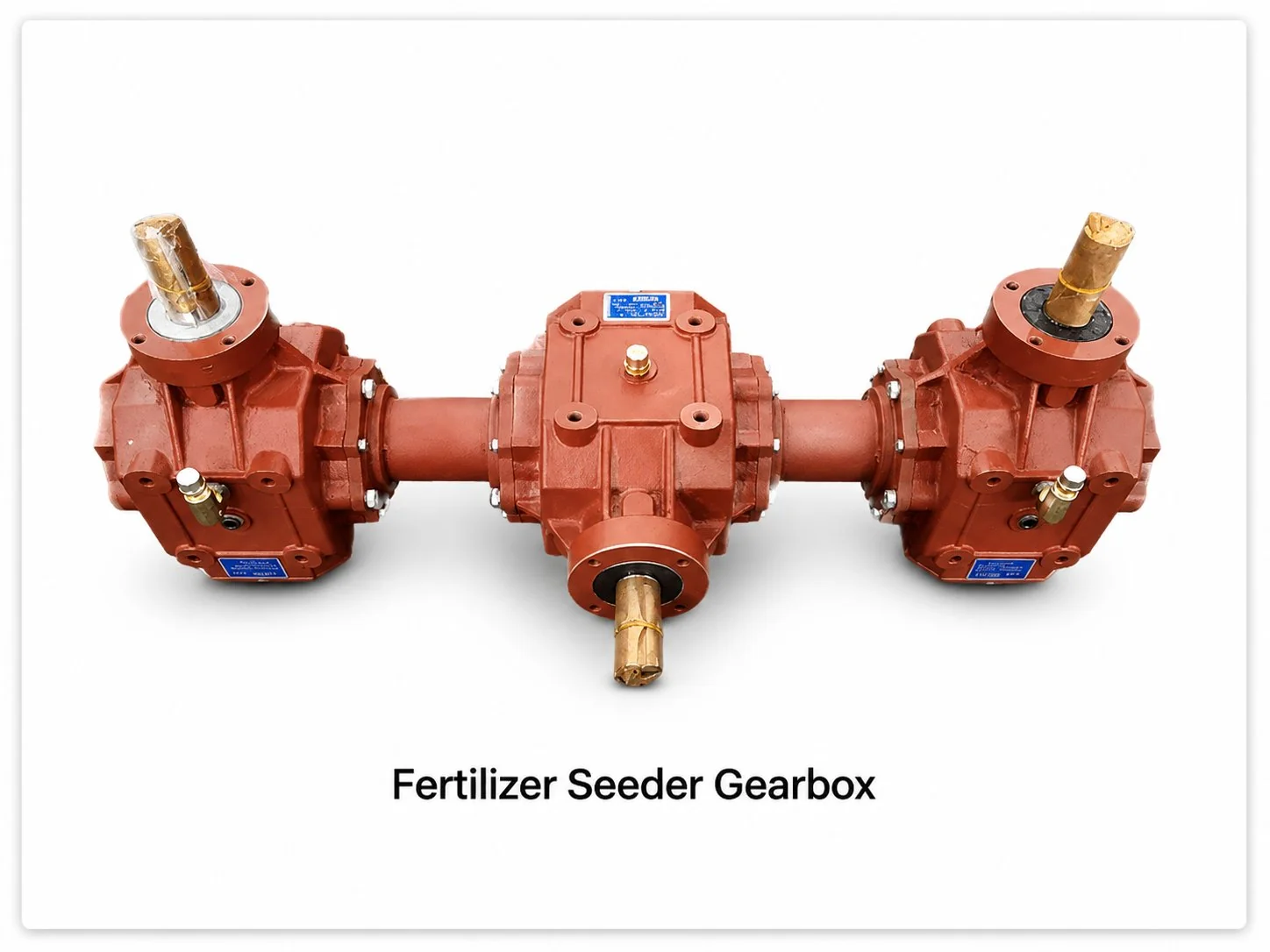
Streuertypen und ihre spezifischen Getriebeanforderungen
Die mechanischen Anforderungen an das Getriebe variieren stark je nach Art des Streumechanismus. Eine falsche Abstimmung des Getriebes auf den Streuertyp – selbst bei korrektem Drehmoment – kann zu schlechter Streuleistung, beschleunigtem Verschleiß oder gar zum Totalausfall führen, da die Belastung nicht mit der internen Konstruktion des Getriebes vereinbar ist.
Doppelscheiben-Schleuderstreuer sind in der modernen Landwirtschaft am weitesten verbreitet. Zwei rotierende Scheiben mit einem Durchmesser von typischerweise 400 bis 600 mm drehen sich mit 500 bis 900 U/min in entgegengesetzte Richtungen. Das Düngemittel fällt aus dem Behälter auf die Scheibenoberfläche und wird durch die Zentrifugalkraft nach außen beschleunigt. Je nach Scheibendrehzahl und Schaufelgeometrie werden Geschwindigkeiten von 25 bis 40 m/s erreicht, die vom Scheibenrand abprallen. Das Getriebe dieses Systems muss zwei gegenläufige Abtriebswellen von einer einzigen Zapfwelle (PTO) liefern. Dies wird entweder durch ein Zahnradgetriebe in einem Gehäuse oder durch zwei separate Getriebe mit gemeinsamer Eingangswelle realisiert. Der Drehmomentbedarf ist moderat (typischerweise 150 bis 400 Nm pro Scheibe bei Betriebsdrehzahl), da sich die Scheiben einmalig frei drehen. Die Hauptlast entsteht durch den Aufprall des Düngemittels auf die Schaufeln und den Luftwiderstand bei hohen Drehzahlen. Allerdings kann das Anlaufdrehmoment beim Beschleunigen der Scheiben aus dem Stillstand das Drei- bis Vierfache des Betriebsdrehmoments erreichen, und das Getriebe muss dieser kurzzeitigen Belastung bei jedem Einrücken der Nebenantriebswelle standhalten.
Pendelrohrstreuer nutzen einen grundlegend anderen Mechanismus: Ein Rohr oszilliert horizontal in einem Winkel von 50 bis 70 Grad und schwingt das Material abwechselnd nach links und rechts aus der Auswurföffnung. Das Getriebe dieses Systems muss die kontinuierliche Drehbewegung der Zapfwelle in eine oszillierende Ausgangsbewegung umwandeln – typischerweise über ein Kupplungs-, Kurbelschleifen- oder Nockengetriebe, das in den Getriebeausgang integriert oder von diesem angetrieben wird. Diese oszillierende Bewegung erzeugt an jedem Ende des Schwenkbereichs eine Drehmomentumkehr: Das Getriebe muss das Rohr zweimal pro Schwingzyklus abbremsen, anhalten und in die entgegengesetzte Richtung beschleunigen. Bei typischen Betriebsdrehzahlen von 60 bis 90 Schwingungen pro Minute erfahren die Zahnräder über 100 Drehmomentumkehrungen pro Minute – eine Belastung, die pro Betriebsstunde deutlich mehr Materialermüdung verursacht als die konstante Drehbelastung eines Kreiselstreuers. Die Getriebe für Pendelspreizer müssen Zahnradprofile aufweisen, die für bidirektionale Belastung ausgelegt sind, sowie Lageranordnungen, die axialen Schub in beide Richtungen aufnehmen können.
Streuwagen mit einer einzigen Scheibe sind einfacher konstruiert, übertragen aber die gesamte Streulast auf eine einzige Abtriebswelle. Das Getriebe ist ein einfacher Winkelantrieb – ähnlich dem Getriebe eines Rotationsmähers, jedoch typischerweise mit einer höheren Abtriebsdrehzahl (600 bis 800 U/min statt der bei Mähwerken üblichen 150 bis 300 U/min). Durch die Einscheibenkonstruktion konzentrieren sich alle Unwuchtkräfte beim Streugutaufprall auf einen Lagersatz, was zu höheren Radialbelastungen der Abtriebswellenlager führt als bei einer vergleichbaren Zweischeibenkonstruktion, bei der die Kräfte auf zwei Lagersätze verteilt sind. Getriebe für Einscheibenstreuer benötigen daher Abtriebswellenlager mit höherer dynamischer Belastbarkeit als ihre Zweischeiben-Pendants bei gleicher Streuleistung.
Getriebeübersetzung und Geschwindigkeitskonfiguration für präzises Streuen
Das Streubild – und damit die Gleichmäßigkeit der Düngerverteilung – wird direkt durch die Drehzahl der Streuscheibe bestimmt, welche wiederum vom Getriebeübersetzungsverhältnis und der Zapfwellendrehzahl abhängt. Die korrekte Einstellung dieses Verhältnisses ist unerlässlich; sie ist der wichtigste technische Parameter für die Streuleistung.
Für einen Standard-Zapfwellenantrieb mit 540 U/min, der einen Zweischeibenstreuer mit einer erforderlichen Scheibendrehzahl von 720 U/min antreibt, benötigt das Getriebe ein Übersetzungsverhältnis von ca. 1,33:1. Durch diese Drehzahlerhöhung arbeitet das Getriebe als Drehzahlverstärker und nicht als Untersetzungsgetriebe – die Abtriebswelle dreht sich schneller als die Antriebswelle, und das Drehmoment am Ausgang ist entsprechend geringer als am Eingang. Getriebe mit Drehzahlerhöhung unterliegen anderen Konstruktionsbeschränkungen als Getriebe mit Drehzahlreduzierung: Die höhere Abtriebsdrehzahl erhöht die Lagerdrehzahl, was sich auf die Berechnung der Lagerlebensdauer und den Schmierstoffbedarf auswirkt. Das geringere Abtriebsdrehmoment reduziert zwar die Belastung der Zahnräder, führt aber zu einer höheren Eingriffsfrequenz. Dies kann Resonanzen hervorrufen, wenn die Eingriffsfrequenz mit einer Eigenfrequenz der Scheibe oder des Gehäuses übereinstimmt.
Die variable Ausbringungstechnik bringt eine zusätzliche Komplexitätsebene mit sich. Moderne GPS-gesteuerte Streuer passen die Ausbringungsmenge in Echtzeit anhand von Applikationskarten an, was eine Änderung der Scheibendrehzahl während der Traktorfahrt erfordert. Einige Systeme regeln die Scheibendrehzahl über einen Hydraulikmotor (und umgehen so das Zapfwellengetriebe zur Drehzahlregelung), viele kostengünstige Systeme nutzen jedoch das Zapfwellengetriebe mit einem festen Übersetzungsverhältnis und regulieren die Materialzufuhr über verstellbare Behälterklappen. Bei diesem System mit festem Übersetzungsverhältnis arbeitet das Getriebe mit konstanter Drehzahl und muss unabhängig von Lastschwankungen durch variierende Materialdurchflussmengen eine präzise Ausgangsdrehzahl beibehalten – eine Anforderung, die Getriebe mit geringem Zahnflankenspiel und hoher Torsionssteifigkeit begünstigt, um Drehzahlschwankungen oder -oszillationen an der Scheibe zu verhindern.
⚙️ Gängige Getriebeübersetzungen für Düngerstreuer
1:1 (540 U/min Ausgangsdrehzahl): Kleine Einscheiben-Streugeräte für Weideflächen und kleine Parzellen. Ausreichende Scheibendrehzahl für leichte Materialien wie Kalk und Gips.
Übersetzungsverhältnis 1,33:1 (720 U/min Ausgangsdrehzahl): Standardmäßige Doppelscheiben-Zentrifugalstreuer für Harnstoff, DAP und MAP. Das gängigste Verhältnis bei Großflächenstreugeräten.
Übersetzungsverhältnis 1,67:1 (900 U/min Ausgangsdrehzahl): Hochleistungs-Scheibenstreuer für große Streubreiten (30 bis 36 m). Eine höhere Scheibendrehzahl erhöht die Wurfweite, erfordert jedoch robustere Lager und ein Schmiermittel mit höherer Viskosität.
Untersetzung 2:1 (Ausgangsdrehzahl 270 U/min): Pendelrohrstreuer und Fallstreuer. Niedrigere Drehzahlen eignen sich für den oszillierenden oder dosierenden Mechanismus, mit Drehmomentverstärkung für Materialtransportlasten.
Korrosionsbeständigkeit: Warum Dünger Standardgetriebe zerstört
Die korrosive Natur von Düngemitteln ist der größte Unterschied zwischen einem Streuergetriebe und anderen Arten von Landwirtschaftliches GetriebeDas Getriebe eines Rotationsmähwerks arbeitet in einer staubigen Umgebung, wobei der Staub jedoch aus biologisch inertem Boden- und Pflanzenmaterial besteht. Das Getriebe eines Düngerstreuers hingegen arbeitet in einer Umgebung, die mit Ammoniumsalzen, Chloriden, Sulfaten und Phosphaten gesättigt ist – Verbindungen, die Eisen-, Stahl- und Aluminiumoberflächen aktiv korrodieren und gängige Dichtungsmaterialien angreifen.
Unlackierte Gusseisengehäuse zeigen bereits nach 30 bis 60 Tagen kontinuierlicher Düngemittelexposition sichtbare Korrosion. Diese beginnt an Oberflächenunebenheiten und Bearbeitungsspuren und schreitet dann zu Lochfraß fort, der die Gehäusestruktur schwächt und Leckwege für Feuchtigkeit und verunreinigte Luft in das Getriebeinnere schafft. Gelangen Korrosionspartikel ins Öl, wirken sie als abrasive Verunreinigungen und beschleunigen den Verschleiß von Zahnrädern und Lagern – ein sich selbst verstärkender Ausfallmechanismus, bei dem äußere Korrosion innere mechanische Schäden verursacht.
Wirksamer Korrosionsschutz erfordert ein mehrschichtiges Verfahren. Die Gehäuseaußenseite sollte mit einer Zinkphosphat-Konversionsbeschichtung, gefolgt von einer Epoxidgrundierung und einer Polyurethan-Deckschicht, behandelt werden – dasselbe Beschichtungssystem, das auch für Behälter in der chemischen Industrie verwendet wird, die mäßig korrosiven Umgebungen ausgesetzt sind. Dieses dreischichtige System bietet Opferanodenschutz (die Zinkschicht korrodiert bevorzugt und schützt so das Eisensubstrat), Barriereschutz (die Epoxidgrundierung versiegelt die Oberfläche) sowie UV- und Chemikalienbeständigkeit (die Polyurethan-Deckschicht widersteht dem spezifischen chemischen Angriff durch Düngemittellösungen). Einige hochwertige Getriebe für Düngemittelstreuer verwenden in kritischen Bereichen Gehäuse aus Edelstahl oder Komponenten aus Aluminiumbronze, wodurch die Korrosionsanfälligkeit an diesen Stellen vollständig eliminiert wird – allerdings zu einem deutlich höheren Preis.
Die Dichtungsmaterialien müssen auch hinsichtlich ihrer chemischen Beständigkeit ausgewählt werden. Standardmäßige Nitrilkautschukdichtungen (NBR) – ausreichend für die meisten landwirtschaftlichen Getriebeanwendungen – zersetzen sich bei Kontakt mit den in Düngemittelrückständen vorkommenden Ammonium- und Chloridkonzentrationen. Der Nitrilkautschuk härtet aus, verliert seine Elastizität und bildet umlaufende Risse, durch die düngemittelhaltige Feuchtigkeit in das Getriebe eindringen kann. Viton®-Fluorelastomerdichtungen (FKM) sind diesen Chemikalien deutlich beständiger und behalten ihre Flexibilität und Dichtkraft in düngemittelbelasteten Umgebungen drei- bis fünfmal länger als Nitrilkautschuk. Der Kostenunterschied ist minimal (eine Viton®-Dichtung kostet etwa 10⁴² bis 10⁴² mehr als eine vergleichbare Nitrilkautschukdichtung), was sie zu einer der lohnendsten Verbesserungen für Getriebe von Düngemittelstreuern macht.
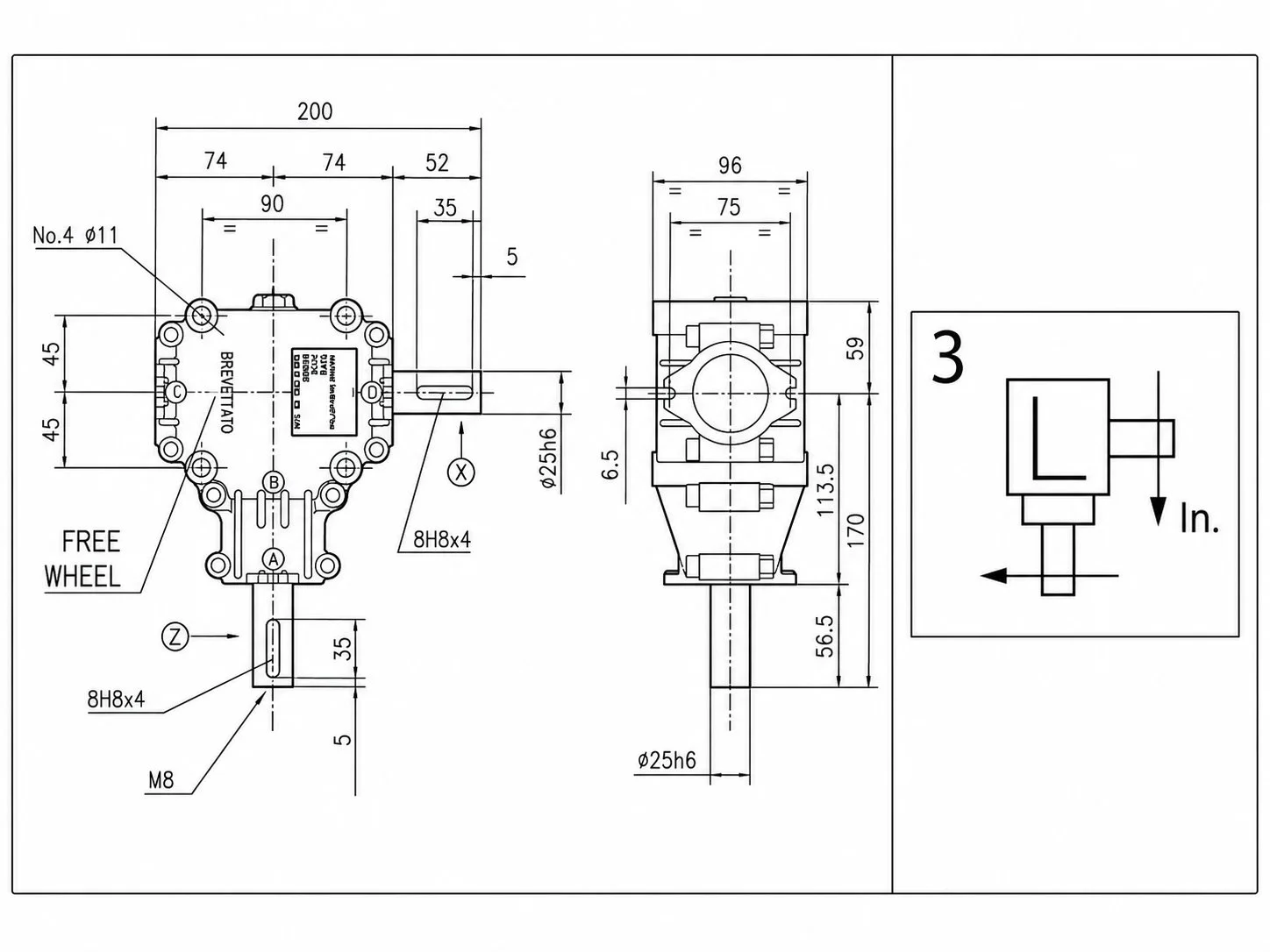
Maßzeichnung des Getriebes für Düngerstreuer – Präzisionsbefestigungs- und Wellenspezifikationen für die Geräteintegration
Auslegungsüberlegungen für Lager beim Einsatz von Düngerstreuern

Die Lageranordnung im Getriebe eines Düngerstreuers muss eine Kombination von Lasten aufnehmen, die sich wesentlich von anderen Zapfwellengetrieben unterscheidet. Die Radialkräfte durch den Zahneingriff sind vergleichbar mit anderen Getriebetypen, jedoch erfährt das Lager zusätzlich Unwuchtkräfte durch den Streumechanismus – insbesondere bei Einscheibenstreuern. Hierbei erzeugt der asymmetrische Aufprall des Streuguts auf die Schaufeln eine rotierende Unwucht auf der Abtriebswelle, die sich als Radialkraftkomponente mit der Drehzahl der Streuscheibe manifestiert.
Bei Doppelscheiben-Getrieben gleichen die gegenläufigen Drehbewegungen der beiden Scheiben die Unwuchtkräfte teilweise aus. Dennoch muss das Getriebe die Differenzlast aufnehmen, wenn eine Scheibe mehr Material aufnimmt als die andere – ein häufiger Fall, wenn der Materialschieber für variable Fördermengen einseitig teilweise geschlossen ist. Diese Differenzlast erzeugt ein Biegemoment im Getriebegehäuse, das die Lager der Abtriebswelle und die Lagerbohrungen im Gehäuse beansprucht. Mit der Zeit kann diese zyklische Biegung bei Gusseisengehäusen zu einer Längung der Lagerbohrungen führen, wodurch sich die Lagervorspannung ändert und die Ausrichtung der Zahnräder beeinträchtigt wird.
Abgedichtete Lager – Lager mit integrierten Dichtungen auf beiden Seiten – werden zunehmend für Getriebe von Düngerstreuern als zusätzliche Schutzmaßnahme gegen Verunreinigungen eingesetzt. Während die primären Wellendichtungen das Eindringen von Verunreinigungen in die Lager verhindern sollen, bietet ein abgedichtetes Lager eine zusätzliche Barriere: Selbst wenn die Wellendichtung versagt und düngerhaltige Feuchtigkeit in das Gehäuse eindringt, verhindern die integrierten Dichtungen des Lagers, dass das verunreinigte Öl die Wälzkontaktzone des Lagers erreicht, bis die Wellendichtung ausgetauscht werden kann. Dieser doppelte Schutz verlängert die Zeitspanne zwischen Dichtungsausfall und Lagerschaden von Tagen auf Wochen und bietet somit ein Wartungsfenster, das der einfache Schutz nicht bietet.
Integration des Antriebsstrangs: Ausrichtung der Nebenabtriebswelle und Überlegungen zum Kreuzgelenk
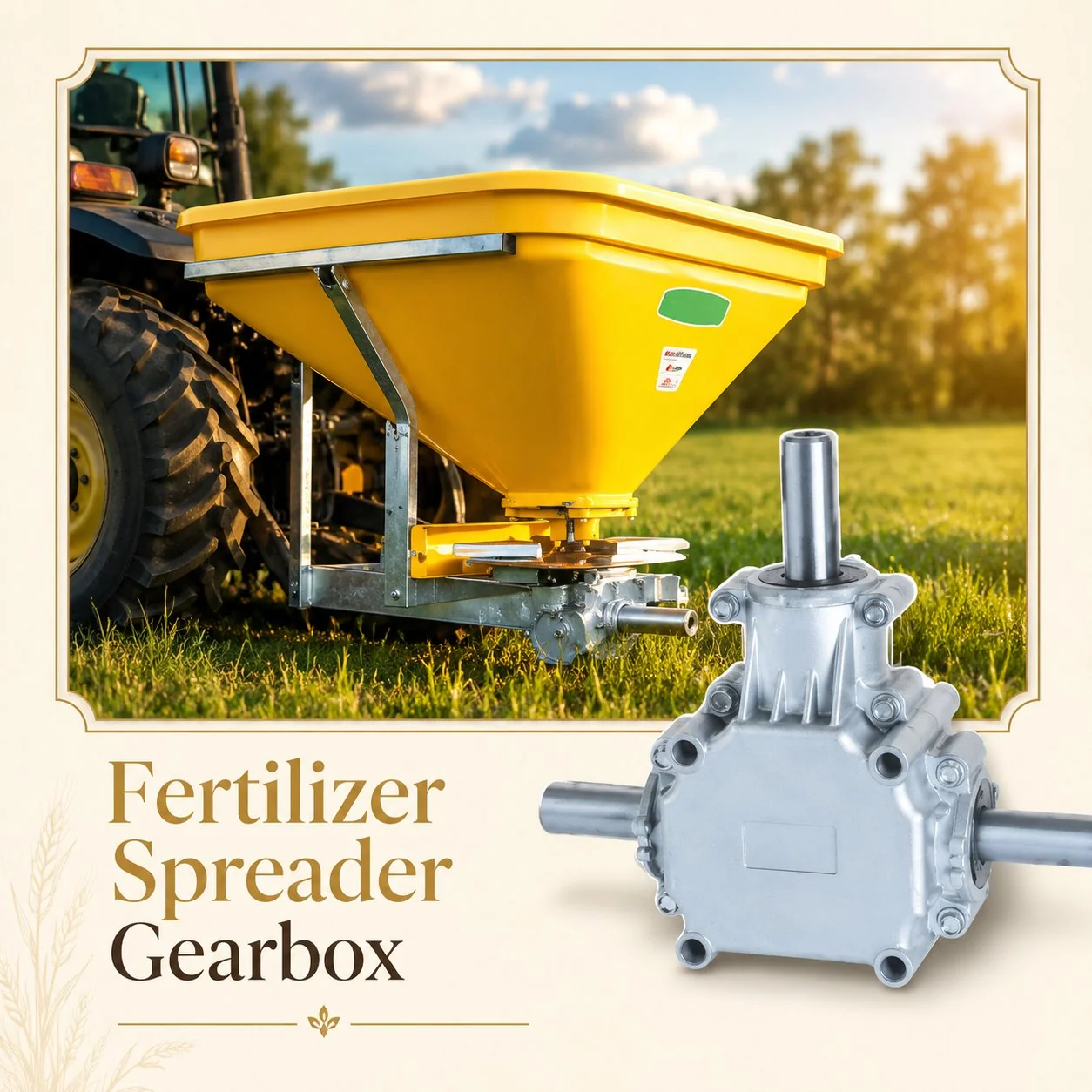
Die Verbindung zwischen der Traktorzapfwelle und dem Getriebe des Düngerstreuers wird durch ein Zapfwellenantriebswelle Mit Kreuzgelenken an beiden Enden. Die Qualität und Ausrichtung dieses Antriebsstrangs beeinflusst direkt die Lebensdauer der Eingangswellenlager und der Dichtungen des Getriebes. Fluchtungsfehler von mehr als 8 bis 10 Grad an einem der Kreuzgelenke erzeugen zyklische Drehzahlschwankungen (den klassischen Hookeschen Gelenkeffekt), die zu Torsionsschwingungen am Getriebeeingang führen. Diese Schwingungen beschleunigen den Verschleiß der Eingangswellenlager und können Resonanzen im Zahneingriff hervorrufen, die hörbare Geräusche und erhöhte Zahnkontaktspannungen verursachen.
Anhängerstreuer stellen die ungünstigsten Bedingungen für die Ausrichtung des Antriebsstrangs dar, da sich die Position des Streuers relativ zum Traktor beim Abbiegen, bei Unebenheiten im Gelände und beim Entleeren des Behälters sowie beim Anheben der Federung ständig ändert. Die Betriebswinkel der Kreuzgelenke können von nahezu null Grad auf gerader, ebener Strecke auf 15 Grad oder mehr bei engen Kurven ausschlagen – weit über dem für Standard-Kreuzgelenke empfohlenen Grenzwert von 7 bis 8 Grad für den Dauerbetrieb. Weitwinkel-Gleichlaufgelenke (CV-Gelenke) oder Doppelgelenke reduzieren die Geschwindigkeitsschwankungen bei großen Winkeln und schützen den Getriebeeingang vor den von Standard-Kreuzgelenken erzeugten Torsionsschwingungen.
Das Teleskopgelenk des Antriebsstrangs muss ebenfalls ordnungsgemäß gewartet werden. Ein verschlissenes Schiebegelenk verursacht axiales Spiel, wodurch sich der Antriebsstrang unter wechselnder Last hin und her bewegen kann. Dies führt zu axialen Stoßbelastungen, die auf die Dichtung und das Lager der Getriebeeingangswelle übertragen werden und für die das Getriebe nicht ausgelegt ist. Durch Schmieren der Verzahnung des Schiebegelenks bei jedem Wartungsintervall der Nebenabtriebswelle (in der Regel alle 8 bis 10 Betriebsstunden) wird der Verschleiß der Verzahnung, der dieses axiale Spiel verursacht, verhindert.
Schmierstoffmanagement in korrosiven Betriebsumgebungen
Das Getriebeöl in Düngerstreuergetrieben ist Gefahren ausgesetzt, die in anderen landwirtschaftlichen Getrieben nicht auftreten. Die größte Gefahr stellt die Verunreinigung durch hygroskopischen Düngerstaub dar. Düngerpartikel, die sich am Getriebegehäuse absetzen, absorbieren Luftfeuchtigkeit und bilden eine korrosive Lösung, die durch Dichtungen ins Öl gelangt. Bereits ein Wassergehalt von 200 ppm (0,021 TP3T) im Getriebeöl reduziert die Schmierfilmstärke um bis zu 401 TP3T, da Wasser das Öl an der kritischen Zahnkontaktfläche verdrängt und den gleichen Kontaktdruck nicht mehr aufrechterhalten kann. Bei 500 ppm führt die Wasserverunreinigung zu Lochfraß an den Lagerlaufbahnen, was die Lagerlebensdauer drastisch verkürzt.
Die zweite Gefahr stellt die chemische Verunreinigung dar. Gelöste Düngemittelsalze, die in das Öl gelangen, verändern dessen pH-Wert (in der Regel machen sie es saurer) und können mit den EP-Additiven des Öls reagieren. Dadurch werden die Schwefel-Phosphor-Verbindungen verbraucht, die den entscheidenden chemischen Schutz gegen Metall-auf-Metall-Kontakt gewährleisten. Sobald die EP-Additive aufgebraucht sind, arbeiten die Zahnräder ohne chemischen Schutz, und jede kurzzeitige Beschädigung des Schmierfilms führt zu direktem adhäsivem Verschleiß – einem weitaus zerstörerischeren Mechanismus als der geringe abrasive Verschleiß, den sauberes Öl zulässt.
Die Ölwechselintervalle für Getriebe von Düngerstreuern sollten gemäß 50% kürzer sein als für vergleichbare Getriebe in nicht korrosiven Umgebungen. Während ein Getriebe eines Rotationsmähwerks mit jährlichen Ölwechseln sicher betrieben werden kann, sollte ein Getriebe eines Düngerstreuers, das 200 bis 400 Stunden pro Saison im Einsatz ist, alle 100 bis 150 Stunden oder zur Saisonmitte – je nachdem, was zuerst eintritt – frisches Öl erhalten. Ölanalysen sind für Düngerstreuergetriebe besonders wertvoll: Die Überwachung des Wassergehalts und der Säurezahl in aufeinanderfolgenden Proben zeigt, ob das Dichtungssystem seine Integrität beibehält oder sich verschlechtert. Dies ermöglicht eine frühzeitige Warnung, bevor die Verunreinigung ein Ausmaß erreicht, das die Zahnräder und Lager beschädigt.
Wartungsprotokoll: Verlängerung der Getriebelebensdauer im Düngemitteleinsatz
Die Wartung von Getrieben für Düngerstreuer erfordert mehr Sorgfalt und häufigere Wartungsintervalle als die meisten anderen Zapfwellengetriebe in der Landwirtschaft. Die korrosive Umgebung beschleunigt alle Verschleißmechanismen – Dichtungsalterung, Schmierstoffzersetzung, Oberflächenkorrosion, Lockerung von Befestigungselementen durch chemische Angriffe auf die Gewinde – und ein für Standardbedingungen in der Landwirtschaft ausgelegter Wartungsplan ist für ein Düngerstreuergetriebe deutlich unzureichend.
🧹
Nach jeder Nutzungssitzung
Spülen Sie das Getriebegehäuse mit klarem Wasser ab, um Düngemittelreste zu entfernen, bevor diese Feuchtigkeit aufnehmen. Prüfen Sie die Wellendichtungen auf sichtbare Beschädigungen oder Undichtigkeiten. Stellen Sie sicher, dass das Entlüftungsventil frei und funktionsfähig ist – ein verstopftes Entlüftungsventil führt zu einem Druckaufbau, der Öl an den Dichtungen vorbeidrücken kann.
🛢️
Alle 100–150 Stunden oder zur Saisonmitte
Getriebeöl ablassen und ersetzen. Vor dem Nachfüllen das abgelassene Öl prüfen: Milchiges Aussehen deutet auf Wassereintritt hin; eine grüne oder blaue Verfärbung lässt auf Kupferkorrosion durch gelöste Düngemittelsalze schließen. Wellendichtringe bei festgestellter Undichtigkeit ersetzen. Korrosionsstellen am Gehäuse mit Ausbesserungslack behandeln.
🔧
Saisonende (umfassend)
Öl vollständig ablassen und neu befüllen. Beide Wellendichtringe ersetzen (unabhängig vom Zustand – die Kosten sind gering, die Folgen eines Ausfalls jedoch gravierend). Gehäuse auf Korrosionsschäden prüfen. Zahnflankenspiel und Lagerspiel kontrollieren. Beschädigte Stellen mit einer Ausbesserungslackierung versehen und das Getriebe anschließend in einem geschlossenen Raum lagern oder das Anbaugerät abdecken, um es vor winterlicher Kondensation zu schützen.
Ein häufig übersehenes Wartungselement ist die Entlüftung. Jedes Zapfwellengetriebe verfügt über eine Entlüftung – ein kleines Ventil oder Filterelement, das den Druckausgleich im Gehäuse bei schwankender Öltemperatur während des Betriebs ermöglicht. Bei Düngerstreuergetrieben ist die Entlüftung düngerhaltigem Staub ausgesetzt, der das Filterelement verstopfen oder im Entlüftungsgehäuse kristallisieren kann. Eine verstopfte Entlüftung verhindert den Druckausgleich, wodurch der Innendruck temperaturabhängig schwankt: Überdruck bei Erwärmung des Getriebes (wodurch Öl an Dichtungen vorbeigedrückt werden kann) und Unterdruck bei Abkühlung (wodurch verunreinigte Luft durch kleinste Dichtungsfehler gesaugt wird). Durch Austausch oder Reinigung der Entlüftung bei jedem Ölwechsel lässt sich diese Fehlerursache vermeiden.
Auswahl eines OEM- oder Aftermarket-Ersatzgetriebes
Wenn das Getriebe eines Düngerstreuers ausgetauscht werden muss, sind bei der Auswahl sowohl die mechanische Kompatibilität als auch die Eignung für den Einsatz unter Berücksichtigung der Umgebungsbedingungen entscheidend. Ein Standard-Zapfwellengetriebe mit dem richtigen Übersetzungsverhältnis, Drehmoment und Befestigungsmuster passt zwar mechanisch zum Streuer – aber ohne die für den Einsatz in der Düngerstreuung erforderliche korrosionsbeständige Konstruktion erreicht dieses Getriebe nur einen Bruchteil der erwarteten Lebensdauer.
Bei der Auswahl eines Ersatzgetriebes sind folgende Spezifikationen zu prüfen: die Eingangswellenverzahnung (6-Zahn-Verzahnung 1-3/8 Zoll für 540 U/min oder 21-Zahn-Verzahnung für 1000 U/min), das Übersetzungsverhältnis und die Drehrichtung des Abtriebs, der Durchmesser und die Anschlussart der Abtriebswelle (verzahnt, mit Keilnut oder Flansch), das Befestigungsschraubenmuster und die Gehäuseausrichtung sowie das Gehäusematerial und die Beschichtung. Bei Doppelscheibenstreuern muss das Getriebe zwei gegenläufige Abtriebe aufweisen – diese spezielle Konfiguration bieten Standard-Nebenabtriebsgetriebe nicht.
Bei einem defekten Düngerstreuergetriebe lohnt sich oft ein Upgrade gegenüber der ursprünglichen Spezifikation. Waren im Originalgetriebe Nitril-Dichtungen verbaut, kostet der Wechsel zu Viton-Dichtungen praktisch nichts extra, verlängert aber die Lebensdauer der Dichtungen im Düngemitteleinsatz erheblich. Bestand das Originalgehäuse aus unbeschichtetem Gusseisen, verursacht ein Ersatz mit Epoxid-Polyurethan-Beschichtung nur geringe Mehrkosten und beseitigt gleichzeitig die Korrosionsgefahr von außen. Und war das Drehmoment des Originalgetriebes für die Anwendung grenzwertig – ein häufiges Problem bei der Verwendung von schwereren und dichteren Materialien als ursprünglich vorgesehen –, bietet die nächsthöhere Drehmomentklasse eine zusätzliche Sicherheitsreserve. Kontakt unser Ingenieurteam Für spezifische Ersatzteilempfehlungen, die auf Ihr Streuermodell und die von Ihnen verarbeiteten Düngemittel abgestimmt sind.
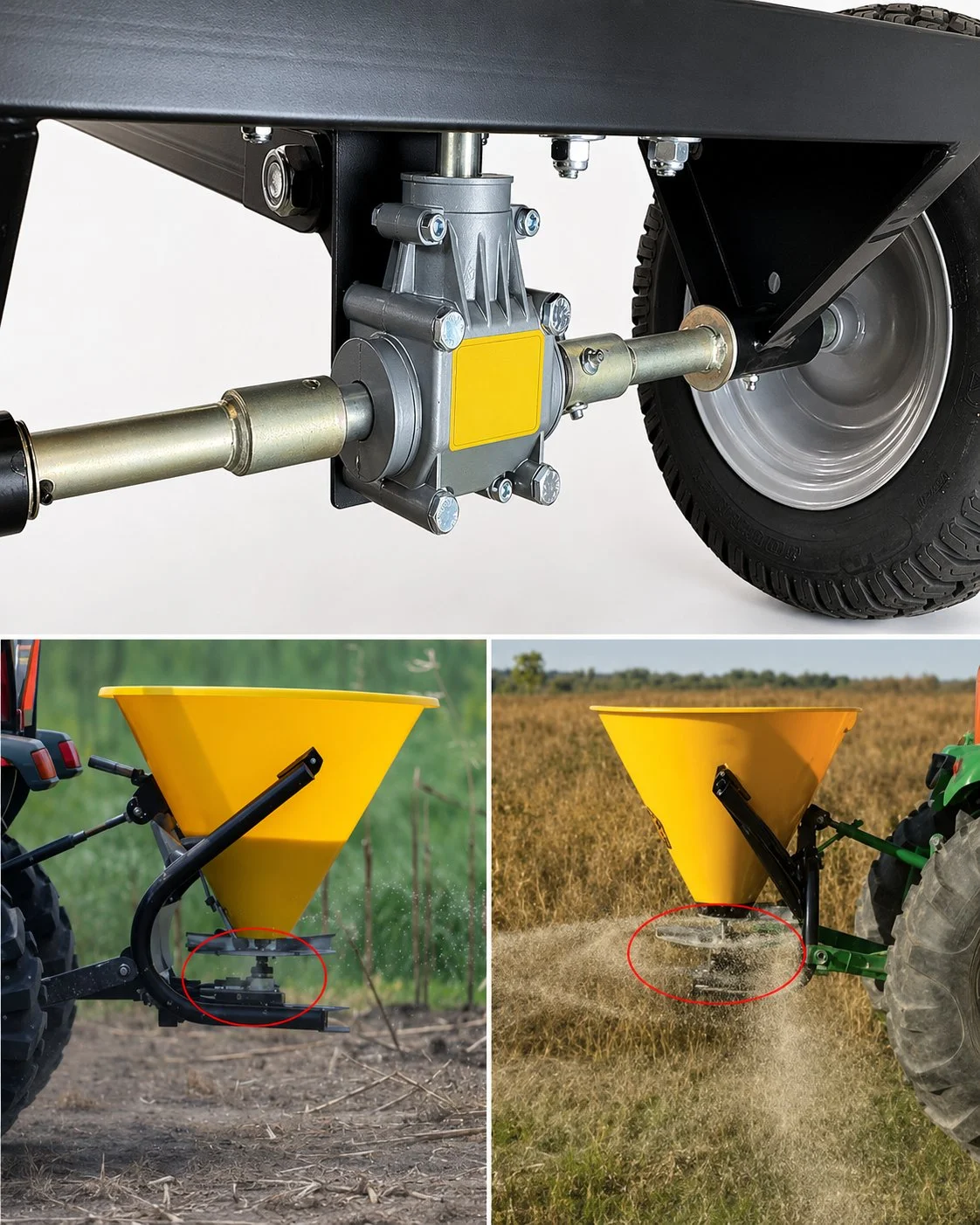
Getriebe für Düngerstreuer, das einen Zweischeiben-Radialstreuer im großflächigen Einsatz antreibt
Häufig gestellte Fragen
Präzisionsgetriebe für jede Streuerkonfiguration
Von Doppelscheiben-Zentrifugaleinheiten bis hin zu Pendelrohrantrieben – unser Ingenieurteam spezifiziert und liefert Getriebe für Düngerstreuer mit korrosionsbeständiger Konstruktion, chemikalienbeständigen Dichtungen und präzisen Übersetzungsverhältnissen für eine optimale Streuleistung.
Herausgeber: Cxm