Screw Conveyor Gearbox: Drive Ratios and Torque Requirements
Screw conveyors (augers) are the workhorse of grain handling — they transfer grain horizontally, on inclines, and vertically from ground hoppers to bin tops, from truck unloading pits to processing facilities, and between storage structures. The PTO gearbox driving a screw conveyor must reduce the tractor or motor input speed to the optimal auger flight speed while delivering the continuous torque needed to push grain through the trough against friction, gravity (on inclines), and the back-pressure of accumulated grain at the discharge end.
Optimal screw conveyor speed depends on the grain type, conveyor diameter, and inclination angle. For horizontal wheat conveyors with 200 to 300 mm diameter flights, the typical operating speed is 400 to 600 RPM. Larger-diameter conveyors (400 to 500 mm) run slower — 200 to 400 RPM — to limit grain damage from excessive centrifugal force at the flight periphery. Inclined conveyors require progressively lower speeds as the angle increases: a 45-degree incline typically runs 30 to 50 percent slower than a horizontal conveyor of the same diameter to maintain volumetric efficiency as grain tends to cascade backward between flight gaps on steep inclines.
For a PTO-driven portable auger receiving 540 RPM input, a typical gearbox ratio of 1:1 to 1.3:1 (speed reduction) delivers the 400 to 540 RPM output suitable for medium-diameter horizontal conveyors. Inclined augers or large-diameter conveyors may require ratios of 2:1 to 3:1 for adequate speed reduction. The torque requirement is dominated by the starting condition — a screw conveyor buried in grain requires 2 to 3 times the running torque to begin rotation, and the agricultural gearbox must be rated for this starting torque without exceeding its peak load capacity.
Screw Conveyor Starting Torque
2–3×
Running torque required at startup when the conveyor trough is loaded with grain
The PTO gearbox must be rated for this peak starting torque without damage
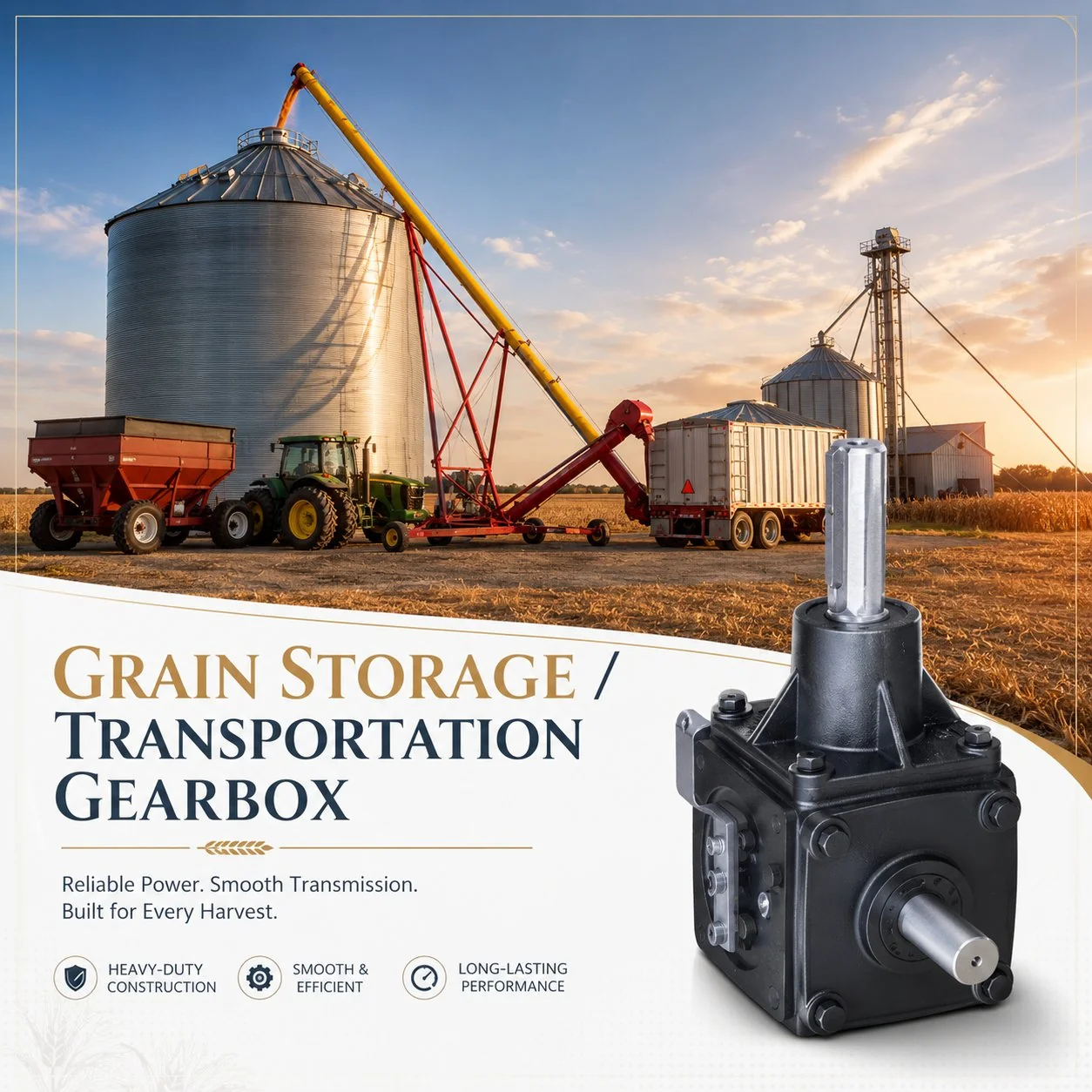
Bucket Elevator Gearbox Sizing for Grain Storage Facilities
Bucket elevators lift grain vertically from ground level to bin tops, dryer inlets, and cleaning equipment at heights of 10 to 40+ meters. The gearbox driving a bucket elevator must deliver consistent low-speed, high-torque output to the head shaft — typically 30 to 80 RPM depending on elevator belt speed and bucket size. This requires significant speed reduction from the motor or PTO input: a 1,000 RPM motor driving a 50 RPM head shaft needs a 20:1 overall ratio, typically achieved by combining a worm or helical gearbox with a secondary chain or belt drive stage.
The power requirement for a bucket elevator is determined by the lift height, throughput rate, and grain bulk density. A typical calculation for a wheat elevator moving 100 tonnes per hour through a 25-meter lift yields approximately 15 to 20 kW (20 to 27 HP) at the head shaft — well within PTO gearbox capability for portable or farm-scale installations. However, the actual gearbox selection must account for the efficiency losses in the drive train (gear mesh, belt slip, bearing friction) that reduce the power available at the elevator head shaft compared to the motor or PTO input power.
Bucket elevator gearboxes experience a unique loading pattern: relatively constant torque during normal operation (the weight of loaded buckets on the ascending side creates a steady gravitational load) but severe transient loads during startup (accelerating the full mass of the belt, buckets, and grain from rest) and during bucket plugging events (when grain fails to discharge at the head and accumulates in the boot, dramatically increasing the belt tension). The gearbox must tolerate these transient overloads without gear tooth damage or bearing failure. For similar continuous-duty agricultural gearbox applications that share these demanding operational characteristics, see our technical resource on gearbox for manure spreaders, which covers comparable high-torque drive requirements.
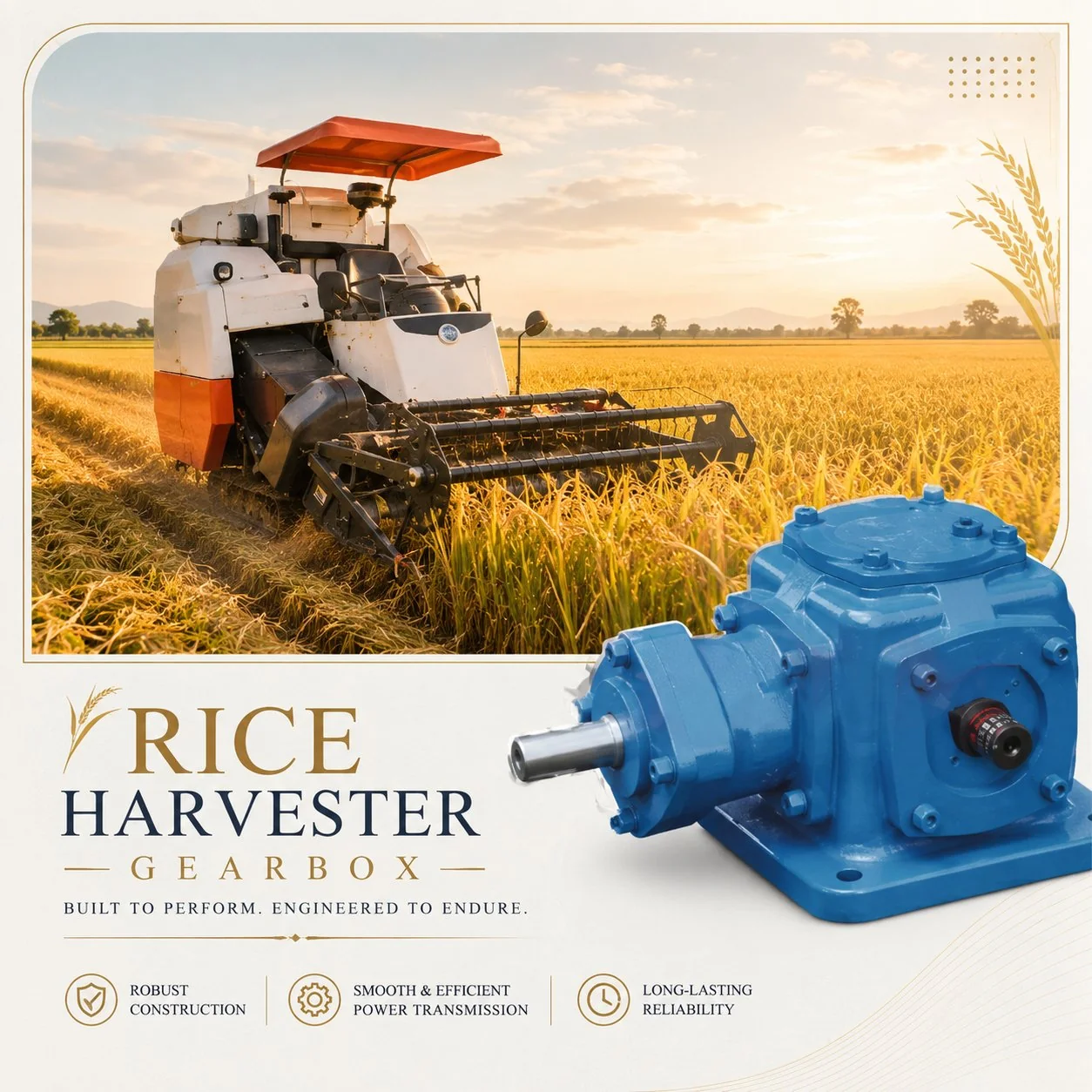
Grain Bin Sweep Augers: Gearbox Requirements for Complete Bin Cleanout
Sweep augers are low-profile screw conveyors that rotate around the inside perimeter of flat-bottom grain bins, pushing grain toward the center sump for discharge through the unloading auger below. The gearbox driving a sweep auger must deliver very low output speed (10 to 30 RPM for the sweep arm rotation) combined with moderate torque for pushing grain across the bin floor against friction. This requires either a high-ratio gearbox (30:1 to 50:1) or a multi-stage drive combining a gearbox with a chain reduction drive.
Sweep auger gearboxes operate in one of the most challenging environments in grain handling: fully submerged in grain dust at the bottom of a storage bin. The grain dust is extremely fine, abrasive (silica content varies by grain type but is always present), and enters any unsealed opening within hours of operation. A standard agricultural gearbox with a vented breather cap will ingest grain dust rapidly, contaminating the oil and accelerating wear on every internal surface. Sweep auger gearboxes must use sealed (IP65 or higher) housings with pressurized breather systems or fully sealed-for-life designs that eliminate the dust ingestion pathway entirely.
🔄
Screw Conveyor Drive
Speed: 200–600 RPM output. Ratio: 1:1 to 3:1 reduction. Torque: moderate continuous with 2–3× starting spike. Housing: standard sealed with grain dust consideration.
⬆️
Bucket Elevator Drive
Speed: 30–80 RPM output. Ratio: 15:1 to 30:1 (multi-stage). Torque: high continuous with severe startup transients. Housing: heavy-duty, shaft-mounted or foot-mounted.
🌀
Sweep Auger Drive
Speed: 10–30 RPM output. Ratio: 30:1 to 50:1 (multi-stage). Torque: moderate. Housing: sealed IP65+ or sealed-for-life — grain dust environment demands full dust exclusion.
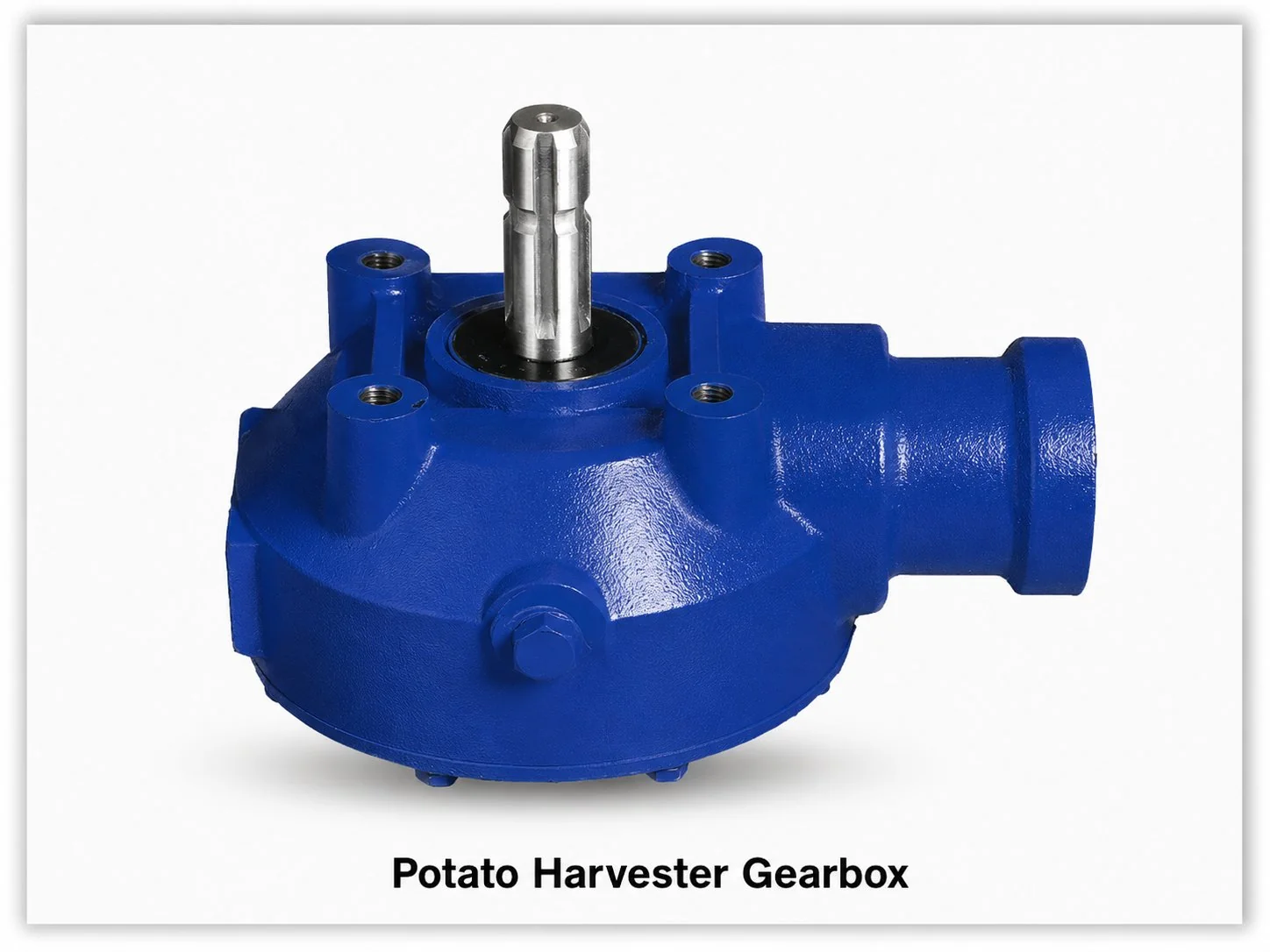
Dust-Sealed Housing: Protecting Gearboxes in Grain Dust Environments
Grain dust is classified as a combustible dust hazard in most industrial safety standards, but its mechanical effects on gearbox internals are equally destructive. Fine grain dust particles (10 to 100 micrometers) penetrate standard lip seals within days of continuous operation, mix with the gear oil to form an abrasive slurry, and accelerate wear on gear tooth surfaces, bearing races, and seal lips. A gearbox running in a grain dust environment with inadequate sealing can lose 50 to 70 percent of its expected service life compared to the same gearbox operating in a clean environment.
Effective dust sealing for grain handling gearboxes requires a multi-barrier approach. Double-lip shaft seals with a grease-packed intermediate chamber provide the primary shaft seal barrier — the outer lip excludes dust while the grease between the lips captures any particles that pass the outer seal before they can reach the inner lip and the oil space. Sealed breather valves (desiccant breathers or pressure-relief check valves) replace open breather caps to prevent dust ingestion through the housing ventilation path. Machined housing joints with gaskets or sealant replace the rough-cast joint faces that allow dust entry through the housing parting line.
For PTO-driven portable grain augers that move between field unloading and bin filling duties, the dust exposure varies with each setup. A PTO gearbox on a field unloading auger may operate in relatively clean conditions, while the same auger repositioned at a bin filling station operates in a dense dust cloud generated by falling grain. A quality gearbox manufacturer like Ever-Power PTO Gearbox offers dust-sealed versions of standard models for grain handling applications. Contact our engineering team for specifications on sealed housing options. For PTO shaft and agricultural gearbox packages designed for grain handling operations, we provide integrated solutions with matched dust sealing across all drive components.
✅ Grain Handling Gearbox Selection Checklist
☐ Output speed matched to conveyor type and grain (RPM verified for grain damage limit)
☐ Torque rating covers 2–3× running torque for loaded startup condition
☐ Continuous duty thermal rating adequate for 10–14 hour harvest-day operation
☐ Dust sealing appropriate for operating environment (IP65+ for in-bin applications)
☐ Mounting configuration verified (foot-mount, flange-mount, or shaft-mount)
☐ Spare gearbox on hand for harvest-critical applications with zero-downtime requirement
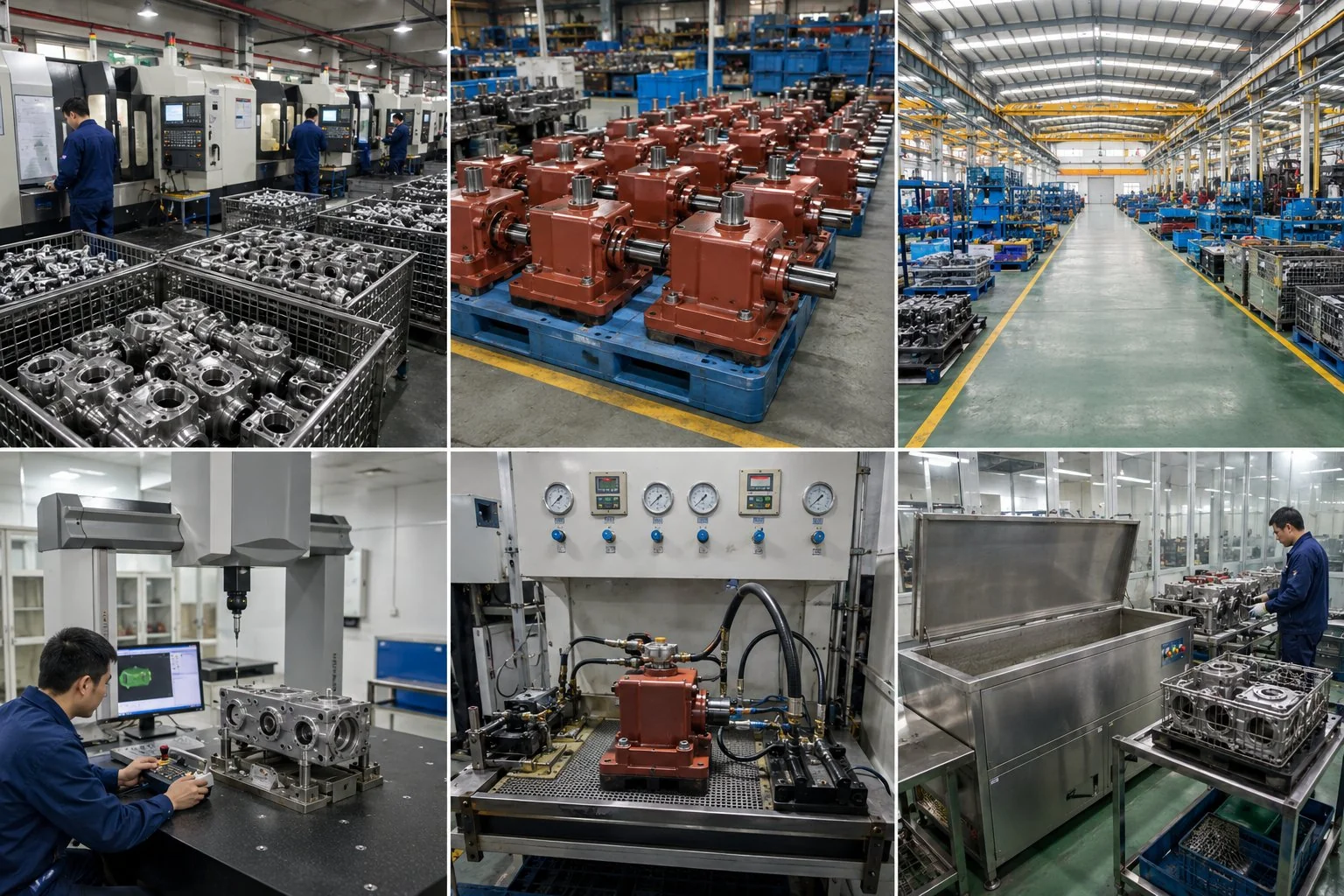
Continuous Duty at Harvest Throughput Rates
Grain handling systems run 10 to 16 hours per day during the harvest window — far longer than the intermittent duty cycles of most agricultural gearbox applications. A rotary cutter operates in bursts of minutes between turns and repositioning. A grain auger runs continuously for hours, transferring load after load from truck to bin without interruption. This continuous duty creates sustained thermal loading that exposes any weakness in the gearbox’s thermal management design.
A gearbox that operates comfortably at 60 degrees Celsius oil temperature during 30-minute duty cycles may reach 90 to 100 degrees Celsius after 8 hours of continuous operation at the same load. At these elevated temperatures, mineral gear oil degrades rapidly — losing viscosity, oxidizing faster, and depositing varnish on internal surfaces that insulates the housing and further reduces heat dissipation. The thermal spiral can progress to bearing failure within days if not managed. For grain handling gearboxes expected to run 10+ hours daily during harvest, synthetic gear oil (PAO-based EP 220 or equivalent) is the minimum recommendation. Synthetic oil maintains its viscosity and oxidation resistance at temperatures where mineral oil fails, extending both oil service life and the gearbox components it protects.
Housing design also affects continuous-duty thermal performance. A gearbox with large external surface area and finned surfaces dissipates heat to the ambient air more effectively than a compact smooth-walled housing of the same internal volume. Shaft-mounted gearboxes that sit directly on the conveyor head shaft often have limited natural convection because the mounting arrangement restricts airflow around the housing. In these installations, oil capacity becomes the primary thermal buffer — a larger oil volume absorbs more heat energy before reaching critical temperature, buying time before thermal equilibrium is reached. Specifying a gearbox with 20 to 30 percent more oil capacity than the minimum required provides a meaningful thermal margin for extended harvest-day operation.
Harvest Season Gearbox Maintenance Strategy
The harvest window is not the time for major gearbox maintenance — it is the time when preparation pays dividends. Pre-harvest inspection should include draining and replacing gear oil in every grain handling gearbox (starting each harvest with fresh oil ensures maximum protection during the most demanding period), checking oil level and seal condition on every unit, greasing all external bearings and PTO driveline U-joints, and verifying that all mounting fasteners are torqued to specification. Any gearbox that showed signs of distress during the previous harvest (unusual noise, elevated temperature, oil contamination, or seal leakage) should be rebuilt or replaced before the new harvest begins — not after the first load of grain reveals that last season’s marginal gearbox has become this season’s catastrophic failure.
During harvest, daily maintenance is limited to what can be done quickly without disrupting throughput: checking oil levels every morning before the first truck arrives, listening for changes in gearbox noise during the first minutes of operation each day (a change in pitch or the appearance of new grinding or clicking sounds indicates progressing internal damage), and monitoring housing temperature by touch (a gearbox that was warm yesterday but is hot today is telling you something has changed). If a gearbox develops a confirmed problem during harvest, the decision framework is simple: if you have a spare gearbox on the shelf, swap it immediately and rebuild the failed unit during the off-season. If you do not have a spare, contact your supplier for emergency overnight shipping of a replacement — the cost of expedited shipping is trivial compared to a day of lost grain handling capacity during the harvest window.
Post-harvest, drain the oil from all grain handling gearboxes and inspect it for contamination (grain dust, water, metallic particles). Refill with fresh oil and run each gearbox briefly to coat all internal surfaces with protective oil film before the extended storage period. This post-harvest oil change removes the contamination accumulated during harvest operation and ensures that the gearbox enters storage with clean oil protecting every internal surface against corrosion during months of inactivity.
Frequently Asked Questions
Request a Free Compatibility Check
Send us your grain handling equipment model, conveyor specifications, and throughput requirements. Our engineering team will verify gearbox compatibility and recommend the correct ratio, torque rating, and dust sealing level for your specific application — free of charge, with a detailed proposal returned within 24 hours.