What Makes a Flail Mower Gearbox Different
一个 割草机变速箱 operates under a fundamentally different stress profile than most PTO-driven implements. Where a rotary cutter encounters occasional heavy impact from rocks or stumps, a flail mower endures continuous high-frequency impacts from dozens of individually hinged blades striking vegetation, debris, stones, and hidden objects at every revolution.
This constant bombardment creates a unique engineering challenge: the gearbox must simultaneously handle high rotational speed, sustained vibration, relentless seal pressure from airborne debris, and thermal loads from extended operating periods. Understanding these demands is the first step toward choosing a unit that lasts.
How a Flail Mower Gearbox Converts PTO Power
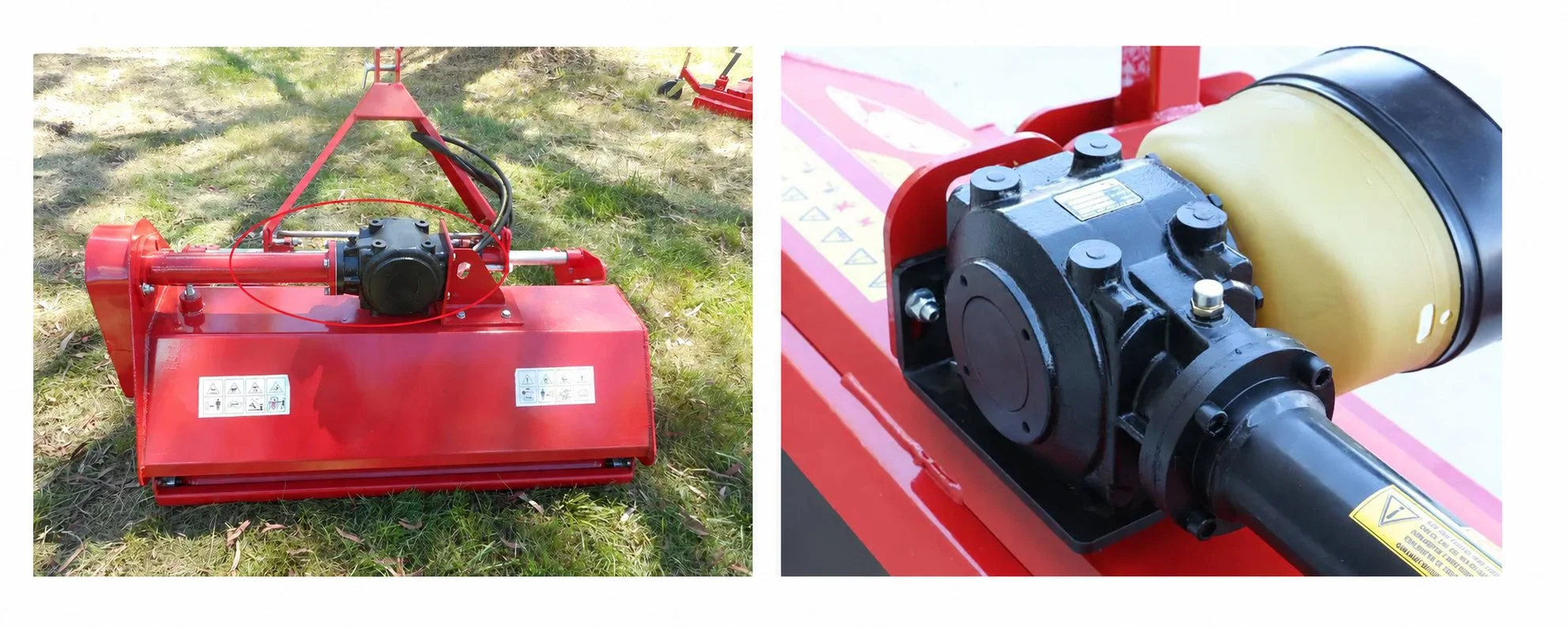
这 动力输出轴 delivers rotational energy from the tractor — typically at 540 RPM — into the gearbox input shaft. Inside the housing, a spiral bevel gear set redirects this power 90 degrees, from the horizontal driveline axis to the horizontal rotor axis running parallel to the ground. Unlike rotary cutters that direct power downward vertically, flail mowers need a horizontal output to spin the rotor drum.
Most flail mower PTO gearbox designs use a gear ratio close to 1:1 or a slight increase (e.g., 1:1.2), because flail blades rely on high tip speed rather than high torque to shred vegetation effectively. The many small, hinged flail blades each carry relatively little mass, so the energy required per impact is low — but the rotor must spin fast enough to ensure each blade clears its cut before the mower advances past the material.
🔑 Critical Difference from Rotary Cutters
A rotary cutter gearbox trades speed for torque (ratios of 1:1.47 to 1:2.4) to power heavy blades through thick brush. A flail mower gearbox maintains or slightly increases speed, because cutting power comes from blade tip velocity and impact frequency — not raw force. This fundamental difference dictates every design decision inside the housing.
Impact-Load Engineering: Built for Continuous Punishment
Each flail blade striking an object sends a shock wave back through the rotor shaft, through the bearings, and into the gear mesh. Multiply this by 20 to 40 blades per revolution, at 500+ RPM, over thousands of hours — and you begin to understand why flail mower gearbox engineering demands a different approach to materials and tolerances.
🔩
齿轮齿廓
Spiral bevel gears with carburized and case-hardened teeth (HRC 58–62 surface, tough core) absorb cyclic micro-impacts without pitting. Straight-cut gears cannot handle the vibration spectrum of flail operation.
🛡️
Housing Construction
Ductile iron or spheroidal graphite (SG) iron housings flex under impact without cracking — unlike gray cast iron, which is brittle and shatters under sustained vibration loading.
⚙️
轴承选择
Double-row tapered roller bearings handle the combined radial, axial, and cyclic loads. Single-row bearings used in lighter-duty applications would fatigue rapidly under flail mower vibration patterns.
Seal Technology for High-Debris Environments
Flail mowers generate an enormous volume of airborne debris — shredded vegetation, soil particles, small stones, moisture — that constantly assaults the gearbox seals. Standard single-lip shaft seals used on less demanding implements fail within one season in this environment. Effective flail mower gearbox sealing requires a multi-barrier approach:
1
External Debris Shield
A labyrinth or slinger ring mounted on the shaft outside the primary seal flings debris away from the seal face by centrifugal force. This first barrier stops 90%+ of particles before they reach any sealing surface.
2
Double-Lip Oil Seal
The primary seal uses two lips: the inner lip retains oil, the outer lip excludes contaminants. FKM (Viton) material withstands higher temperatures and chemical exposure compared to standard NBR rubber.
3
Shaft Surface Finish
The shaft journal under the seal must be ground and polished to a surface roughness of Ra 0.2–0.4 µm. A scored or rough shaft chews through seal lips regardless of seal quality.
4
Breather Vent with Filter
A filtered breather vent equalizes internal pressure without admitting debris-laden air. Blocked breathers are the single most common cause of seal failure in flail mower gearboxes — internal pressure forces oil past even a new seal.
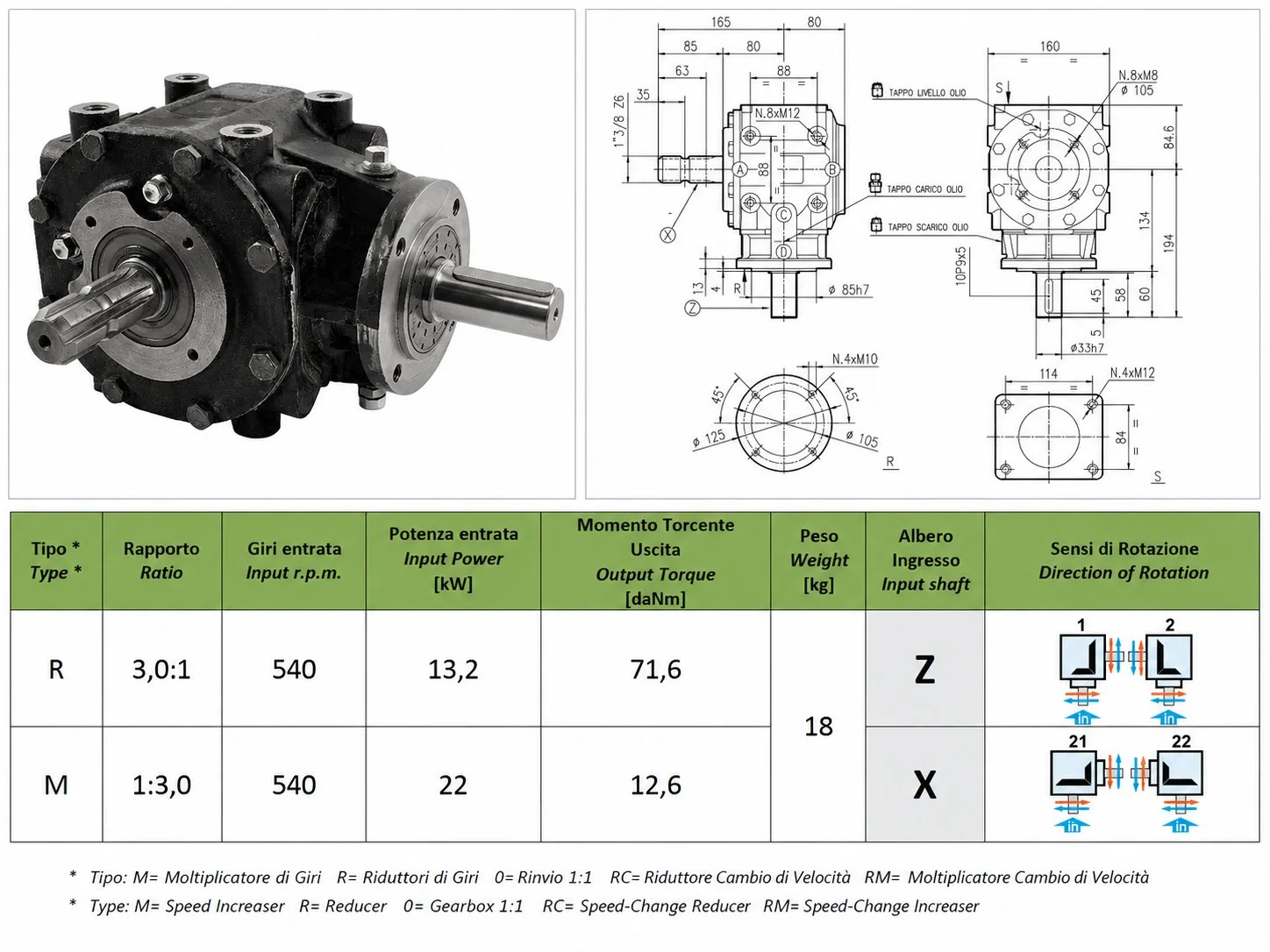
Dimensional reference for standard flail mower gearbox mounting and shaft configurations
Specification Table: Flail Mower Gearbox Selection Parameters
When sourcing a replacement or specifying a new flail mower gearbox, these parameters must match your implement and tractor combination precisely:
| 范围 | Light-Duty Flail | Medium-Duty Flail | Heavy-Duty Flail |
|---|---|---|---|
| Tractor HP range | 15–35马力 | 35–75 HP | 75–150+ HP |
| PTO输入速度 | 540 转/分 | 540 转/分 | 540 or 1000 RPM |
| 齿轮比 | 1:1 | 1:1 至 1:1.2 | 1:1 至 1:1.5 |
| Rotor belt / direct drive | Belt | Belt or direct | Direct drive |
| 密封类型 | Single lip NBR | Double lip NBR/FKM | Double lip FKM + slinger |
| 房屋材料 | 铸铁 | 球墨铸铁 | SG iron / cast steel |
| Typical cutting width | 1.0–1.5 m | 1.5–2.2 m | 2.2–3.0+ m |
Flail Mower Gearbox vs. Rotary Cutter Gearbox
These two gearbox types serve different mowing philosophies. The comparison matters because installing the wrong type leads to premature failure or poor cutting performance.
| 特征 | 割草机变速箱 | 旋转切割机齿轮箱 |
|---|---|---|
| Power direction | Horizontal → horizontal (90°) | Horizontal → vertical (90°) |
| 典型齿轮比 | 1:1 至 1:1.2 | 1:1.47 至 1:2.4 |
| Load pattern | Continuous high-frequency | Occasional heavy impact |
| Debris exposure | Extreme — shredded material envelope | Moderate — open deck design |
| Key design priority | Seal technology + vibration durability | Shear protection + torque capacity |
| 过载保护 | Belt slip or friction clutch | Shear bolt or slip clutch |
一个 旋转切割机用变速箱 is built to survive sudden catastrophic impacts and deliver maximum torque at reduced speed. A flail mower gearbox, by contrast, is engineered for relentless sustained vibration and aggressive debris environments at higher operating speeds.
Gearbox Setup: Installation Best Practices
Correct installation determines whether your flail mower gearbox reaches its rated service life or fails within the first season. Follow these practices during every new installation or replacement:
✅
Verify mounting alignment — Bolt the gearbox to the mower frame using the manufacturer’s specified torque sequence. Misalignment of even 0.5 mm between the gearbox output shaft centerline and the rotor shaft centerline creates radial bearing loads that were not designed into the system.
✅
Check belt tension (belt-driven models) — Too loose and the belt slips, overheats, and glazes. Too tight and it overloads the gearbox output bearing. Follow the manufacturer’s deflection specification using a belt tension gauge.
✅
Fill with correct oil type and volume — Use EP 80W-90 gear oil filled to the exact level marked on the sight glass or dipstick. Overfilling causes churning, foaming, and elevated temperature. Underfilling leaves the upper bearing starved.
✅
Confirm driveline U-joint angles — PTO shaft universal joints should operate below 25° working angle. Excessive angles cause cyclic speed variation (Cardan error) that amplifies vibration in the gearbox input bearings.
✅
Run-in period — Operate at half load for the first 2 hours, then drain and refill the oil. Break-in flushes machining particles and initial wear debris before they can circulate and cause secondary damage.
Maintenance Schedule for Flail Mower Gearboxes
Flail mowers operate in harsher conditions than most PTO-driven implements, which means maintenance intervals should be shorter than standard 农业齿轮箱 recommendations. A discipline of inspection and fluid management prevents the cascading failures that turn a minor issue into a total gearbox loss.
🛢️ Recommended Maintenance Intervals
●
每次使用前 — Check oil level; visually inspect for leaks around input and output shaft seals.
●
Every 25 hours — Clean breather vent and debris shield; check belt tension (belt-driven models).
●
Every 75 hours — Drain and replace gear oil completely. Flail environments contaminate oil faster than other applications.
●
Every 150 hours — Inspect seals for lip wear; check shaft journals for scoring; measure gear backlash.
●
赛季结束 — Full teardown inspection of bearings, gears, seals, housing; store with fresh oil at operating temperature to coat all internal surfaces.
Notice that the oil change interval (75 hours) is shorter than the standard 100-hour recommendation for most PTO gearbox applications. The high debris load in flail mowing introduces contaminants into the oil faster, accelerating abrasive wear on gear surfaces and bearings.
Troubleshooting Common Flail Mower Gearbox Problems
When your gearbox starts showing symptoms, quick diagnosis prevents an expensive rebuild. Here are the most common problems and their root causes:
⚠️
Oil leak at the output shaft — Check breather vent first. If blocked, internal pressure forces oil past even a new seal. If breather is clear, inspect the seal lip and shaft surface for scoring.
⚠️
Vibration increase during operation — Could indicate worn bearings, gear tooth damage, or an imbalanced rotor. Check bearing play first; if tight, inspect gears for pitting or chipped teeth.
⚠️
Overheating (housing too hot to touch) — Low oil, wrong viscosity, or continuous overloading. Verify oil level and grade; reduce ground speed or raise cutting height to decrease load.
⚠️
Grinding noise on startup — Metal-on-metal contact, usually from dry bearings (oil settled during storage) or advanced gear wear. Run at idle for 30 seconds to circulate oil before engaging the PTO fully. If noise persists, inspect internally.
跨品牌替换兼容性
Flail mower owners running equipment from brands such as Kuhn, Maschio, Ferri, Orsi, McConnel, Bomford, Muthing, and Berti often need replacement gearboxes that match the original mounting pattern, gear ratio, and shaft configuration. Aftermarket units manufactured to OEM specifications provide a cost-effective alternative to dealer-sourced originals — often with improved materials and seals. All brand names referenced are registered trademarks of their respective owners and are mentioned solely for cross-reference identification.
If you need help identifying the correct replacement for your machine, 联系我们的工程团队 with the OEM part number or the gearbox nameplate data — we cross-reference dimensions and confirm compatibility before shipping.
Why Gearbox Quality Matters More for Flail Mowers
The consequences of a cheap 动力输出轴变速箱 failing on a flail mower are more severe than on most other implements. A seized gearbox at highway-adjacent mowing speed creates safety hazards. A sudden belt separation from a cracked output shaft can wrap around the rotor and jam the entire machine. Downtime during municipal mowing contracts costs money and reputation.
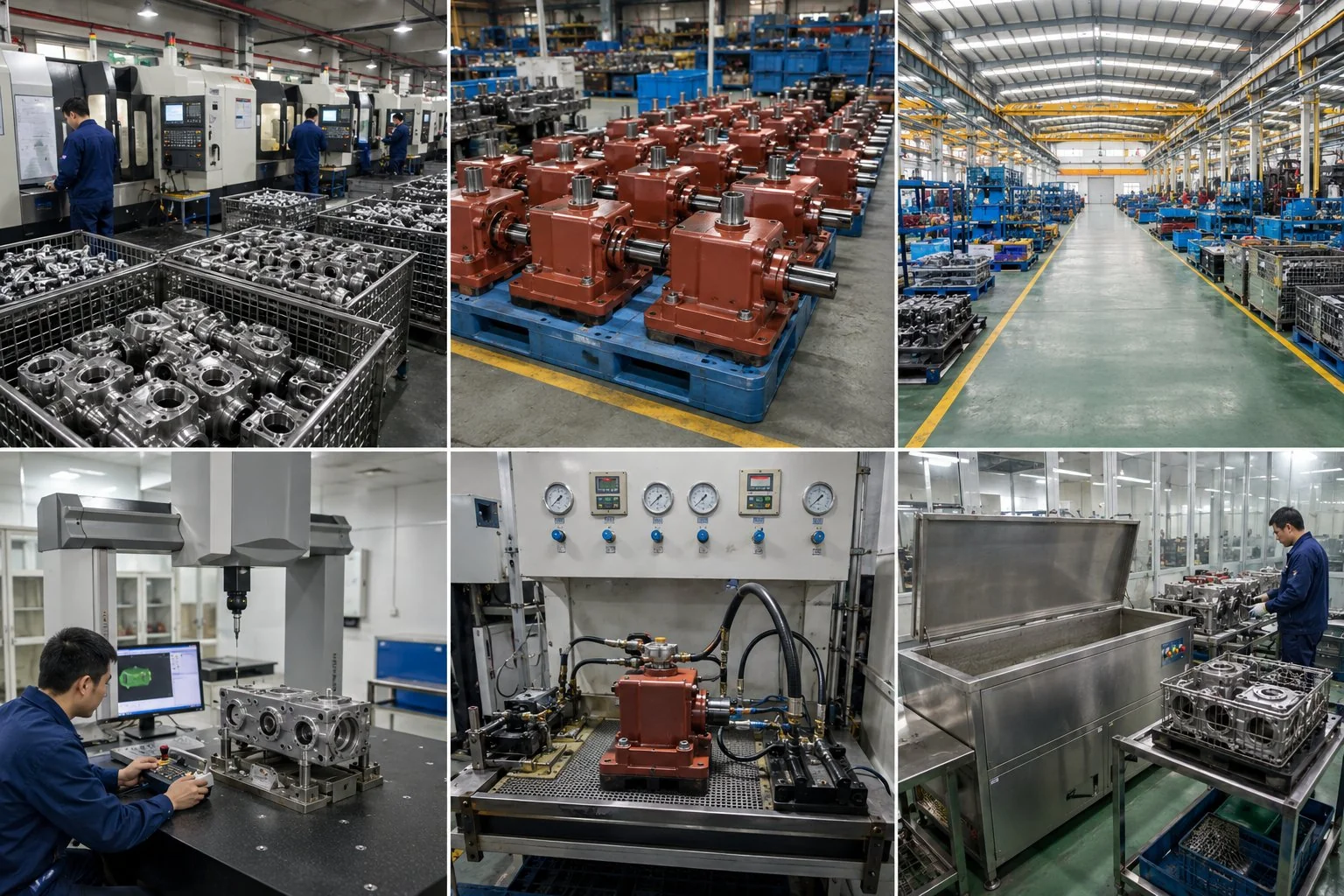
Quality differentiators to evaluate include gear material and heat treatment method, bearing brand and rated load capacity, housing metallurgy (ductile iron vs. gray iron), seal material (FKM vs. NBR), and whether the manufacturer performs 100% load testing before shipment. A thorough supplier like Ever-Power PTO变速箱 tests every unit under load before it leaves the factory — confirming noise level, temperature rise, seal integrity, and vibration within specification limits.
常见问题解答
Need a Flail Mower Gearbox That Lasts?
From single-unit replacements to OEM supply agreements, our engineering team matches 农业齿轮箱 configurations to your specific flail mower application — backed by 20+ years of manufacturing expertise and 100% load testing on every unit.
编辑:Cxm