Hvorfor traktorhydraulik alene ikke er nok
De fleste moderne traktorer leveres med et indbygget hydraulisk system - en pumpe, der drives af motoren via transmissionen, og som forsyner fjernkoblinger bagpå eller i midten. Disse kredsløb leverer typisk mellem 30 og 80 liter i minuttet ved driftstryk på 170 til 210 bar, hvilket er nok til at hæve en trepunktsophæng, drive en frontlæsser eller betjene et par dobbeltvirkende cylindre på et jordbearbejdningsredskab. Men når et redskab kræver kontinuerlig højflow-hydraulisk kraft - brændekløvere, der kører med 100+ LPM, store kornstøvsugere, træsakse, mobile betonpumper eller højkapacitets afgrødesprøjter - når det indbyggede kredsløb sine grænser.
Den grundlæggende begrænsning er flowmængden. Traktorens motordrevne pumpe er dimensioneret til periodisk drift og deles på tværs af flere kredsløb. Omdirigering af al tilgængelig strøm til et enkelt redskab udsulter styre-, bremse- og transmissionssmøringskredsløbene, der er afhængige af den samme pumpe. Resultatet er i bedste fald en træg styrerespons og i værste fald et sikkerhedskritisk tab af hydraulisk bremsehjælp på traktorer, der er afhængige af hydrostatiske bremsekredsløb.
En hydraulisk PTO-gearkasse løser dette problem ved at skabe et helt uafhængigt hydraulisk kredsløb. PTO-akslen driver en hastighedsforøgende gearkasse der drejer en dedikeret hydraulisk pumpe med den korrekte indgangshastighed. Denne pumpe har sin egen beholder, sit eget filter, sin egen overtryksventil og sit eget sæt slanger, der fører til redskabet. Traktorens indbyggede hydrauliske system er uberørt - styring, bremser, anhængertræk og læsser fortsætter med at fungere præcis som de ville gøre uden redskab monteret.
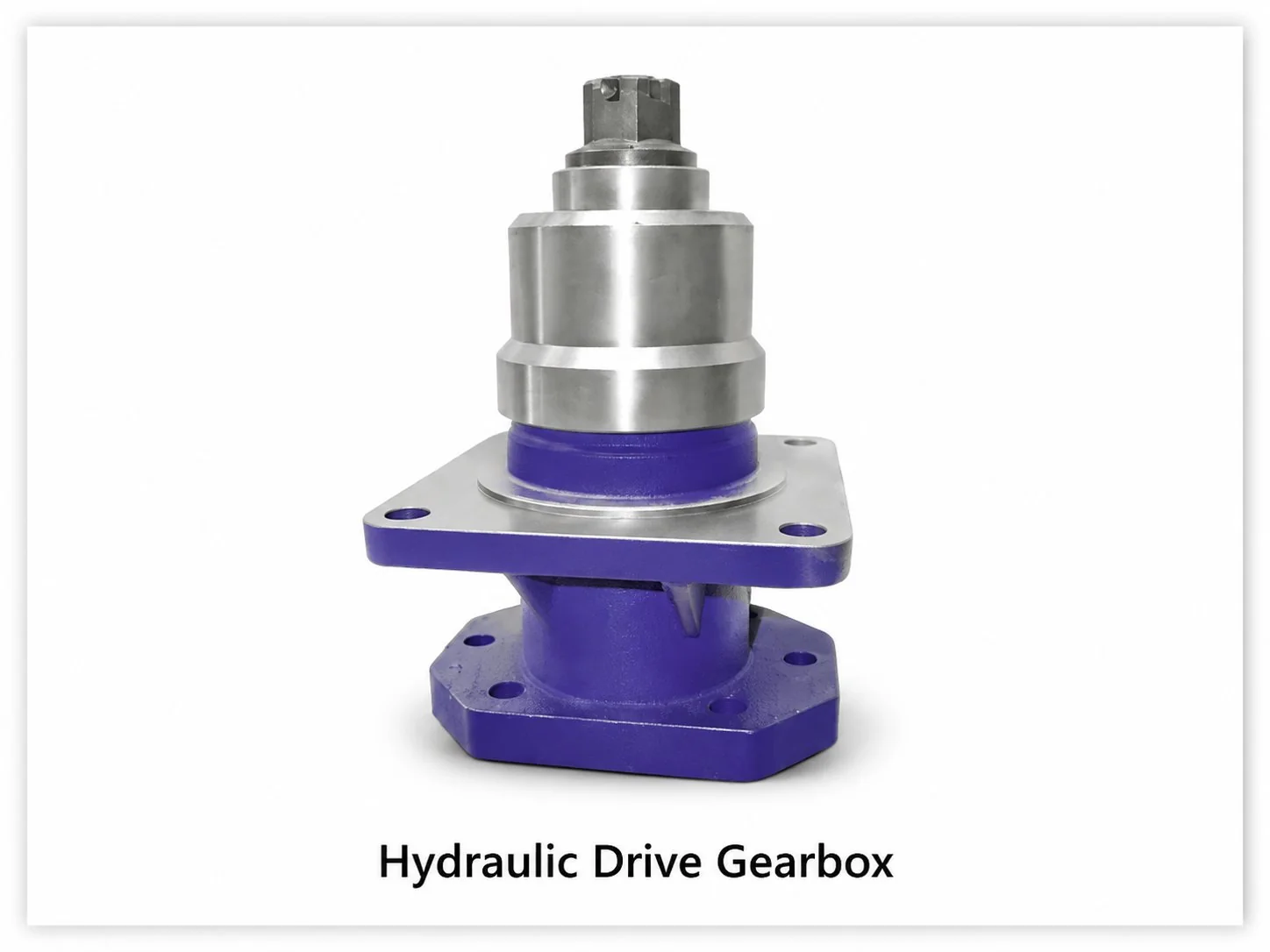
Hvordan en hastighedsforøger til hydrauliske pumper fungerer
En hastighedsforøger er den mekaniske modsætning til en gearreduktion. Hvor en gearreduktion tager et input med høj hastighed og lavt drejningsmoment og konverterer det til et output med lav hastighed og højt drejningsmoment, gør en hastighedsforøger det modsatte: den accepterer PTO-akslens relativt langsomme rotation - 540 o/min på kategori I- og II-traktorer eller 1.000 o/min på kategori III- og større maskiner - og multiplicerer det til det område på 1.500 til 3.000 o/min, som hydrauliske pumper af tandhjuls- og stempeltypen kræver for effektiv drift.
Tandhjulssystemet i en PTO-gearkasse med hastighedsforøgelse bruger typisk en af tre konfigurationer. Den enkleste er et enkelt cylindrisk tandhjulstrin med et lille drivtandhjul på PTO-indgangsakslen, der går i indgreb med et større drevet tandhjul på en mellemaksel, og derefter et andet lille tandhjul på den mellemaksel, der driver udgangen. Dette totrins cylindriske arrangement kan opnå udvekslingsforhold fra 1:2 til 1:4 i en kompakt pakke, men genererer mere støj og vibrationer end spiralformede alternativer, fordi cylindriske tandhjulstænder går i ind- og udkobling langs deres fulde fladebredde samtidigt.
Hastighedsøgere til spiralformede gear bruger tænder, der er skåret i en vinkel i forhold til gearaksen, så indgrebet bevæger sig progressivt hen over tandhjulets bredde i stedet for at ske på én gang. Dette giver en jævnere momentoverførsel, lavere støj og længere tandlevetid under kontinuerlige pumpedrev. Den aksiale trykkraft, som spiralformede gear skaber, styres af koniske rullelejer i hver ende af udgangsakslen - en vigtig detalje i lejevalget, der adskiller hastighedsforøgere i kommerciel kvalitet fra billige importerede varer, der bruger sporkuglelejer og svigter for tidligt under aksial belastning.
Den tredje konfiguration er planetgear. En planetgears hastighedsforøger låser ringhjulet, driver planetgearkassen fra PTO-akslen og modtager højhastighedsoutput fra solgearet. Planetgear opnår høje hastighedsforhold – op til 1:6 – i en meget kort aksial længde, hvilket gør dem velegnede til installationer, hvor pladsen mellem PTO-studsen og pumpen er begrænset. De fordeler også belastningen på tværs af flere planetgear (typisk tre eller fire), hvilket reducerer belastningen på en enkelt tand og øger gearkassens kontinuerlige moment i forhold til dens fysiske størrelse.
⚙️ Regel for valg af hastighedsforhold
Divider pumpens nominelle indgangshastighed med PTO-hastigheden for at få minimumsforholdet. Eksempel: En tandhjulspumpe med en nominel hastighed på 2.500 o/min på en PTO med 540 o/min kræver et forhold på mindst 1:4,63. Rund op til det næste tilgængelige kommercielle forhold – i dette tilfælde 1:5 – for at sikre, at pumpen når fuld slagvolumen uden at overhastighedsberegne PTO'en. Kontroller altid pumpeproducentens maksimalt tilladte indgangshastighed, før gearkassens udvekslingsforhold fastsættes.
Beregninger af pumpe-drev-forhold
Valg af det korrekte hastighedsforøgerforhold kræver, at tre variabler matches: traktorens PTO-udgangshastighed, hydraulikpumpens nominelle indgangshastighed og redskabets flow- og trykkrav. Hvis dette tages forkert, kan det enten føre til et underpræsterende hydraulisk kredsløb (for lavt forhold, pumpen drejer for langsomt til at producere nominelt flow) eller en katastrofal pumpefejl (for højt forhold, pumpen kører for hurtigt og kaviterer).
Start med pumpens slagvolumenspecifikation, udtrykt i kubikcentimeter pr. omdrejning (cc/omdr.). Gang slagvolumen med det ønskede omdrejningstal for udgangsakslen og divider med 1.000 for at få det teoretiske flow i liter pr. minut. Anvend derefter en volumetrisk effektivitetsfaktor – typisk 0,90 til 0,95 for nye tandhjulspumper, 0,92 til 0,97 for stempelpumper – for at få det faktiske leverede flow. Hvis dette faktiske flow opfylder eller overstiger redskabets krav en smule, er forholdet korrekt.
Kravet til indgangseffekt er lige så kritisk. Hydraulisk effekt i kilowatt er lig med flow (LPM) ganget med tryk (bar) divideret med 600. Et system, der leverer 80 LPM ved 200 bar, kræver 26,7 kW indgangseffekt. Da PTO-gearkassen har sine egne mekaniske tab - typisk 3% til 6% for en hastighedsforøger med spiralformet gear, 5% til 10% for en planetarisk enhed - stiger det faktiske PTO-effektbehov til cirka 28 til 30 kW i dette eksempel. Traktoren skal have mindst så mange PTO-hestekræfter tilgængelige ved den regulerede motorhastighed, med en sikkerhedsmargin på 10% til 15% for transiente belastninger.
| PTO-hastighed | Gearkasseudveksling | Udgangs-omdrejningstal | Pumpetype | Typisk flow (LPM) | Bedste applikation |
|---|---|---|---|---|---|
| 540 omdr./min. | 1:2 | 1,080 | Tandhjulspumpe | 20–40 | Let hydraulisk udstyr, brændekløvere |
| 540 omdr./min. | 1:3 | 1,620 | Tandhjuls- eller vingepumpe | 40–65 | Pæleførere, mellemstore sprøjter |
| 540 omdr./min. | 1:4.5 | 2,430 | Stempelpumpe | 60–100 | Kornstøvsugere, træsaks |
| 1.000 omdr./min. | 1:2 | 2,000 | Tandhjuls- eller stempelpumpe | 50–90 | Højkapacitetssprøjter, mobile blandere |
| 1.000 omdr./min. | 1:3 | 3,000 | Højhastigheds stempelpumpe | 90–150+ | Betonpumper, store flishuggere |
En fejl, der ofte opstår i marken, er at parre en 540 o/min PTO med en hastighedsforøger med højt udvekslingsforhold for at nå pumpehastigheder over 3.000 o/min. Selvom det er matematisk muligt (et 1:6-forhold ved 540 o/min giver 3.240 o/min), bliver momentmultiplikationen ved PTO-indgangsenden ekstrem - gearkassens indgangsaksel skal absorbere den fulde systembelastning ved 540 o/min, hvilket betyder et meget højt moment for et givet effektniveau. Splineforbindelsen mellem PTO-studsen og gearkassens indgangsaksel bliver det svage led. En 1.000 o/min PTO, der leverer den samme effekt, gør det med omtrent halvt så meget moment, hvilket halverer belastningen på spline-grænsefladen. Til hydrauliske applikationer med høj effekt over ca. 30 kW anbefales en 1.000 o/min PTO kraftigt.
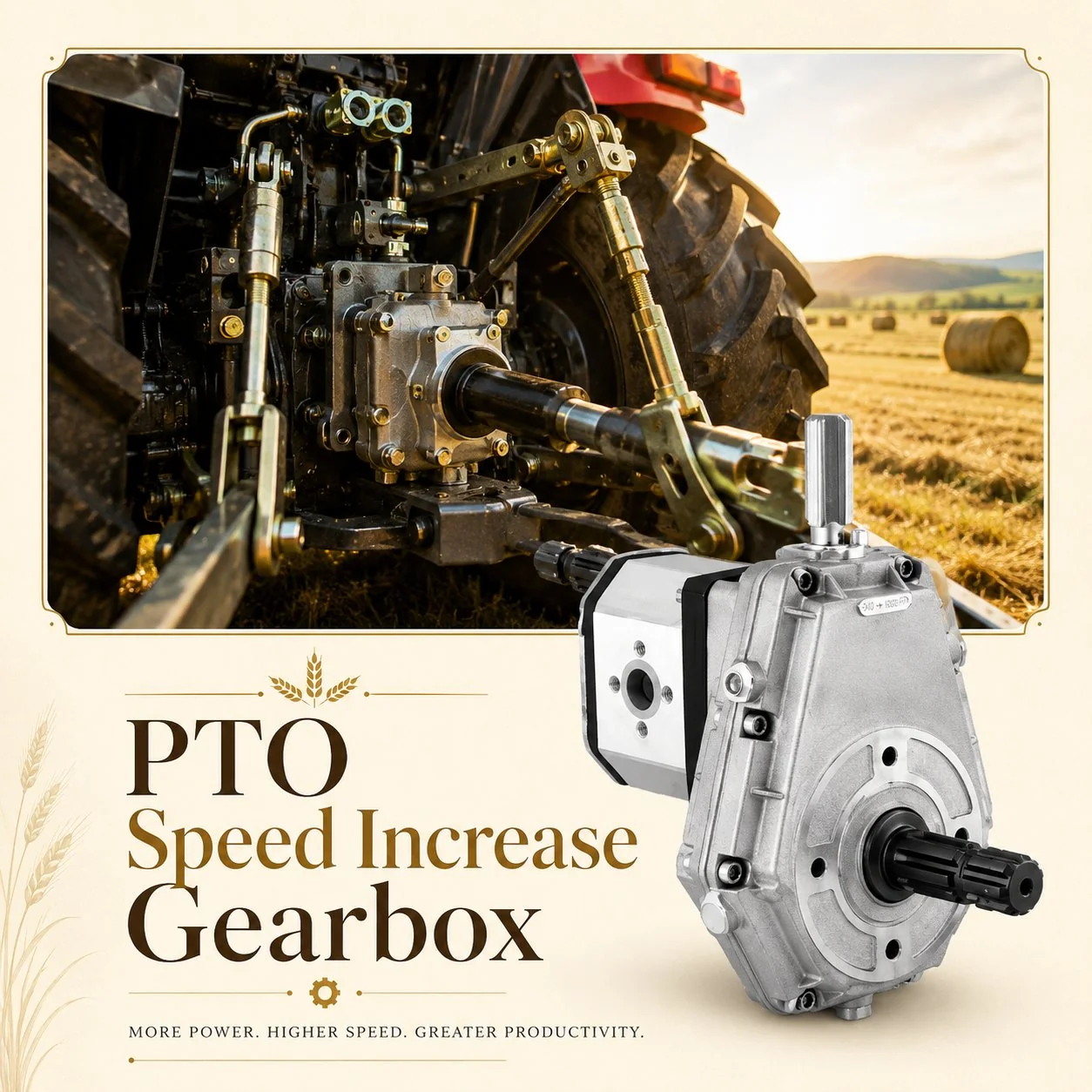
PTO-gearkasse med hastighedsforøger — kompakt design til direkte kobling til hydrauliske pumpeflanger
Forholdet mellem flowhastighed, tryk og gearkassens udgangshastighed
Hydrauliske systemer overholder et grundlæggende forhold: flowhastigheden bestemmer aktuatorens hastighed, mens tryk bestemmer aktuatorens kraft. En cylinder, der bevæger sig med en given hastighed, skal fyldes med et bestemt antal liter pr. minut; belastningen på den pågældende cylinder bestemmer det tryk, pumpen skal generere. Den hydrauliske PTO-gearkasse er forbundet med dette forhold gennem sin udgangshastighed, fordi pumpeflowet er direkte proportionalt med pumpehastigheden ved en given slagvolumen.
Hvis du reducerer PTO-gearkassens udgangshastighed med 10% – f.eks. ved at sænke motorens omdrejningstal fra nominel hastighed til en delvis gasspjældsindstilling – falder pumpeflowet med det samme 10%. På en afgrødesprøjte betyder det mindre sprøjtemængde pr. minut. På en brændekløver kører cylinderen langsommere ud. Dette lineære forhold gør PTO-hastighedsstyring til den enkleste måde at finjustere hydraulisk ydelse undervejs, men det betyder også, at enhver variation i PTO-hastigheden påvirker redskabets ydeevne direkte.
Trykket er derimod belastningsafhængigt. Pumpen genererer det tryk, systemet har brug for, op til overtryksventilens indstilling. En PTO-gearkasse påvirker ikke trykket direkte - den påvirker flowet. Der er dog en indirekte sammenhæng: Når systemtrykket stiger mod overtryksventilens indstilling, kræver pumpen mere indgangsmoment fra gearkassen. Dette øgede moment belaster gearkassens lejer, gear og splineforbindelser hårdere. I praksis oplever en hydraulisk PTO-gearkasse, der kører en pumpe ved 70% af overtryksventilens tryk, betydeligt mindre mekanisk belastning end den samme gearkasse, der kører pumpen ved 100% aflastning. Korrekt kalibrering af overtryksventilen er derfor en faktor for gearkassens levetid, ikke blot en hydraulisk sikkerhedsforanstaltning.
Temperaturen tilføjer en ekstra dimension. Hydraulikoliens viskositet falder, når temperaturen stiger, hvilket reducerer pumpens volumetriske virkningsgrad og øger den interne lækage en smule. Ved applikationer med lang driftscyklus, såsom kontinuerlig kornoverførsel eller langvarig træklipning, kan olietemperaturen i det uafhængige hydrauliske kredsløb stige over 80 °C, hvis reservoiret er for lille, eller køleren er utilstrækkelig. Ved disse temperaturer forringes oliens smørefilmstyrke også - og denne olie er normalt den samme væske, der cirkulerer gennem selve PTO-gearkassen i kombinerede reservoirdesign. At holde hydraulikolietemperaturen under 65 °C forlænger både pumpens og gearkassens levetid betydeligt.
Termisk styring i kontinuerlig hydraulisk drift
Kontinuerlige hydrauliske applikationer presser PTO-gearkassens termiske grænser på måder, som intermitterende landbrugsredskaber sjældent gør. PTO-aksel Ved at drive en roterende fræser overføres kun maksimal effekt under skærekontakt – mellem overkørslerne falder belastningen til næsten nul vindtab. En hydraulisk PTO-gearkasse, der driver en pumpe, overfører derimod kontinuerlig effekt i hele den hydrauliske drift, hvilket kan være timer til kornhåndtering eller sprøjteopgaver.
Varmen, der genereres i en hastighedsforøgende gearkasse, kommer fra tre kilder. Tandhjulsfriktion tegner sig for den største andel - den glidende bevægelse mellem de parrende tandhjulstænder omdanner 2% til 5% af den transmitterede effekt til varme, afhængigt af geartype, overfladefinish og smøremiddelkvalitet. Lejefriktion tilføjer yderligere 0,5% til 2%, hvilket varierer med lejetype og forbelastning. Oliekærning - den energi, der spildes, når gearene sprøjter gennem oliebadet - kan bidrage betydeligt, hvis oliestanden er for høj, eller oliens viskositet er for tung til driftstemperaturen.
For en gearkasse, der kontinuerligt yder 30 kW, varierer den samlede interne varmegenerering fra cirka 1 kW til 2 kW. Denne varme skal afgives gennem gearkassehuset til den omgivende luft. Støbejernshuse afgiver varme mere effektivt end aluminium ved høje temperaturer på grund af jernets højere termiske masse, men aluminiumshuse fungerer bedre i konvektive kølesituationer på grund af deres højere varmeledningsevne. Uanset hvad bestemmer husets overfladeareal og luftstrømmen omkring gearkassen den stabile driftstemperatur.
Installationer, der omslutter gearkassen inde i en metalpladeskærm eller monterer den i et forsænket rum, reducerer luftstrømmen og fanger varme. I alvorlige tilfælde overstiger olietemperaturerne inde i gearkassen 110 °C - et punkt, hvor de fleste EP-gearolier begynder at oxidere hurtigt og mister deres slid- og skumhæmmende egenskaber inden for hundredvis af timer i stedet for de tusindvis af timer, de ville holde ved 70 °C til 80 °C. Tilføjelse af en simpel ventilatordrevet oliekøler til hydraulikkredsløbets returledning - eller føring af returolien gennem en luftblæsningskøler, før den kommer ind i reservoiret - kan sænke driftstemperaturerne med 20 °C til 30 °C og fordoble serviceintervallet for både pumpen og gearkassen.
🌡️
Under 65°C — Optimal zone
Fuld oliefilmsmøring aktiv. Tandhjulsslid ved minimumshastigheder. Elastomerer tætnes inden for det nominelle temperaturområde. Olieskiftinterval ved producentens maksimale anbefaling.
⚠️
65°C–90°C — Forsigtighedszone
Olieoxidationen accelererer. Viskositetsfald reducerer bæreevnen. Halver olieskiftintervallet. Kontroller pakninger for hærdning eller lækage hver 200 timer.
🔴
Over 90°C — Skadezone
Hurtig olienedbrydning. Lejefedt smelter i forseglede lejer. Forkulning af tætninglæber. Øjeblikkelig nedlukning og undersøgelse af den underliggende årsag er nødvendig før fortsat drift.
Tandhjulspumpe vs. stempelpumpe: Matchning af pumpetype og gearkasse
Den type hydraulikpumpe, der er boltet til hastighedsforøgerens udgangsflange, bestemmer i høj grad gearkassens driftsegenskaber. Tandhjulspumper - det mest almindelige valg til PTO-drevne hydrauliske kredsløb - er designs med udvendigt gear og to indgribende cylindriske tandhjul inde i et hus med snæver tolerance. De er enkle, tolerante over for snavs, selvansugende og relativt billige. Deres flowpulsering er moderat, og de producerer ensartet ydelse over et bredt temperaturområde. De fleste tandhjulspumper fungerer effektivt mellem 1.200 og 2.800 o/min, hvilket gør en hastighedsforøger på 1:2 til 1:4 på en PTO med 540 o/min til standardparringen.
Tandhjulspumper genererer en radial belastning på deres drivaksel, fordi trykforskellen over tandhjulsindgrebet skubber begge tandhjul væk fra højtryksudløbsporten. Denne radiale belastning overføres direkte gennem pumpens drivakselkobling til hastighedsforøgerens udgangsleje. I højtryksapplikationer (over 200 bar kontinuerligt) kan denne radiale kraft være betydelig - nok til at reducere udgangslejets levetid med 40% til 60% sammenlignet med den beregnede levetid baseret udelukkende på drejningsmoment. Producenter af hastighedsforøgere, der klassificerer deres gearkasser til hydraulisk pumpedrift, tager højde for denne ekstra radiale belastning; generiske landbrugsgearkasser, der bruges som hastighedsforøgere, gør det typisk ikke.
Aksialstempelpumper er det højtydende alternativ. De bruger en roterende cylinderblok med 7 til 9 stempler, der bevæger sig frem og tilbage i deres boringer, når blokken vipper mod en skiftplade. Stempelpumper opnår højere tryk (op til 350 bar kontinuerligt), højere volumetrisk effektivitet (92% til 97%) og kan have variabel slagvolumen – hvilket betyder, at flowoutputtet justeres automatisk for at matche behovet ved at ændre skiftpladens vinkel. Denne variable slagvolumen reducerer energispild betydeligt ved applikationer med varierende belastningskrav, fordi pumpen kun producerer den strømning, kredsløbet har brug for på et givet tidspunkt, i stedet for at dumpe overskydende strømning over sikkerhedsventilen som varme.
Gearkasseimplikationerne for stempelpumper adskiller sig fra tandhjulspumper. Stempelpumper genererer mindre radial belastning på drivakslen, men skaber højere torsionspulsering, fordi hvert stempels arbejdsslag producerer en diskret momentspids. Med 9 stempler ved 2.500 o/min ser gearkassen 375 momentpulser pr. sekund - en højfrekvent excitation, der kan resonere med tandhjulsfrekvenser og forstærke vibrationer. Hastighedsøgere med spiralformede tandhjul håndterer dette bedre end cylindriske tandhjulsdesign, fordi den spiralformede tandindgrebs iboende udjævningseffekt dæmper stempelpumpens torsionspulsering, før den når PTO-drivlinjen.
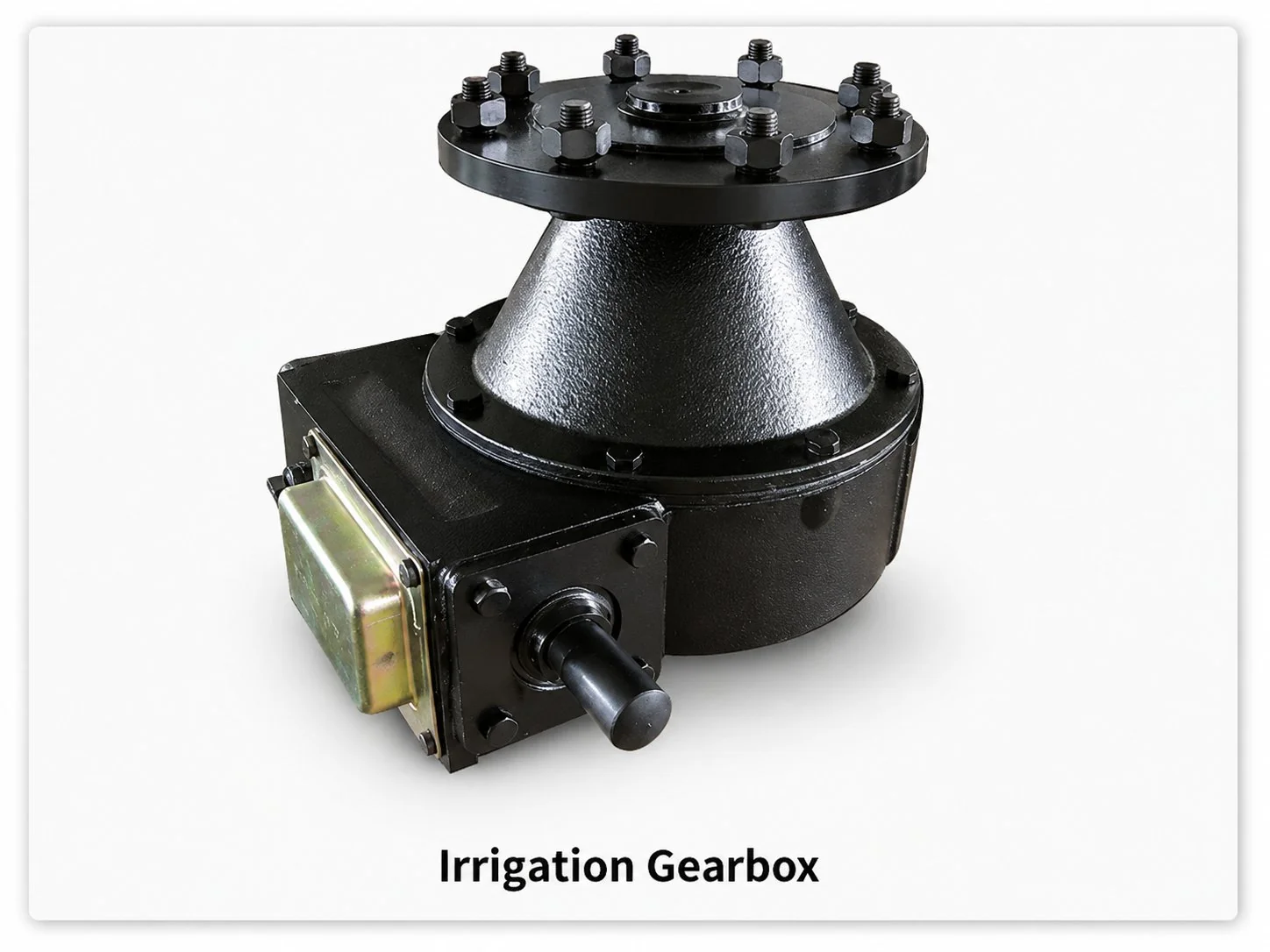
Bedste praksis for installation af hydrauliske PTO-gearkassesystemer
Korrekt installation tegner sig for en hydraulisk PTO-gearkasses levetid i længere tid end gearkassens interne konstruktion. En præcist fremstillet hastighedsforøger, der er boltet ind i en forkert justeret monteringsramme med en underdimensioneret landbrugsgearkasse Drivlinjen vil svigte hurtigere end en mellemklasseenhed installeret med korrekt justering og tilstrækkelig drivlinjeunderstøttelse.
PTO-drivlinjen, der forbinder traktorens akseltap med gearkassens indgangsaksel, skal kunne håndtere de vertikale og horisontale vinkelændringer, der opstår, når traktoren drejer, og når redskabet hopper hen over ujævnt terræn. Universalled på drivakslen håndterer disse vinkelændringer, men hvert led introducerer en cyklisk hastighedsvariation (kardanledseffekten), der stiger med driftsvinklen. Ved 10 graders ledvinkel er variationen i udgangshastigheden cirka 1,5% – næsten ikke mærkbar. Ved 25 grader stiger den til over 10%, hvilket skaber en pulserende indgang, der belaster gearkassens indgangslejer og tandhjul med dobbelt så høj PTO-rotationsfrekvens. At holde drivlinjens driftsvinkler under 15 grader – og ideelt set under 10 grader – er afgørende for gearkassens lange levetid.
Koblingen mellem pumpe og gearkasse er lige så kritisk. De fleste hastighedsforøgere bruger en SAE-standard pilot- og boltcirkel på udgangsfladen, der matcher almindelige monteringsflanger for hydrauliske pumpe (SAE A, SAE B eller SAE C, afhængigt af pumpestørrelse). Pumpens drivaksel er forbundet til gearkassens udgang via en notkobling eller kilekobling. Denne kobling skal installeres med den korrekte indgrebsdybde - for lav, og notkontaktområdet er utilstrækkeligt, hvilket fører til hurtig notslid; for dyb, og pumpeakslen bunder ud mod gearkassens udgangsleje, hvilket skaber en aksial forspænding, der aldrig var tilsigtet, og accelererer lejesvigt.
Montering af gearkasse-pumpe-enheden kræver en stiv ramme eller et beslag, der forhindrer vibrationsinduceret bevægelse. Den samlede vægt af en hastighedsforøger og en stempelpumpe kan nå op på 35 til 60 kg, og den roterende masse ved 2.500+ omdr./min. skaber gyroskopiske kræfter under traktorens drejning, der forsøger at vride enheden af dens montering. Gummiisoleringsophæng absorberer nogle vibrationer, men skal være stive nok til at forhindre overdreven bevægelse - alt for bløde ophæng tillader enheden at oscillere, hvilket trætter de hydrauliske slangeforbindelser og drivlinjesamlinger.
Almindelige anvendelser af PTO-drevne hydrauliske systemer
Alsidigheden ved en hydraulisk PTO-gearkasse kommer af, at hydraulisk kraft er uendeligt delelig og kan overføres via fjernbetjening. Når PTO-gearkassen drejer pumpen, kan hydraulikvæsken ledes overalt på redskabet – eller endda til separate redskaber, der arbejder samtidigt, via flowdelere. Denne fleksibilitet har drevet dens anvendelse i en bred vifte af landbrugs-, skovbrugs-, bygge- og kommunale applikationer.
I skovbrug driver PTO-drevne hydrauliske kredsløb gribesave, trækløvere, brændekløvere og brændemaskiner. Disse applikationer kræver højtrykskredsløb med moderat flow - typisk 180 til 280 bar ved 30 til 60 LPM. En PTO på 540 o/min med en 1:3 hastighedsforøger, der driver en 28 cc/omdr. tandhjulspumpe, producerer cirka 45 LPM ved nominel hastighed, hvilket er tilstrækkeligt til de fleste enkeltcylindrede skovbrugsredskaber. Dobbeltcylindrede maskiner - dem, der klemmer og skærer samtidigt - kan have brug for 70+ LPM, hvilket øger kravet til en PTO på 1.000 o/min med et forhold på 1:2,5, der driver en større slagvolumenpumpe.
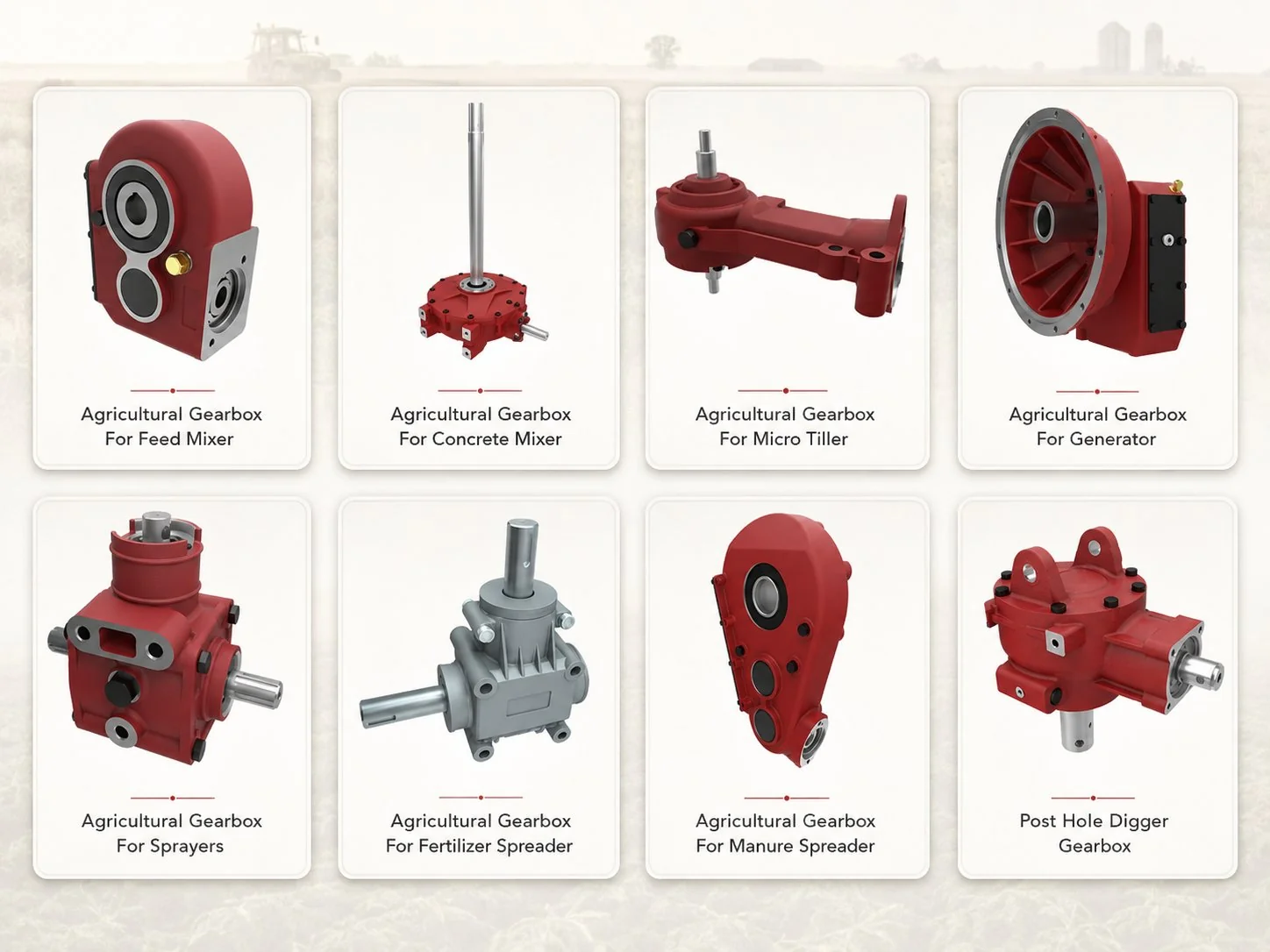
I landbruget, ud over de standard traktormonterede redskaber, driver hydrauliske PTO-gearkasser kornstøvsugere (højflow-kredsløb med moderat tryk, der bevæger sig 100+ LPM), frugtplantagesprøjter med hydrauliske blæserdrev og hydraulisk drevne gødningsindsprøjtningssystemer, der kræver både højt flow og højt tryk for at presse gylle ned i jorden gennem skiveskårne indsprøjtningsslidser. Ingeniørteamet hos Ever-Power specificerer regelmæssigt hastighedsforøgerforhold til disse krævende applikationer og matcher gearkassekapaciteten med de specifikke pumpe- og kredsløbskrav i hver kundes system.
Kommunale og forsyningsmæssige applikationer omfatter PTO-drevne hydrauliske kraftenheder på lastbilmonterede lifte, gadefejemaskiner og mobile kompressorer. Disse installationer bruger ofte lastbil-PTO-udgange på 1.000 o/min. og kører kontinuerligt i fulde arbejdsskift - 6 til 10 timer om dagen. Gearkassevalget til disse applikationer skal prioritere kontinuerlig termisk klassificering, kraftige lejer og akseltætninger af høj kvalitet, der modstår vejsnavs og saltpåvirkning, der er forbundet med vejudstyr.
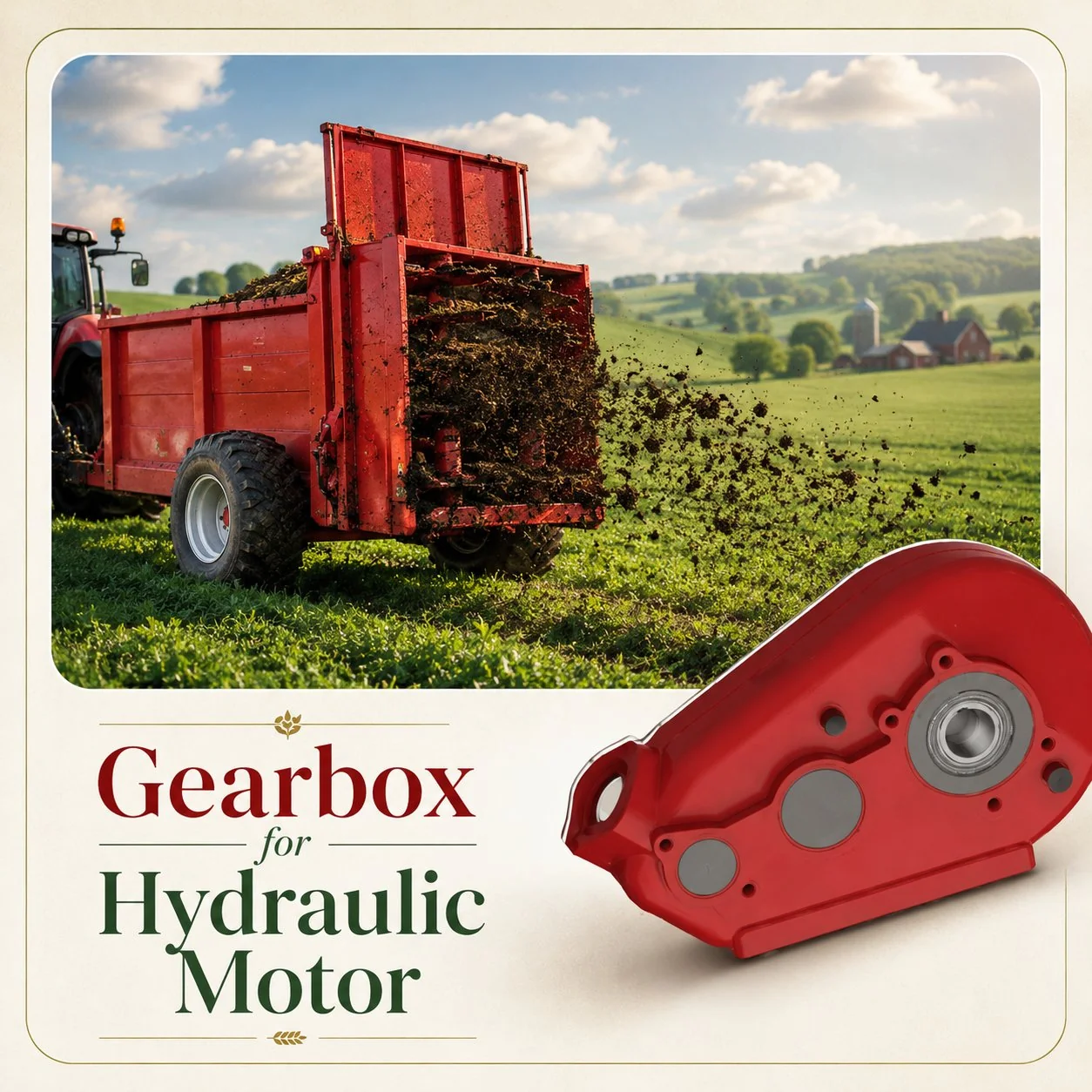
Hydraulisk motorgearkasse - typisk for PTO-drevne uafhængige hydrauliske kredsløb
Vedligeholdelsesplan for hydrauliske PTO-gearkassesystemer
Da en hydraulisk PTO-gearkasse fungerer under kontinuerlig belastning i stedet for den periodiske drift, der er almindelig for de fleste landbrugsgearkasser, bør dens vedligeholdelsesplan være mere aggressiv end de intervaller, der er offentliggjort for generelle PTO-gearkasser.
Olietilstanden er den bedste indikator for gearkassens indre tilstand. Tag en 100 ml olieprøve gennem aftapningsporten ved hvert serviceinterval, og undersøg den visuelt. Klar, ravfarvet olie uden metallisk glans indikerer normal drift. Et mælkeagtigt udseende signalerer vandforurening - ofte fra kondens i maskiner, der cykler mellem varm drift og kold opbevaring natten over. Fin metallisk glimmer i bunden af en klar prøvebeholder tyder på accelereret tandslid, normalt fra enten forurenet olie eller et overbelastet tandhjulsnet. Mørk, oxideret olie med en brændt lugt indikerer kronisk overophedning og kræver en øjeblikkelig undersøgelse af det termiske styringssystem, før gearkassen fortsætter service.
Indgangs- og udgangsakselpakninger skal inspiceres hver 250. timer. På indgangssiden kan en utæt pakning tillade PTO-fedt at forurene gearkasseolien – dette kan identificeres ved en grålig misfarvning af olien nær indgangsenden. På udgangssiden, hvor pumpens drivaksel forlader gearkassen, udsætter en utæt pakning gearkassens indre for hydraulikvæske. Mens mange PTO-hastighedsforøgere deler olie med pumpen (især i kombinerede husdesign), skal enheder med separate smøresystemer holde gearolie og hydraulikvæske adskilt, fordi additivpakkerne i de to væsker kan være kemisk inkompatible.
Drivlinjen, der forbinder traktorens PTO med gearkassens indgang, skal smøres for hver 50. driftstime — universallejelejer, glidegavlsnoter og skjoldlejer kræver alle nyt fedt for at forhindre tørløbskorrosion, der opstår mellem driftssæsonerne. Kryds- og lejeuniversalled er det mest almindelige fejlpunkt i hele PTO'ens hydrauliske system, og det er langt billigere at udskifte dem forebyggende (hver 500. til 800. time, afhængigt af driftsvinkel) end den skade, der forårsages, når et defekt universalled får drivlinjen til at løsne sig ved høj hastighed.
Sådan vælger du den rigtige hydrauliske PTO-gearkasse
Udvælgelsen starter med fire oplysninger: traktorens PTO-hastighed (540 eller 1.000 o/min), traktorens tilgængelige PTO-hestekraft, hydraulikpumpens specifikationer (slagvolumen, nominel hastighed, monteringsflange og drivakselkonfiguration) og redskabets hydrauliske krav (flow, tryk og arbejdscyklus).
Med disse fire input følger udvælgelsesprocessen en logisk rækkefølge. Først bestemmes den nødvendige gearkasseudgangshastighed ved at dividere pumpens nominelle indgangshastighed med PTO-hastigheden. Dernæst beregnes det maksimale kontinuerlige drejningsmoment, som gearkassen skal overføre - dette er lig med pumpens maksimale indgangsmoment ved overtryksventilens trykindstilling plus en margin på 15% for transiente belastninger. For det tredje verificeres, at gearkassens offentliggjorte kontinuerlige drejningsmomentklassificering ved den beregnede udgangshastighed overstiger dette krav. For det fjerde bekræftes den mekaniske grænseflade - indgangssplinen skal matche PTO-studsen (typisk 6-spline 1-3/8 tommer for 540 o/min eller 21-spline 1-3/8 tommer for 1.000 o/min), og udgangsflangen skal matche pumpens monteringsmønster.
Undgå den almindelige fejl at vælge en gearkasse udelukkende baseret på hestekræfternes effekt uden at bekræfte momentet. To gearkasser med en nominel effekt på "50 HK" kan have meget forskellige momentkapaciteter, hvis den ene er nominel til et 1:2-forhold (lavere udgangsmoment) og den anden til et 1:4-forhold (højere udgangsmoment). Det faktiske moment ved tandhjulet – ikke hestekræfterne på typeskiltet – afgør, om gearene og lejerne vil overleve den tilsigtede anvendelse. Ever-Power PTO-gearkasse produktlister for at finde enheder med komplette momentspecifikationer ved hvert forhold, hvilket gør det nemt at vælge applikationsspecifikt.
Ofte stillede spørgsmål
Har du brug for en PTO-hastighedsforøger til dit hydrauliske system?
Fra hastighedsforøgere med standard udvekslingsforhold til specialkonstruerede hydrauliske PTO-gearkasseløsninger til applikationer med højt flow, leverer vores team præcisionstilpassede enheder, der er bakket op af over 20 års produktionsekspertise inden for landbrugs- og industriel kraftoverføring.
Redaktør: Cxm